What Makes Trevor Paglen’s Work So Powerful?
Trevor Paglen’s work is powerful because he reveals that the contemporary world is shaped by images, machines, infrastructures, and systems that most people rarely see—and that increasingly do not need human beings in order to operate.
A distant military base shimmers through atmospheric distortion.
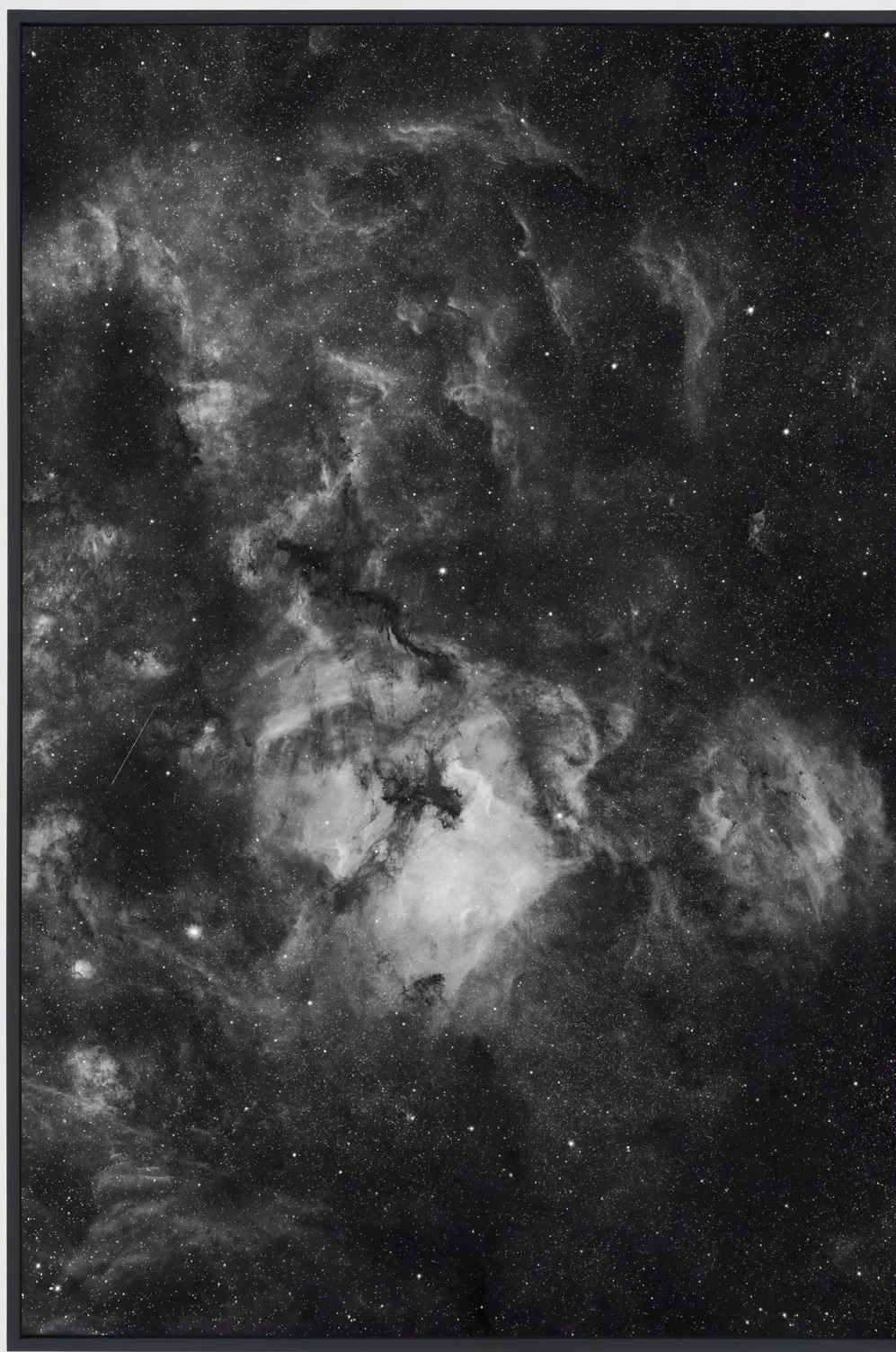
A surveillance satellite crosses a field of stars.
A drone appears as a nearly invisible speck.
Fiber-optic cables lie beneath the ocean carrying vast quantities of data.
A grid of photographs shows the training images through which computer-vision systems learn to classify human beings.
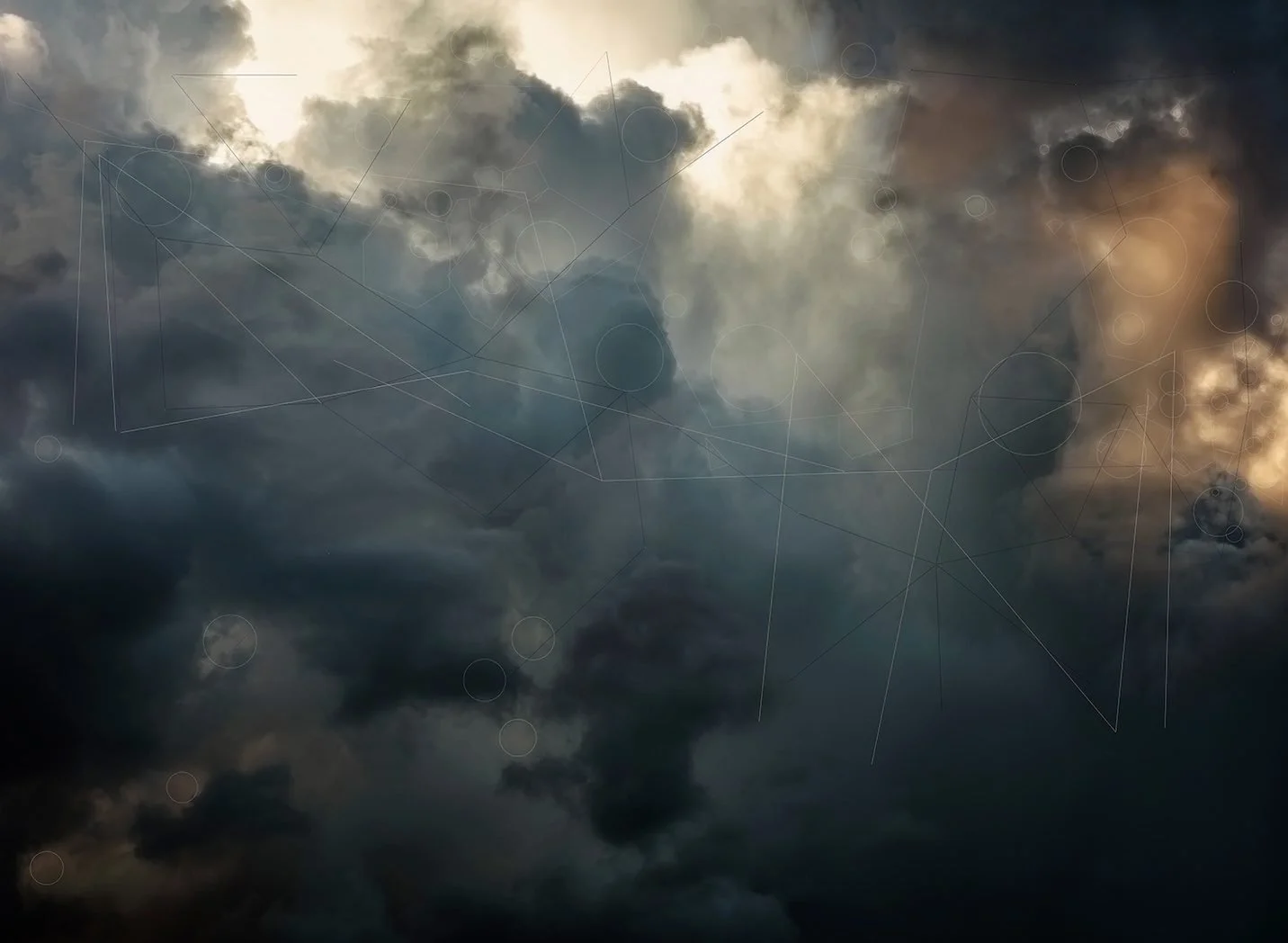
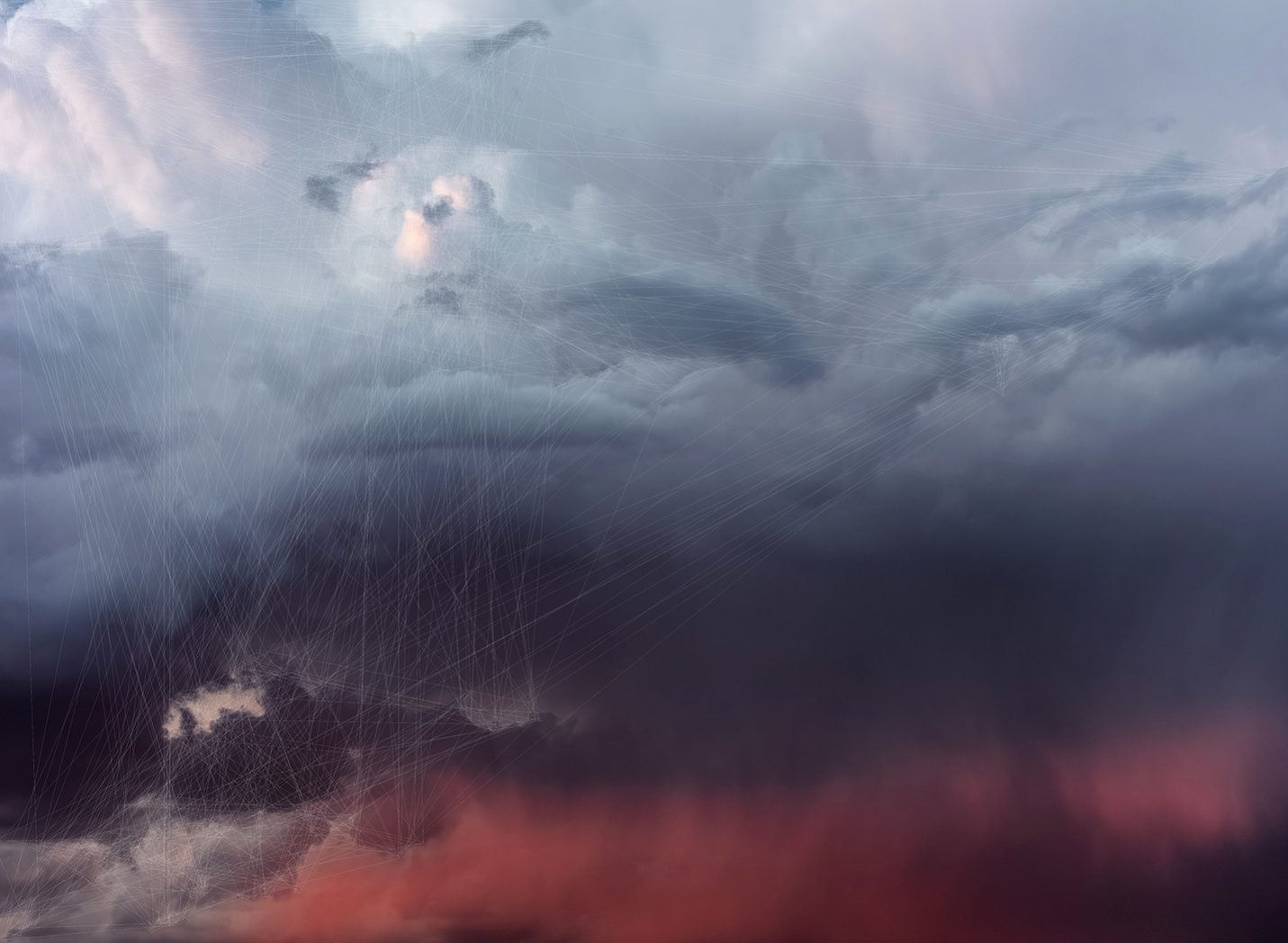
Clouds and landscapes are processed by algorithms whose internal categories are invisible to the viewer.
A photograph may look beautiful, atmospheric, and almost romantic, while documenting machinery designed for surveillance, targeting, data extraction, or secrecy.
Paglen’s central inquiry might be stated this way:
How can art make visible the hidden systems that increasingly determine what can be seen, known, classified, predicted, and acted upon?
His work does not simply expose secret objects. It investigates the deeper politics of perception.
Who is allowed to see?
Who is being seen?
What remains hidden?
What happens when machines begin interpreting images for other machines rather than for people?
And what kind of world emerges when vision becomes infrastructure?
What the Viewer Encounters
Paglen works across photography, sculpture, moving image, research, writing, engineering, geography, installation, and collaborative technological projects. His practice has examined covert military installations, spy satellites, drone warfare, undersea communications cables, classified government programs, artificial intelligence, facial recognition, influence operations, and the automated interpretation of images. (Pace Gallery)
The viewer may encounter:
blurred photographs of distant military sites;
night skies crossed by satellite trails;
images of drones against clouds or sunlight;
maps and documents revealing hidden infrastructures;
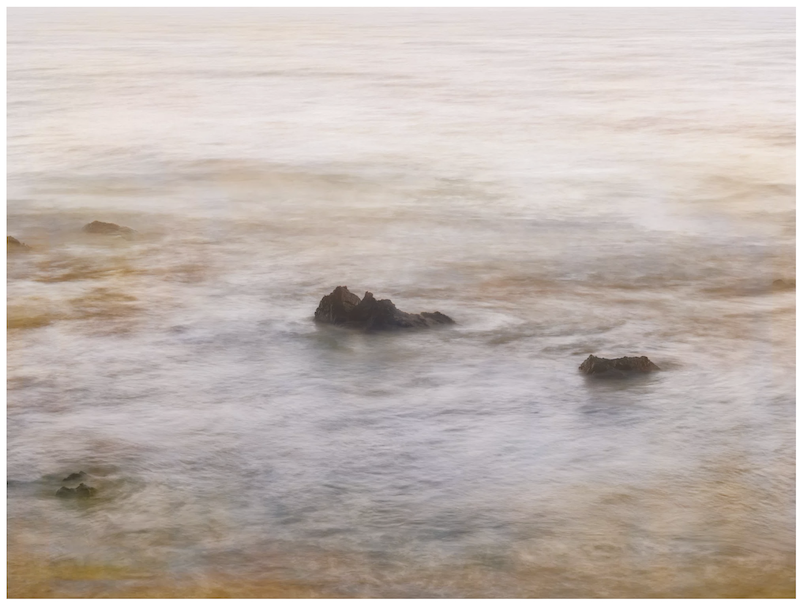
photographs of beaches where undersea cables come ashore;
machine-learning datasets;
computer-generated image classifications;
algorithmically altered landscapes;
sculptural satellites that serve no practical military or commercial purpose;
video feeds that resemble operational surveillance interfaces.
Many of these works are visually restrained.
A photograph may initially resemble:
a landscape;
an astronomical image;
a cloud study;
a sunset;
an abstract color field;
a minimalist grid.
Only later does the viewer learn that the small light in the sky is a surveillance platform, that the distant architecture belongs to a classified facility, or that the image has been filtered through a machine-vision system.
The work operates through delayed recognition.
Beauty draws the viewer closer.
Information changes what beauty means.
The Inquiry Beneath the Work
Modern power does not always appear through visible monuments, uniforms, or public institutions.
It often operates through hidden or ordinary infrastructures:
satellites;
databases;
cables;
classification systems;
server farms;
algorithms;
sensors;
proprietary platforms;
automated weapons;
image-recognition systems.
These structures shape political and social life while remaining largely inaccessible to public observation.
Paglen’s work asks:
How can democratic societies understand systems whose operations are secret, technically obscure, physically remote, or deliberately concealed?
This is not only a problem of hidden information.
It is a problem of perception.
A secret base may exist in a desert, but be located so far away that conventional vision cannot reach it.
A satellite may pass overhead, but remain invisible without specialized knowledge and equipment.
A facial-recognition model may classify a person, but the categories through which it operates remain hidden in code, training data, and proprietary systems.
The contemporary world therefore contains many things that are physically real but perceptually unavailable.
Paglen’s artistic project begins in that gap.
Making the Invisible Visible
Paglen is frequently described as an artist who makes invisible systems visible.
That phrase is useful, but incomplete.
The work does not usually reveal hidden structures with total clarity.
His photographs often remain blurred, distant, incomplete, or ambiguous.
A secret installation may appear only as a heat-distorted cluster on the horizon.
A satellite may be represented by a thin streak crossing the sky.
A drone may be barely distinguishable from dust on the image.
This limited visibility is essential.
The work does not say:
Now the secret has been completely exposed.
It says:
Here is evidence that something consequential exists beyond ordinary access.
The image makes the limit of seeing visible.
Paglen’s photographs frequently depend on extreme distance, specialized lenses, astronomical calculations, geographical research, and sustained waiting. The resulting distortions are not technical failures. They show how secrecy is produced spatially and technologically. (The Guardian)
The work reveals not only the hidden object, but the difficulty of reaching it.
The Landscape of Secrecy
Paglen often describes his practice through the history of landscape art.
His landscapes, however, contain infrastructures that conventional landscape imagery tends to exclude:
classified bases;
weapons-testing zones;
intelligence facilities;
data cables;
satellites;
drones;
radar systems.
This changes what landscape means.
A landscape is not simply nature observed from a distance.
It is territory organized by power.
The desert may contain an invisible military geography.
The ocean floor may contain communications infrastructure.
The sky may contain hundreds or thousands of surveillance and communications objects.
The cloud may be both atmospheric phenomenon and metaphor for data infrastructure.
Paglen’s landscapes show that no apparently empty space is necessarily empty.
The landscape has become crowded with systems whose visibility is unevenly distributed.
Distance as Political Form
Distance plays a major role in Paglen’s work.
A military installation may be hidden because it is:
geographically remote;
legally restricted;
surrounded by controlled land;
obscured by atmospheric conditions;
excluded from ordinary maps;
protected by secrecy laws.
Paglen often photographs such sites from publicly accessible locations many miles away.
The distance becomes visible in the image.
Heat haze breaks the architecture apart.
Light scatters.
Forms lose precision.
The photograph carries the political relationship between observer and subject.
The state possesses:
proximity;
access;
technical clarity;
operational knowledge.
The public possesses:
distance;
partial evidence;
speculation;
blurred visibility.
The image is therefore not merely a photograph of a secret facility.
It is a photograph of unequal access to reality.
The Sublime and the Secret State
Many of Paglen’s photographs are visually beautiful.
They contain:
glowing skies;
deserts;
clouds;
stars;
mountains;
atmospheric color;
distant light.
This beauty connects the work to the history of the sublime: the aesthetic experience of forces that exceed ordinary human scale or comprehension.
Historically, the sublime was associated with:
storms;
mountains;
oceans;
cosmic space;
natural power.
Paglen relocates the sublime into technological and political systems.
The overwhelming force is no longer only nature.
It is also:
surveillance;
planetary computation;
military technology;
artificial intelligence;
information infrastructure.
A night sky remains beautiful, but it is crossed by machines.
A cloud remains atmospheric, but may be read by computer vision.
A desert remains vast, but contains weapons systems and classified architecture.
The technological sublime is attractive and threatening at once.
Spy Satellites and the Reversal of the Gaze
Paglen has spent years identifying and photographing classified or unacknowledged satellites by combining astronomical observation, orbital data, research, and collaborative networks of amateur observers. His satellite photographs make visible objects designed to observe the Earth while remaining difficult for the public to identify. (The Guardian)
This produces a reversal.
The satellite looks down.
Paglen looks back.
The object designed to observe becomes the object observed.
But the relationship is not equal.
The satellite may possess:
high-resolution sensors;
governmental support;
classified information;
continuous coverage;
enormous technical capacity.
The artist possesses a telescope, calculations, patience, and public visibility.
The act of looking back does not neutralize the surveillance system.
It creates symbolic and political resistance.
To observe the observer is to refuse complete invisibility.
The Sky Is No Longer Neutral
For most of art history, the sky has functioned as:
atmosphere;
weather;
divine realm;
symbol of transcendence;
field of astronomical wonder;
compositional space.
Paglen shows that the sky is also infrastructure.
It contains:
reconnaissance satellites;
communications systems;
navigation systems;
missile-warning systems;
debris;
experimental technologies.
The night sky therefore becomes politically occupied.
What appears visually empty may be operationally dense.
This is one of Paglen’s most important discoveries:
The technological systems governing life often hide inside perceptual backgrounds that people have learned to ignore.
The work retrains attention.
A speck becomes a platform.
A streak becomes an orbit.
A cloud becomes a machine-readable object.
Drones and the Asymmetry of Vision
Paglen’s drone photographs often show aircraft at extreme distance.
They may appear:
tiny;
indistinct;
silhouetted;
almost absorbed into the sky.
The drone’s visual insignificance contrasts with its operational power.
A machine that appears as a speck to the observer may see the ground below with extraordinary precision.
This creates an asymmetry:
The drone can see clearly while remaining nearly unseen.
That asymmetry is central to contemporary military power.
Those controlling the machine may remain physically distant from the consequences of its actions.
Those being observed may not know:
when they are visible;
how they are classified;
whether they are considered threatening;
who is making decisions about them.
Paglen’s photographs do not show what the drone sees.
They show how little the observed world can see of the drone.
Operational Images
Some images are made for people to look at.
Others are made in order to perform tasks.
A targeting image may help guide a weapon.
A facial-recognition image may help identify a person.
A satellite image may classify terrain.
A machine-vision system may detect objects in traffic or interpret behavior.
These are sometimes called operational images because their primary purpose is not contemplation but action.
Paglen’s work increasingly investigates this transformation.
Photography is no longer only:
human makes image → human looks at image.
It may become:
sensor captures data → machine classifies image → system acts.
The human viewer may never see the image at all.
This is a major historical shift.
Images become active components inside automated systems.
Invisible Images
Paglen has used the phrase invisible images to describe images produced by machines for interpretation by other machines.
Examples include:
facial-recognition inputs;
object-detection frames;
surveillance feeds;
medical scans processed automatically;
satellite imagery classified computationally;
images embedded inside autonomous systems.
These images may circulate at enormous scale without becoming visible in ordinary public culture.
The political stakes are significant.
Machine-readable images can influence:
policing;
border control;
employment;
credit;
military targeting;
advertising;
social-media visibility;
access to services.
The image may affect a person without that person ever seeing it.
Representation becomes power without becoming public appearance.
A Study of Invisible Images
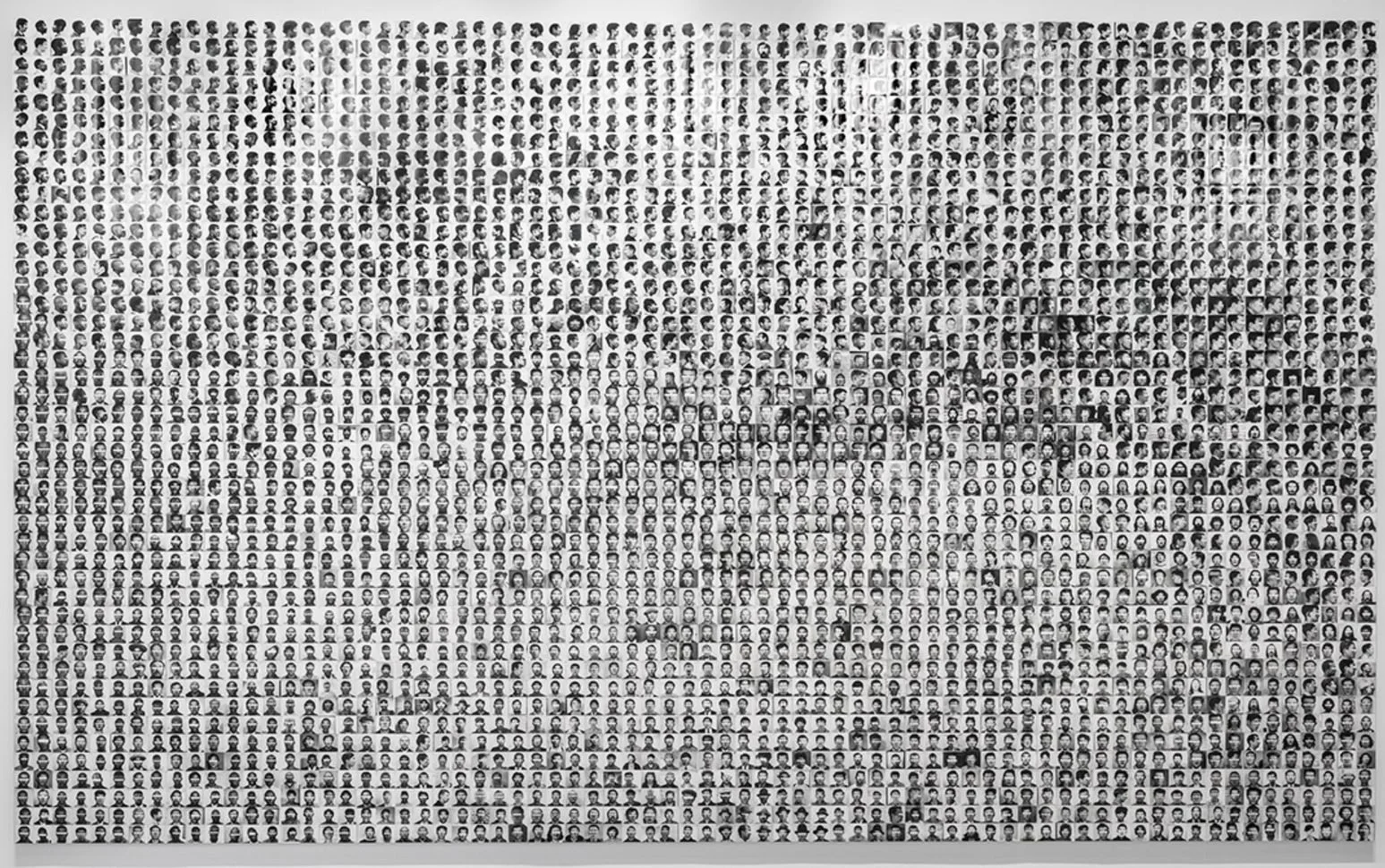
In A Study of Invisible Images, Paglen examined the image systems underlying artificial intelligence, including machine-training datasets, computer-vision classifications, and generated images. The project asked what happens when images are produced primarily for machine interpretation rather than human perception. (Smithsonian American Art Museum)
Grids of training images may appear visually neutral.
But each image has been assigned labels.
A human face may be classified according to:
age;
emotion;
gender;
race;
attractiveness;
criminality;
personality;
behavioral expectation.
These categories are not simply discovered inside the image.
They are imposed through social assumptions, dataset construction, annotation labor, and institutional goals.
The machine learns not only how the world looks.
It learns how someone decided the world should be divided.
Classification Is Never Neutral
Computer vision often appears technical and objective.
A model processes data.
It detects patterns.
It produces classifications.
But every system depends upon prior decisions:
Which images are collected?
Who appears in them?
Who gave consent?
What categories are used?
Who defines correct labels?
What errors are tolerated?
What purpose will the system serve?
Paglen’s work makes classification visible as a cultural and political act.
To label an image is to decide what difference matters.
A dataset does not merely describe the world.
It creates a framework through which the world will be acted upon.
This is especially consequential when categories are applied to people.
A system that claims to detect emotion, danger, trustworthiness, or identity can transform speculative assumptions into automated judgments.
Training Humans
Paglen’s collaborations with researcher Kate Crawford examined how artificial-intelligence systems are trained through enormous image datasets and how those datasets reproduce historical assumptions about race, gender, labor, emotion, and social value.
The title Training Humans reverses a common formulation.
Humans train machines.
But machines also train humans.
Once automated categories enter institutions, people adapt to them.
A person learns how to:
pose for facial recognition;
avoid triggering moderation;
write for search engines;
present a résumé for automated screening;
behave under surveillance;
make oneself legible to platforms.
The classification system begins shaping the subject it claims merely to observe.
This connects closely to your inquiry into performed identity.
A person may construct a character not only for another person, but for a machine.
Ethical Pressure Inside Dataset Critique
Paglen and Crawford’s treatment of facial-image datasets has also generated criticism. Michael J. Lyons, one of the creators of the JAFFE facial-expression dataset, disputed aspects of their account and argued that their exhibition and writing mishandled the dataset’s history and raised unresolved questions about consent. (arXiv)
This criticism matters because it exposes a contradiction within research-based art.
An artwork may critique surveillance, extraction, and the nonconsensual use of images while still relying upon images of people whose participation remains ethically complicated.
The critique can reproduce part of the condition it opposes.
That does not make the inquiry irrelevant.
It makes the ethical standard more demanding.
Artists investigating image power must also examine their own power to collect, display, interpret, and recirculate images.
Machines Do Not See as Humans See
Computer-vision systems are often described as “seeing.”
But machine vision does not necessarily resemble human perception.
A person may see:
a face;
a gesture;
a mood;
a social situation;
beauty;
ambiguity.
A machine may process:
pixels;
edges;
feature vectors;
statistical correlations;
confidence scores;
detected classes.
Paglen’s work explores the mismatch between these systems.
An image that appears obvious to a human may be misclassified by a model.
An image that appears meaningless to a person may activate a strong machine response.
The machine inhabits another visual world.
This resembles Roni Horn’s interest in different perceptual conditions, but Paglen places the question inside automated power.
The machine’s difference matters because the machine may act.
Adversarially Evolved Hallucinations
Paglen has created images designed through machine-learning processes to activate particular classifications within computer-vision systems.
These images may look abstract, strange, or dreamlike to human viewers while being recognized confidently by a machine as a specific category.
The work exposes the instability of automated recognition.
The system does not understand the object in the human sense.
It detects patterns associated statistically with a label.
This creates a critical distinction:
Recognition is not the same as understanding.
A machine can classify an image confidently while being wrong in ways that appear absurd to people.
Yet confidence scores can still influence real decisions.
The machine’s hallucination may become institutionally consequential.
Clouds Seen by Machines
Paglen’s Cloud works transform skies and landscapes through computer-vision operations and algorithmic processing. His exhibition A Color Notation focused on landscapes altered through programming and artificial-intelligence systems. (Pace Gallery)
Clouds are especially important because they sit between form and formlessness.
Human beings recognize images in clouds through projection.
Machines also divide clouds into:
segments;
lines;
objects;
statistical features;
classifications.
The cloud becomes a test of how perception imposes structure upon ambiguity.
A person sees a face or animal.
An algorithm sees edges, regions, or features.
Neither merely receives the cloud neutrally.
Each system constructs a world from it.
Beauty Under Surveillance
Paglen’s photographs are often genuinely beautiful.
The beauty is not accidental decoration.
It creates a contradiction.
The viewer may admire:
the glowing sky;
atmospheric distortion;
deep color;
cosmic scale;
photographic elegance.
Then the title or context reveals:
a classified satellite;
drone activity;
military infrastructure;
automated vision.
The beauty becomes uncomfortable.
One may ask:
Am I aestheticizing surveillance?
Does the image make power too attractive?
Does distance soften violence?
Can beauty encourage attention without neutralizing critique?
Paglen’s strongest images do not answer these questions.
They make admiration ethically unstable.
The Problem of Proof
A documentary photograph is often expected to prove something.
Paglen’s images frequently provide evidence, but not definitive proof.
A distant blur may be identified through extensive research, but the photograph alone may not establish what the viewer is seeing.
The image depends upon:
captions;
coordinates;
titles;
maps;
technical knowledge;
institutional research;
trust in the artist’s process.
This creates a productive tension.
The work critiques secret systems while asking viewers to accept information they may not independently verify.
The viewer remains caught between skepticism and belief.
That condition resembles the world of secrecy itself.
Citizens often know hidden systems through:
leaks;
fragments;
indirect evidence;
technical reports;
anonymous testimony;
partial images.
Knowledge remains provisional.
Photography as Research Instrument
Paglen does not use photography only to produce pictures.
He uses it as part of a wider investigative method.
The process may involve:
public records;
mapping;
field observation;
astronomy;
engineering;
legal research;
interviews;
leaked documents;
geographical analysis;
collaboration with specialists.
The final image condenses this research without displaying all of it directly.
This creates a different relationship between image and knowledge.
The photograph is not the entire argument.
It is the visible threshold of a larger inquiry.
The work expands photography from image-making into a method for investigating the organization of reality.
Geography as Artistic Method
Paglen trained in geography as well as art, and his work frequently treats geography as the study of how power becomes spatial. His practice tracks where secrecy, communication, observation, and control physically occur. (Kinoki)
This includes:
orbital paths;
desert installations;
restricted zones;
oceanic cable routes;
data corridors;
border infrastructures;
global sensing networks.
The work asks not only:
What is the system?
But:
Where is it?
Where does data travel?
Where does surveillance originate?
Where is the body observed?
Where are decisions made?
Where do supposedly immaterial networks touch the Earth?
Paglen reveals that digital power still requires physical geography.
The cloud has cables.
The algorithm has servers.
The satellite has an orbit.
Undersea Cables and the Material Internet
The internet is often imagined as immaterial.
Information seems to move through “the cloud.”
Paglen’s work on undersea fiber-optic cables reveals the material infrastructure beneath that metaphor.
Data travels through:
cables;
landing stations;
switches;
servers;
physical jurisdictions;
vulnerable geographic points.
These cables carry enormous volumes of global communication and can become sites of surveillance, interception, and strategic control.
The image of a beach becomes politically charged when one learns that a major information artery arrives beneath it.
The ordinary landscape contains invisible circulation.
A place used for recreation may also be a point through which financial, personal, military, and governmental data passes.
Autonomy Cube
Paglen collaborated with Jacob Appelbaum on Autonomy Cube, a transparent sculpture containing functioning network hardware that routed gallery visitors’ internet traffic through the Tor anonymity network.
The sculpture combines:
Minimalist form;
technological infrastructure;
privacy tool;
public experiment;
institutional critique.
The cube does not merely symbolize privacy.
It performs a privacy-related function.
The museum becomes part of an alternative communications network.
This follows a principle also present in Pierre Huyghe’s practice:
A work can make an inquiry operational rather than merely representing it.
But the goals differ.
Huyghe builds contingent ecological systems.
Paglen builds or exposes informational systems.
Orbital Reflector: A Satellite Without Utility
Paglen’s Orbital Reflector was conceived as a nonfunctional satellite intended to become visible from Earth as a slowly moving artificial star.
Unlike ordinary satellites, it was not designed for:
surveillance;
navigation;
communication;
military use;
scientific measurement;
commercial service.
Its intended purpose was aesthetic and speculative.
The project asked:
Can space technology be used for something other than utility, profit, or control?
Although technical and political circumstances prevented its full intended realization, the project remains important as an attempt to redirect aerospace infrastructure toward public imagination.
The satellite becomes a counter-image.
Instead of looking down at Earth, it would be looked at.
Instead of gathering data, it would produce a shared visual event.
The Smithsonian displayed one of Paglen’s related prototypes as an object inviting viewers to imagine machinery in the sky that was not surveilling them.
Counter-Infrastructure
Paglen’s practice is not only diagnostic.
Some works attempt to imagine or build alternatives.
A counter-infrastructure is not simply an image criticizing an existing system.
It creates another possibility.
Examples include:
privacy networks;
nonfunctional satellites;
alternative classification systems;
images designed to confuse machine vision;
public tools for observing secret satellites.
These projects ask whether art can intervene in infrastructure rather than only interpret it.
But the results remain limited and provisional.
Art cannot dismantle planetary surveillance systems by itself.
It can, however:
expose assumptions;
create public knowledge;
produce alternative uses;
reveal technical contingency;
make other futures imaginable.
Influence Operations and the Manufacturing of Reality
Paglen’s more recent work has examined propaganda, psychological operations, conspiracy, belief, and the institutional production of perception. His first New York presentation with Pace focused on the lasting cultural effects of military and CIA influence operations, while his 2026 Guggenheim program addressed belief, deception, and conspiratorial structures. (Pace Gallery)
This development expands his inquiry.
The hidden system does not merely watch the world.
It helps create what people believe the world is.
Influence operations may use:
images;
narratives;
repetition;
media channels;
cultural symbols;
emotional triggers;
false identities;
selective information.
The battlefield becomes perceptual.
Power seeks not only to control territory, but to control interpretation.
The Manufactured Observer
This returns the inquiry to identity.
People do not approach images as neutral viewers.
Their perception has been shaped by:
education;
ideology;
platform design;
cultural memory;
algorithmic recommendation;
political messaging;
fear;
repetition.
The observer is produced by systems before the encounter begins.
A person believes they are independently interpreting an image.
But the categories through which they interpret it may already have been trained.
This adds another layer to my emerging formula:
Character makes plans, but character acts inside a world it does not control.
Paglen would add:
The systems of the world may already be training the character how to see.
Cardinals and Uncertain Aerial Phenomena
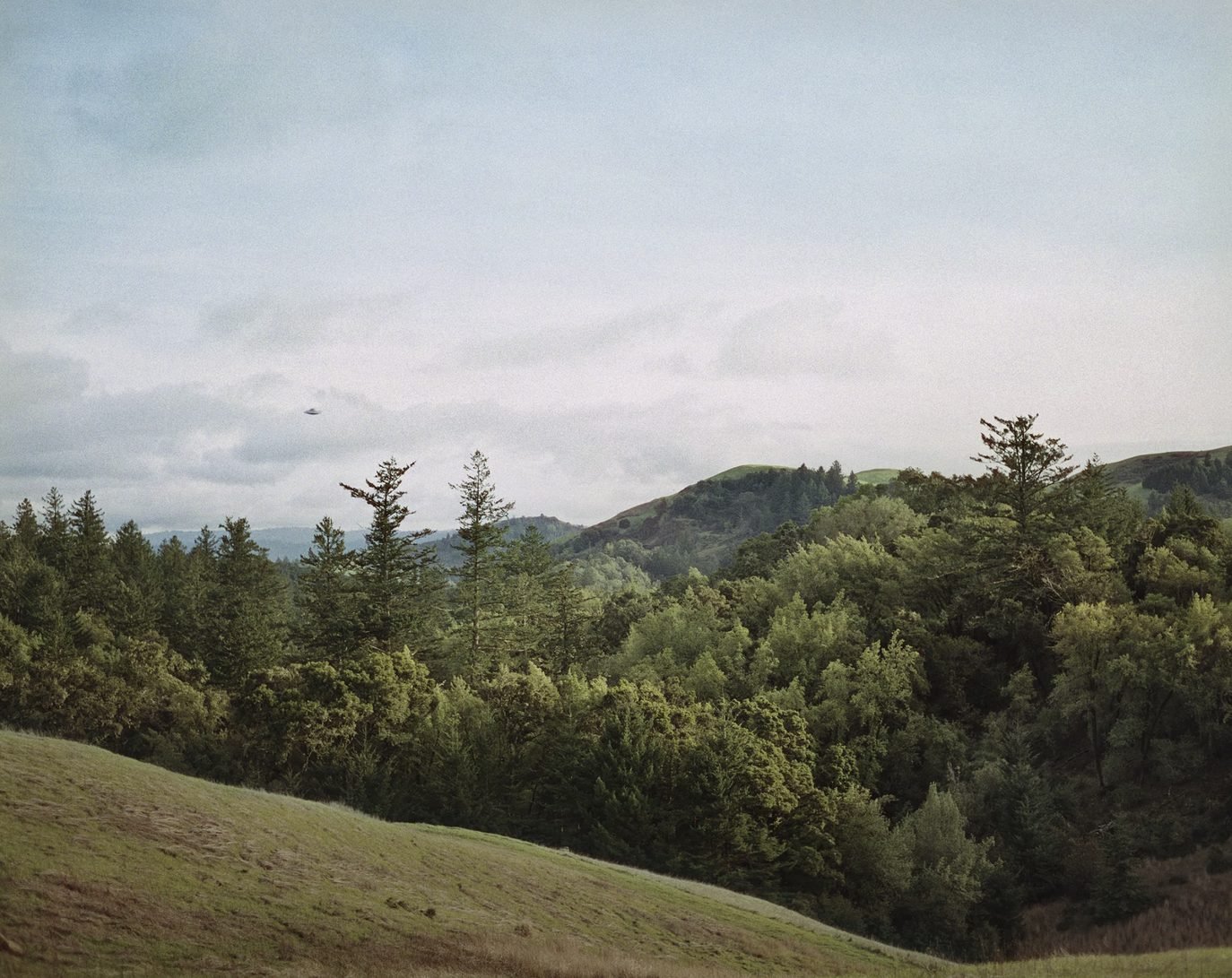
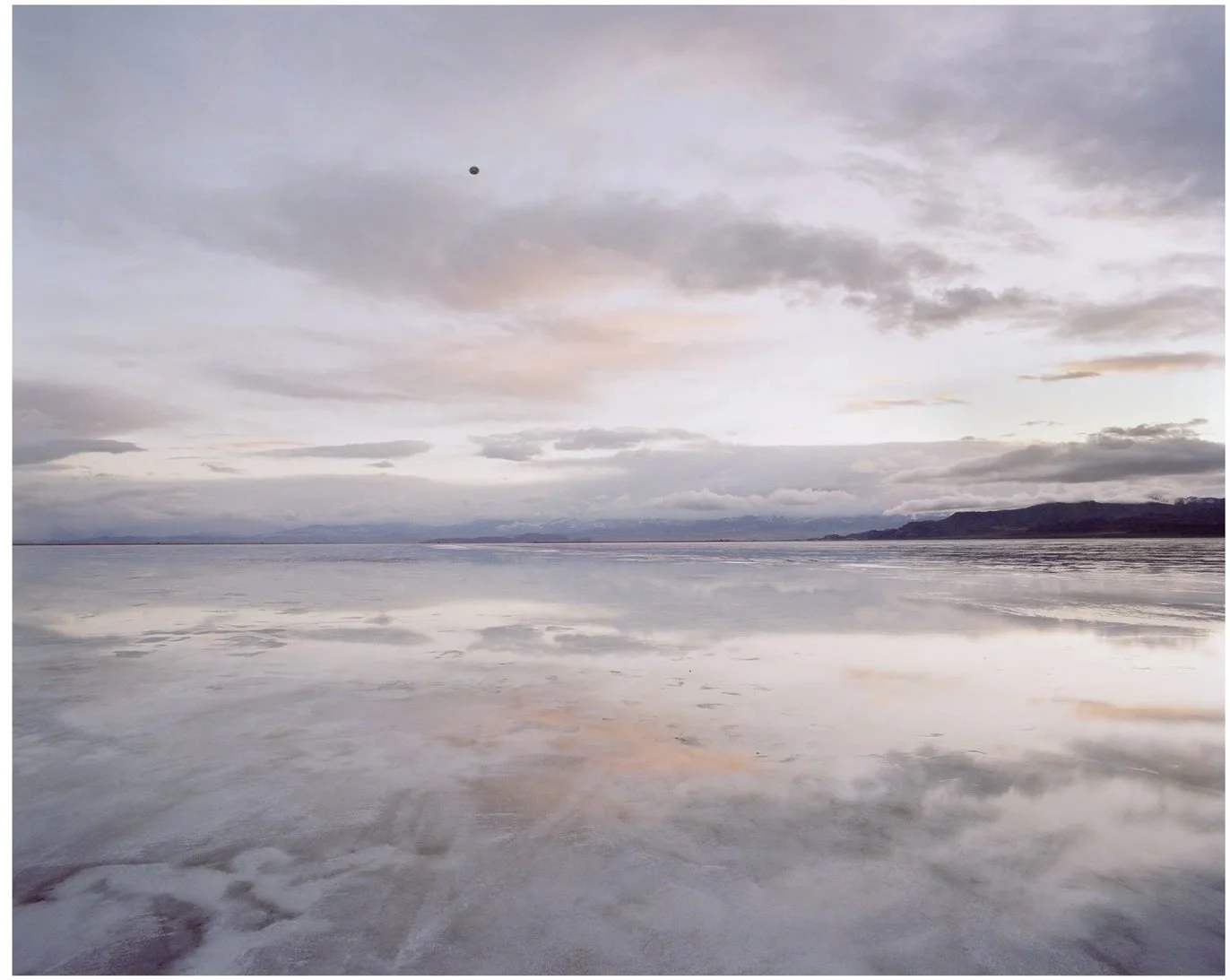
Paglen’s 2025 exhibition Cardinals presented photographs of unusual aerial phenomena recorded in the American West over approximately two decades. These works occupy an unstable threshold between observation, secrecy, evidence, belief, and speculation. (Pace Gallery)
A strange light in the sky may be:
military technology;
sensor artifact;
aircraft;
classified experiment;
natural phenomenon;
misidentification;
projection;
unknown object.
The image does not necessarily resolve the question.
Instead, it examines the conditions under which uncertainty becomes culturally charged.
The sky becomes a surface onto which people project:
fear;
conspiracy;
technological awe;
extraterrestrial fantasy;
mistrust of institutions.
The Horizon and the Limit of Certainty
Paglen’s 2026 exhibition The Horizon Waved, and Nothing Was Certain: 2006–2026 brought together new and earlier landscapes and skyscapes addressing surveillance, secret military infrastructure, machine vision, and unidentified objects in orbit. (Jessica Silverman Gallery)
The title captures a central condition of the practice.
The horizon traditionally offers orientation.
It separates land from sky.
It stabilizes the image.
But in Paglen’s work, the horizon may shimmer, blur, or become unreliable.
The line dividing what is visible from what is hidden begins to move.
This is not only optical instability.
It is epistemological instability.
What can be known?
What can be trusted?
What lies beyond the image?
What systems are operating outside public awareness?
The Central Contradiction
The deepest contradiction in Paglen’s practice is:
He uses images to expose systems whose power increasingly depends on images that people never see.
The work is:
documentary and uncertain;
beautiful and politically disturbing;
evidentiary and incomplete;
technically precise and visually blurred;
public and concerned with secrecy;
humanly viewed and increasingly about machine vision;
critical of infrastructure and dependent upon infrastructure;
revelatory and aware that complete revelation is impossible.
The work cannot fully escape the systems it investigates.
Photography relies on optical technology.
Digital images rely on computation.
Exhibitions rely on institutions.
Research relies on data.
That contradiction gives the practice its pressure.
The Viewer’s Position
Paglen positions the viewer as someone attempting to see from a structurally disadvantaged position.
The viewer is given:
a blur;
a streak;
a distant point;
a grid;
a classification;
a fragment of infrastructure.
The work requires:
curiosity;
contextual knowledge;
doubt;
patience;
willingness to look beyond immediate appearance.
But the viewer also becomes implicated.
Many of the systems Paglen studies depend upon ordinary participation:
smartphones;
social media;
cloud services;
location data;
facial images;
online behavior;
automated recommendations.
The observer is also being observed.
The user is also a data source.
The viewer stands inside the system being examined.
How the Medium Thinks
Paglen’s media are chosen according to the structures under investigation.
Photography
Photography carries documentary authority while revealing the limits of visibility.
Astronomy
Astronomical observation makes classified objects in orbit publicly perceptible.
Geography
Geography locates supposedly immaterial power within territory and infrastructure.
Machine learning
Machine learning reveals how automated systems classify and act upon images.
Sculpture
Sculpture materializes satellites, networks, and technological propositions at bodily scale.
Installation
Installation places viewers inside informational, perceptual, or communications systems.
Writing and research
Writing makes visible the institutional and technical knowledge that photographs alone cannot communicate.
The practice remains coherent because every medium asks how seeing is organized by power.
What the Practice Has Discovered
Across photography, investigation, engineering, sculpture, and artificial intelligence, Paglen’s work appears to have produced several major discoveries.
1. Invisibility is often manufactured
Systems remain unseen through distance, classification, technical complexity, legal secrecy, and perceptual habit.
2. Landscape is infrastructure
Deserts, oceans, clouds, and skies contain political and technological systems.
3. Visibility is unequally distributed
Power often sees clearly while remaining difficult to see in return.
4. Images increasingly act without human viewers
Machine-readable images can classify, target, predict, and govern.
5. Classification produces reality
Datasets and labels do not merely describe the world; they shape how institutions treat it.
6. Beauty can reveal and conceal power simultaneously
A beautiful photograph can attract attention while risking the aestheticization of surveillance.
7. Digital systems remain physically grounded
The cloud depends upon cables, servers, sensors, satellites, and territory.
8. Counter-images can become counter-infrastructures
Art can sometimes produce alternative uses of technology rather than merely criticizing existing ones.
The Artistic Capacity
Paglen has developed the capacity to make hidden infrastructures perceptible without pretending they have become fully transparent.
He can make:
a blurred landscape reveal secrecy;
a satellite trail become a political image;
a cloud become a site of machine perception;
a training dataset become cultural history;
a distant drone expose unequal vision;
a beach become global communications infrastructure;
an abstract image reveal machine misrecognition;
a satellite become a speculative public artwork.
His work depends on integration.
Research does not merely accompany the photograph.
It changes what the photograph is.
The image gives the research perceptual force.
The research gives the image political specificity.
The World Paglen Has Built
Paglen’s artistic world includes recurring:
deserts;
horizons;
skies;
satellites;
drones;
cables;
classified architecture;
clouds;
datasets;
grids;
machine vision;
surveillance interfaces;
strange lights;
hidden networks.
These forms belong to one sustained inquiry because they all concern the politics of perception.
What can be seen?
By whom?
For what purpose?
With what consequences?
The world feels uncanny because ordinary visual experience is surrounded by hidden systems that observe, classify, and act.
Is the Language Still Learning?
Paglen’s visual vocabulary is increasingly recognizable.
A blurred military landscape, satellite trail, machine-vision grid, or algorithmically processed cloud can now appear immediately “Paglen-like.”
This creates a critical risk.
Secrecy and technological complexity can generate significance before the specific inquiry has been fully developed.
The central question is:
Does each new work reveal a new structure of perception and power, or does it repeat the atmosphere of hidden technological menace?
The language remains alive when:
a new sensing technology changes what visibility means;
machine vision alters the role of the image;
influence operations shift the inquiry from observation to belief;
counter-infrastructure creates another use for technology;
uncertainty itself becomes politically consequential;
an apparently familiar landscape reveals a newly emerging system.
His 2025–26 exhibitions and projects continue expanding from surveillance and AI toward uncertain aerial phenomena, conspiracy, influence, and the production of belief. (Jessica Silverman Gallery)
The work weakens when technical opacity becomes a substitute for formal or conceptual discovery.
Complexity is not automatically depth.
Risks and Limits
Paglen’s practice faces several important risks.
Research overpowering encounter
The contextual information may be more compelling than the image itself.
Beauty aestheticizing violence
Atmospheric photographs can make military and surveillance systems visually seductive.
Technical authority becoming prestige
Specialized knowledge may grant the artist authority that viewers cannot independently evaluate.
Critique reproducing extraction
The use of datasets and human images may repeat ethical problems involving consent and classification.
Secrecy becoming romantic
Hidden systems can acquire mystery and fascination that overshadow their consequences.
Machine vision becoming generalized
Different automated systems operate through different goals, institutions, and risks. “AI” can become too broad a category.
Exposure without change
Making a system visible does not necessarily weaken it.
These risks do not diminish the work’s importance.
They define the pressures its strongest projects must confront.
What the Work Expands
Paglen expands what landscape art can address.
Landscape can include:
orbital space;
military secrecy;
communications systems;
machine perception;
undersea infrastructure;
data circulation.
He expands what documentary photography can be.
A documentary image may show not only the subject, but the structural difficulty of seeing it.
He expands what image politics means.
The problem is no longer only how humans represent one another.
It is also how machines classify people and how images trigger automated action.
Most importantly, Paglen reveals that vision is not simply a natural human faculty.
It is increasingly engineered, distributed, automated, privatized, and weaponized.
What Artists Can Learn
The lesson is not to photograph drones, satellites, cables, or computer screens merely because technology feels contemporary.
The deeper lesson is to ask:
What system is shaping experience while remaining absent from ordinary representation?
An artist can investigate:
what the environment hides;
what infrastructure enables;
what classifications determine;
what viewers are trained not to notice;
how the image participates in action;
who possesses the power to observe;
what remains invisible to the person being judged.
Paglen also demonstrates how research can become form.
Distance can become blur.
Secrecy can become partial visibility.
Classification can become a grid.
Orbital infrastructure can become a mark across the sky.
Machine interpretation can become a strange image.
The subject is not merely explained.
It changes how the work must look.
His practice also deepens the inquiry into performed identity.
A person does not only perform for other people.
Increasingly, the person performs for systems that:
scan;
classify;
rank;
predict;
approve;
reject;
target;
recommend.
The machine may misunderstand the performance.
But its misunderstanding can still have consequences.
Paglen’s achievement is to make the politics of seeing visible: to reveal that contemporary reality is increasingly organized by hidden infrastructures and nonhuman observers whose images, classifications, and decisions shape the world without ever becoming fully available to public view.