Cynthia Talmadge: An Artist Exploring the Romantic Dark Side of Contemporary Americana

Cynthia Talmadge is a New York-based artist known for her paintings, photographs, and installations that explore the dark side of contemporary Americana and tabloid culture. Her work often deals with themes of loss, trauma, and the mediated portrayal of these experiences. Talmadge's work is characterized by its use of heightened emotional states, evocative imagery, and a blurring of the lines between reality and fiction.
Early Life and Education
Born in 1989 in New York City, Talmadge grew up in a family that was involved in the arts. Her mother was a painter and her father was a photographer, and she was exposed to art from a young age. Talmadge studied art at the New York University, where she received her BFA in 2012.

Artistic Style and Themes
Talmadge's work is often described as being "romantically dark". She is drawn to subjects that explore the underside of human experience, such as loss, trauma, and the media's portrayal of these experiences. Her work is often characterized by its use of heightened emotional states, evocative imagery, and a blurring of the lines between reality and fiction.
Notable Works
One of Talmadge's most notable works is her 2018 installation "1076 Madison", which consisted of eight paintings of the venerable Frank E. Campbell funeral home. The paintings are rendered in a pointillist style, which gives them a sense of both precision and impermanence. The installation also included a life-sized photograph of the funeral home's entrance, which was covered in a shroud of black fabric.

Influences
Talmadge's work is influenced by a variety of sources, including American pop culture, classical painting, and contemporary art. She is particularly interested in the work of artists such as Edward Hopper, Andy Warhol, and Cindy Sherman.
Future Directions
Talmadge is a rising star in the art world, and her work is sure to continue to be seen and discussed in the years to come. She is a fearless and innovative artist who is not afraid to explore the darker aspects of the human experience. On view at 56 Henry in NYC.

Unveiling the Raw Emotions of Marlene Dumas: A Journey into the Depths of Human Experience

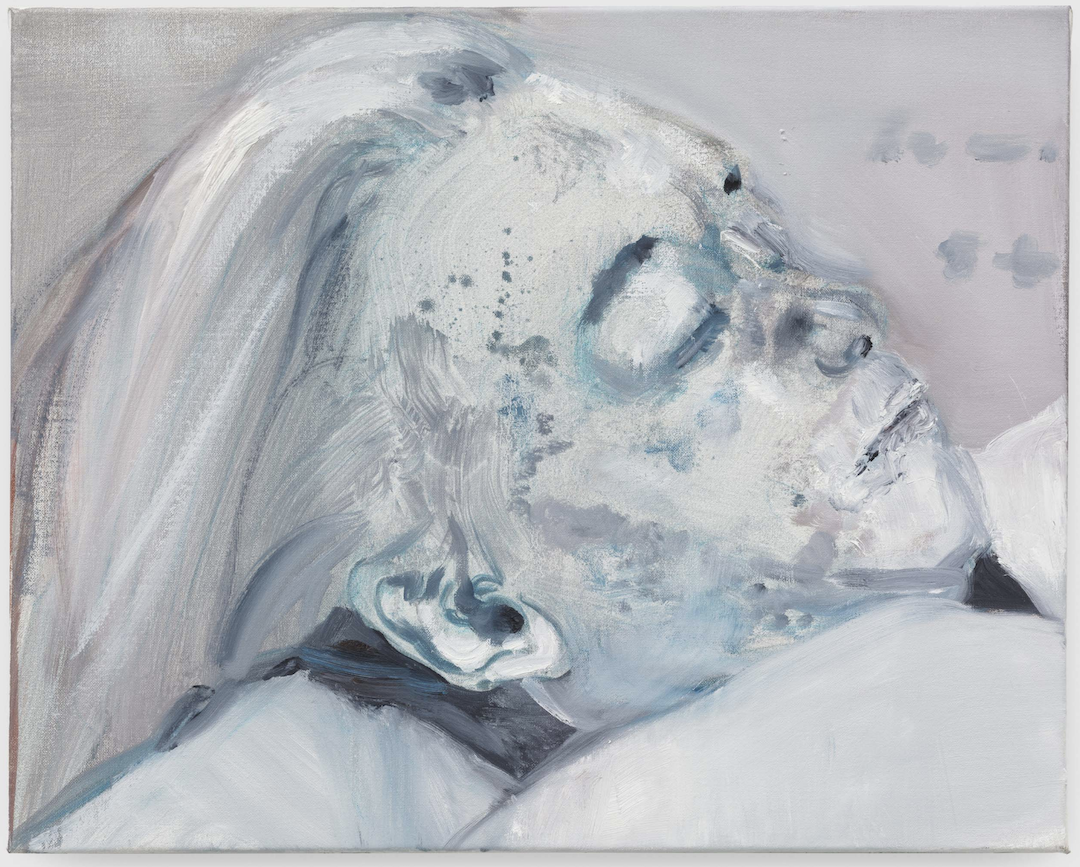
In the world of contemporary art, where abstraction and conceptualism often reign supreme, Marlene Dumas stands out as a singular voice, a painter who fearlessly delves into the depths of human emotion, exploring themes of vulnerability, trauma, and identity. Her work is a captivating blend of raw emotion, raw paint, and raw honesty, challenging viewers to confront the uncomfortable truths that lie beneath the surface of human experience.
Unveiling the Human Condition
Dumas's paintings are not for the faint of heart. They are confrontational, often unsettling, and unapologetically raw. She tackles subjects that others shy away from, portraying the human condition in all its messy, contradictory glory. Her figures, often children or women, are rendered in a loose, expressive style, their faces contorted in pain, their bodies bearing the marks of suffering.
A Master of Emotion
Dumas's mastery lies in her ability to capture the essence of human emotion, to distill it down to its purest form. Her paintings are visceral, evoking a sense of empathy and unease in the viewer. She uses color and texture to convey the intensity of her emotions, her brushstrokes often rough and agitated, mirroring the turmoil within her subjects.

A Mirror to Society
Dumas's work is not just about personal introspection; it also serves as a powerful commentary on society. She explores themes of race, gender, and power, shedding light on the injustices and inequalities that plague our world. Her paintings are a stark reminder of the fragility of human life, the vulnerability of the individual in the face of societal forces.
A Legacy of Raw Honesty
Marlene Dumas is an artist who dares to confront the darkness, who refuses to shy away from the uncomfortable truths of human existence. Her work is a testament to the power of art to provoke, to challenge, and to illuminate the human condition. She is a true original, a painter who has left an indelible mark on the contemporary art scene.

Criticisms and Suggestions
While Dumas's work is undeniably powerful, there are some who argue that her focus on the negative aspects of human existence can become overly bleak and depressing. Her paintings can be difficult to digest, and some viewers may find them too emotionally draining.
One suggestion for Dumas might be to explore a wider range of emotions in her work, to incorporate moments of joy and beauty alongside the darkness. This could help to balance her work and make it more accessible to a wider audience.
Conclusion
Despite any criticisms, Marlene Dumas remains an important and influential artist. Her work is a powerful reminder of the raw and unfiltered nature of human experience, and it challenges us to confront the uncomfortable truths that we often try to ignore. She is a true visionary, an artist who dares to go where others fear to tread.
The Enchanting Abstractions of Tomma Abts: A Journey into Geometric Harmony

The Enchanting Abstractions of Tomma Abts: A Journey into Geometric Harmony
In the realm of abstract art, where colors dance and shapes intertwine, Tomma Abts is a captivating figure, her paintings whispering tales of harmony and precision. Her works, often small in scale yet grand in impact, have captivated audiences worldwide, earning her the prestigious Turner Prize in 2006.
A Symphony of Shapes
Abts' paintings are like musical compositions, each element meticulously arranged to create a harmonious whole. She employs a limited palette, often relying on shades of white, gray, and black, with occasional bursts of vibrant hues. Yet, within this seemingly restricted range, she conjures an astonishing diversity of shapes, patterns, and textures.
Her paintings are devoid of recognizable objects or figures, instead inviting viewers to immerse themselves in the interplay of geometric forms. Triangles, squares, circles, and arcs intertwine, their edges meeting and parting in graceful dances. The viewer's eye is drawn along these lines, tracing the contours of each shape, becoming an active participant in the visual symphony.

The Language of Precision
Abts' paintings are not merely aesthetic delights; they are also testaments to her meticulous craftsmanship. She employs a laborious process, carefully measuring and masking each area of her paintings before applying the paint. The result is a flawless surface, devoid of any visible brushstrokes.
This precision extends beyond the physical execution to the underlying conceptual framework of her work. Abts adheres to a set of self-imposed rules, determining the placement and proportions of each shape. This rigorous approach lends her paintings a sense of order and balance, a welcome respite from the chaos of the modern world.

The Allure of Abstraction
Abts' abstract paintings offer a unique invitation to interpretation. Unlike representational art, which provides a clear narrative or subject matter, Abts' works leave the viewer to their own devices. Each person brings their own experiences, emotions, and perspectives to the encounter, forging a personal connection with the artwork.
This open-endedness is part of the allure of Abts' work. It allows viewers to project their own interpretations, to find meaning and beauty in the intricate arrangements of shapes and colors. Her paintings become a mirror, reflecting the viewer's inner world.
A Legacy of Abstraction
Abts' contributions to the world of abstract art are undeniable. Her paintings have captivated audiences and critics alike, earning her a place among the most influential contemporary artists. Her work serves as a testament to the power of abstraction to evoke emotion, inspire thought, and challenge our perceptions of the world around us.
As Abts continues to explore the vast expanse of abstract art, her paintings promise to remain a source of fascination and inspiration for years to come. Her legacy lies in her ability to transform simple geometric forms into captivating visual narratives, inviting us to embark on a journey of discovery within the realm of pure abstraction.paintings.

Katherine Bernhardt: A Pop Art Powerhouse

In the realm of contemporary art, Katherine Bernhardt stands out as a vibrant and captivating force. Her paintings, bursting with color and energy, capture the essence of pop culture icons, everyday objects, and the mundane details of modern life. With her bold brushstrokes and playful patterns, Bernhardt transforms the ordinary into something extraordinary, inviting viewers to reconsider the familiar through a fresh lens.
The Allure of the Mundane
Bernhardt's fascination with the mundane is what sets her apart from many other artists. While others seek inspiration in grand themes or exotic locales, Bernhardt finds beauty and intrigue in the everyday. She draws her subjects from the detritus of contemporary life – food, toys, household items, and even the pixels on a computer screen. By elevating these ordinary objects to the status of art, Bernhardt challenges our perceptions of value and significance.

A Playful Dialogue with Pop Culture
Bernhardt's paintings are not just about the objects themselves; they are also about the cultural associations and meanings that we attach to them. She often depicts pop culture icons, such as Mickey Mouse, SpongeBob SquarePants, and Hello Kitty, in her signature repetitive patterns. These iconic figures, once symbols of childhood innocence, become transformed in Bernhardt's hands, taking on a new and unexpected energy.
A Visual Symphony of Color and Pattern
Bernhardt's paintings are a feast for the eyes, awash with vibrant colors and mesmerizing patterns. She employs a wide range of techniques, from delicate brushwork to bold impasto, creating a captivating visual experience. Her patterns, often inspired by African textiles, add a layer of rhythmic complexity to her compositions, drawing the viewer into her world of color and energy.

A Master of Repetition
Repetition is a key element in Bernhardt's work. She often paints her subjects in a repetitive grid pattern, creating a sense of order and chaos simultaneously. This repetition allows the viewer to focus on the individual object while also appreciating the overall composition. It is through this interplay of repetition and variation that Bernhardt's paintings achieve their hypnotic effect.

An Artist for the Contemporary Age
Katherine Bernhardt's work is a reflection of our contemporary world, where mass media and consumerism reign supreme. She captures the ever-changing landscape of popular culture and the bombardment of images that we face daily. Through her playful and energetic paintings, Bernhardt invites us to reconsider our relationship with the objects and symbols that surround us, encouraging us to find beauty and meaning in the unexpected.

Criticism and Suggestions for Further Exploration
While Bernhardt's work is undeniably engaging and thought-provoking, one could argue that it occasionally lacks depth and exploration beyond the surface level of her subjects. To further elevate her work, Bernhardt could delve deeper into the cultural and social implications of her chosen objects and symbols. Additionally, she could experiment with different mediums and techniques, perhaps incorporating photography or sculpture into her practice.
Katherine Bernhardt is a captivating and thought-provoking artist who challenges our perceptions of the everyday. Her vibrant paintings, filled with pop culture icons and mundane objects, are a celebration of the ordinary and a testament to the power of art to transform the familiar into something extraordinary. Through her playful and energetic work, Bernhardt invites us to reconsider our relationship with the objects and symbols that surround us, encouraging us to find beauty and meaning in the unexpected.

Lisa Yuskavage: A Painter of Subversive Beauty

In the realm of contemporary art, Lisa Yuskavage stands as a captivating and provocative figure. Her paintings, a blend of vibrant colors, distorted figures, and cheeky humor, challenge traditional notions of femininity and beauty. Yuskavage's work is not for the faint of heart; it's bold, unapologetic, and often jarring, yet it's also undeniably captivating.
A Challenge to Conventional Beauty
Yuskavage's paintings feature women as their central subjects, but these are not the idealized, flawless figures we're accustomed to seeing in art. Instead, her women are distorted, their bodies contorted in ways that defy conventional beauty standards. They're often adorned with gaudy makeup, their hair a tangled mess, and their expressions a mix of defiance and vulnerability.
Through these distorted figures, Yuskavage challenges our perceptions of beauty, forcing us to confront the arbitrary nature of societal norms. Her women are not meant to be objects of desire; they're complex individuals with their own stories and identities.

A Blend of Techniques and Influences
Yuskavage's paintings are a masterclass in technique. She employs a variety of mediums, including oil paint, acrylic, and collage, to create a rich and layered effect. Her brushwork is both delicate and forceful, capturing the nuances of her subjects' expressions and textures.
Yuskavage's work draws inspiration from a wide range of sources, including Pop Art, Surrealism, and Outsider Art. She's particularly influenced by the work of artists like Gustav Klimt, Egon Schiele, and Roy Lichtenstein.


A Painter of Our Times
Yuskavage's work is not just a commentary on beauty standards; it's also a reflection of our contemporary world. Her paintings are filled with references to popular culture, from fashion and makeup to social media and reality TV. In this way, Yuskavage holds up a mirror to our society, capturing its obsessions, anxieties, and contradictions.
Why Should We Care About Lisa Yuskavage's Work?
Lisa Yuskavage is an important artist because she challenges us to think critically about the world around us. Her work is not meant to be passive entertainment; it's meant to provoke thought and conversation. She forces us to question our assumptions about beauty, gender, and identity.
Yuskavage's work is also valuable because it's beautiful in its own right. Her paintings are visually arresting, full of energy and vitality. They're a feast for the eyes and a challenge for the mind.

Ad Reinhardt: The Master of Minimalism

A Life Dedicated to Art
Adolph Friedrich Reinhardt, known as Ad Reinhardt, was an American abstract expressionist painter who is best known for his monochromatic black paintings. He began his career as a figurative painter, but he soon became interested in abstraction.
In the 1940s, Reinhardt joined the American Abstract Artists (AAA), a group of abstract painters who were committed to non-representational art. He also began to experiment with different forms of abstraction, including geometric abstraction, biomorphic abstraction, and abstract expressionism.

The Black Paintings
In the 1950s, Reinhardt began to focus on monochromatic paintings, which he called "black paintings." These paintings were typically square or nearly square, and they were painted with very thin layers of black paint. Reinhardt was interested in the idea of creating paintings that were so minimalist that they would transcend the boundaries of art and become something else entirely.

A Unique Artistic Vision
Reinhardt's black paintings are often seen as a challenge to the viewer. They are devoid of any recognizable forms or symbols, and they can be difficult to look at for extended periods of time. However, Reinhardt believed that his black paintings were a way of achieving a higher level of consciousness. He argued that by stripping away all distractions, the viewer could focus on the pure essence of color and form.
Reinhardt's black paintings are still considered to be some of the most important works of abstract art ever created. They are a testament to his unique artistic vision and his commitment to exploring the limits of painting.

Why Should We Care About Ad Reinhardt's Work?
There are many reasons why we should care about Ad Reinhardt's work. First, his black paintings are a major contribution to the history of abstract art. They are a reminder that art can be about more than just creating beautiful images. It can also be about exploring the nature of reality and consciousness.
Second, Reinhardt's work is a challenge to us to think about what art is and what it can do. His paintings are not meant to be easy or comfortable. They are meant to make us think and to challenge our assumptions about the world.
Finally, Reinhardt's work is a reminder of the power of art to transcend boundaries. His black paintings are a testament to the fact that art can be universal and can speak to people of all cultures and backgrounds. On view at Art Basel Miami Beach and David Zwirner Gallery.

A Painter of Melancholy and Mystery: Unveiling the World of Noah Davis

A Painter of Melancholy and Mystery: Unveiling the World of Noah Davis
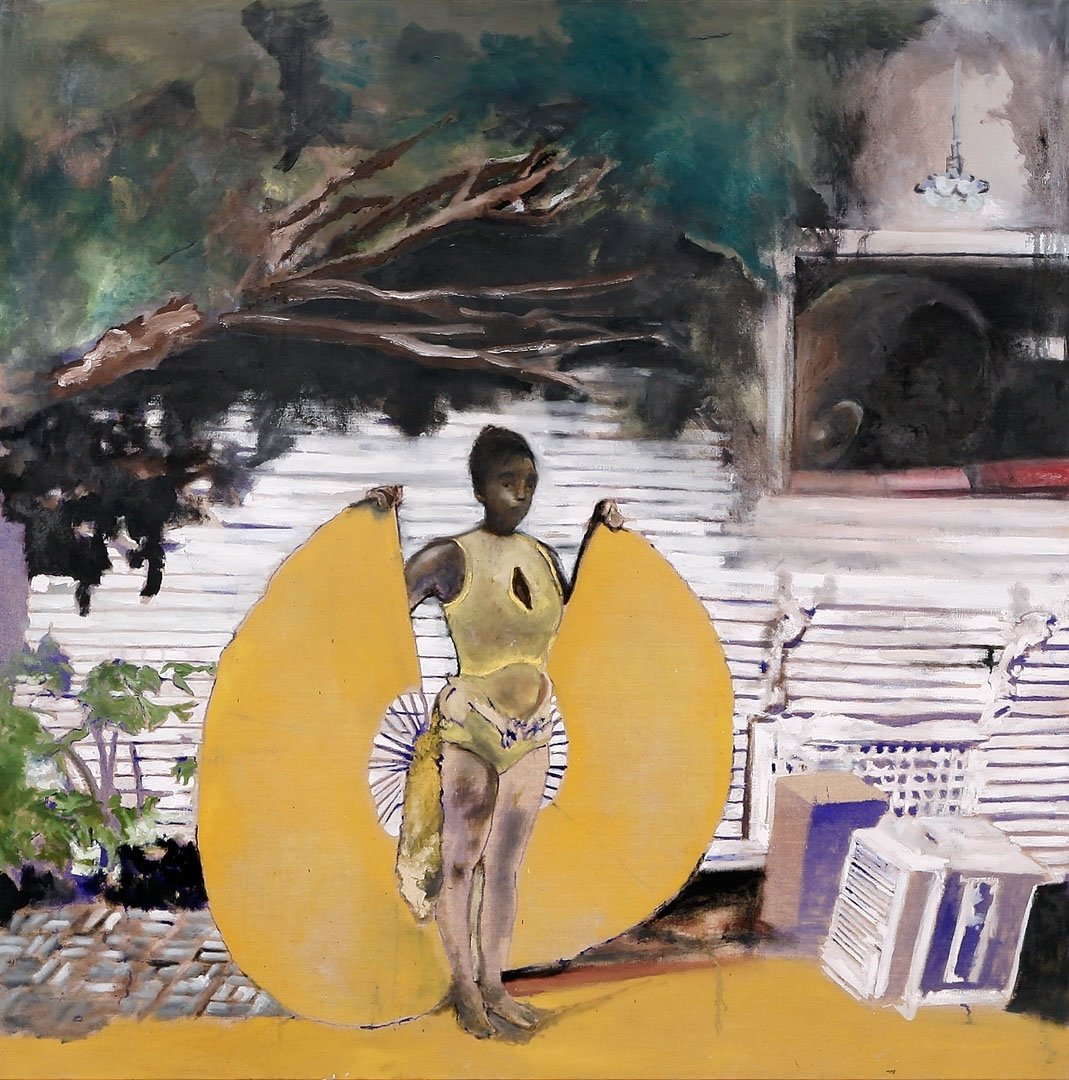
In the realm of contemporary art, Noah Davis stands as a captivating enigma, a painter whose works exude a haunting beauty and enigmatic allure. His canvases, often shrouded in shadowy depths and populated by ethereal figures, invite viewers into a realm of profound introspection and unspoken emotions. Davis's art is not merely about aesthetics; it's an exploration of the human condition, a poignant reflection on the fragility of existence, and the unspoken depths that lie beneath the surface of our everyday lives.
A Master of Mood and Atmosphere
Davis's paintings are masterful orchestrations of mood and atmosphere. His use of color is both subtle and evocative, with muted tones and shadowy hues creating a sense of melancholic introspection. The figures that inhabit his canvases are often indistinct, their forms blurred, as if emerging from a dream or a distant memory. This deliberate ambiguity adds to the enigmatic nature of his work, inviting viewers to project their own interpretations and emotions onto the scene.
Exploring the Human Psyche
Davis's paintings are not merely visually striking; they are deeply psychological explorations of the human condition. His figures, often isolated and alone, seem to embody a sense of alienation and existential angst. The barren landscapes and shadowy backgrounds that surround them further amplify this feeling of isolation and vulnerability.
A Legacy of Unfulfilled Promise
Noah Davis's life and career were tragically cut short at the age of 32 due to a rare form of cancer. Despite his brief time on earth, he left an indelible mark on the art world, with his paintings now held in prestigious collections and attracting critical acclaim. His work continues to resonate with audiences, offering a profound and moving exploration of the human condition.

Key Questions to Unravel Noah Davis's Art
To fully appreciate the depth and complexity of Noah Davis's work, consider these essential questions:
What emotions do his paintings evoke in you?
How do his use of color and composition contribute to the overall mood and atmosphere of his work?
What do you think the indistinct figures in his paintings represent?
How does the use of negative space and shadowy backgrounds enhance the sense of mystery and ambiguity in his work?
What is the significance of the titles of his paintings?
Criticisms
While Noah Davis's work is undoubtedly captivating, there are areas where he could have continued to evolve and expand his artistic expression. A stronger emphasis on narrative elements could have added depth and intrigue to his paintings. Additionally, exploring a wider range of technical approaches, such as incorporating mixed media or experimenting with different textures, could have further enriched his artistic vocabulary.
Noah Davis's art is a testament to the power of painting to evoke profound emotions and explore the complexities of the human experience. His paintings continue to captivate and inspire, leaving an indelible mark on the world of contemporary art. On view at Art Basel Miami and David Zwirner Gallery.

Elizabeth Peyton: Capturing the Essence of Pop Culture Icons

Elizabeth Peyton, an American contemporary artist, has captivated the art world with her intimate and emotive portraits of cultural figures, ranging from musicians, actors, and artists to historical figures and close friends. Her paintings, often rendered in a loose, expressive style reminiscent of Expressionism and Pop Art, capture the essence of her subjects with a unique blend of immediacy and intimacy.
Peyton's work is deeply personal, often drawing inspiration from her own life and the people she encounters. Her portraits are not mere likenesses; they are imbued with a sense of psychological depth and emotional resonance. She captures the fleeting expressions, subtle gestures, and aura of her subjects, revealing their inner lives in a way that is both captivating and enigmatic.

What Makes Peyton's Work Stand Out?
There are several key elements that make Elizabeth Peyton's work so distinctive and engaging:
Emotional Resonance: Peyton's portraits convey a sense of emotionality that is often raw and unfiltered. She captures the vulnerability, intensity, and complexity of her subjects' emotions, inviting viewers into their inner worlds.
Intimacy and Immediacy: Peyton's paintings are often small in scale, creating a sense of intimacy and immediacy. She draws her subjects close, capturing their features and expressions with a sense of directness and immediacy.
Expressive Style: Peyton's paintings are characterized by a loose, expressive style that draws inspiration from Expressionism and Pop Art. She employs bold brushstrokes, vibrant colors, and simplified forms to convey the essence of her subjects.

How to Interpret Peyton's Work
To fully appreciate Elizabeth Peyton's work, it is essential to approach her paintings with an open mind and a willingness to engage with the emotional resonance she evokes. Consider the following questions as you view her work:
What emotions does the portrait convey?
How does the artist's use of color, form, and technique contribute to the emotional impact of the work?
What can you learn about the subject's personality or inner state from the portrait?
What personal connections do you have to the subject or the emotions expressed in the painting?

Why is Elizabeth Peyton Important?
Elizabeth Peyton is an important figure in contemporary art for several reasons:
Reviving Figuration: Peyton's work played a significant role in reviving figuration in contemporary art during the 1990s, when abstraction was dominant. Her portraits demonstrated that figurative painting could be both relevant and expressive in the contemporary context.
Unique Perspective: Peyton's unique approach to portraiture, characterized by her expressive style, intimate scale, and emphasis on emotional resonance, sets her apart from other portrait painters.
Cultural Significance: Peyton's portraits of cultural figures capture the zeitgeist and offer insights into contemporary culture. Her work has documented the cultural landscape of the past few decades, reflecting the changing faces of music, art, and popular culture.
Peyton Among Her Contemporaries
Elizabeth Peyton's work can be compared to that of other contemporary portrait artists, such as Kehinde Wiley, who similarly explore themes of identity, representation, and cultural significance. However, Peyton's distinctive style, characterized by her loose brushstrokes, vibrant colors, and intimate scale, sets her apart from other portraitists.
Why Should You Care About Elizabeth Peyton's Work?
Elizabeth Peyton's work offers a unique and engaging perspective on portraiture and contemporary culture. Her paintings are not just representations of famous faces; they are intimate explorations of human emotion and the power of art to capture the essence of an individual. Her work is a reminder that art can be deeply personal, expressive, and relevant to our lives.
Criticism
While Elizabeth Peyton's work is widely acclaimed, some critics have suggested that her paintings could benefit from greater attention to detail and a more nuanced exploration of her subjects' identities. Additionally, some critics have noted that her work can sometimes appear formulaic, lacking the depth and complexity of her most successful portraits.
In conclusion, Elizabeth Peyton is a remarkable artist who has made significant contributions to contemporary portraiture. Her work is characterized by its emotional resonance, intimacy, and expressive style, offering a unique and engaging perspective on the power of art to capture the essence of an individual. As she continues to evolve and experiment, Peyton is sure to remain a leading figure in the art world for years to come. Currently on view at Art Basel Miami and David Zwirner Gallery.
A Canvas of Minimalism: Unraveling the Allure of Robert Ryman's White Paintings

In the realm of art, where self-expression and bold strokes often dominate the canvas, Robert Ryman stands as a quiet anomaly, a master of minimalism who dared to make white his signature color. His paintings, devoid of vibrant hues or dramatic compositions, exude a captivating simplicity that has intrigued and perplexed art enthusiasts for decades.
Ryman's journey into the world of white began in the 1950s, inspired by the works of Abstract Expressionist masters like Mark Rothko and Jackson Pollock. However, he sought to transcend their emotional intensity, opting instead for a more restrained approach. His canvases became blank slates, devoid of any recognizable imagery, inviting viewers to engage in a contemplative dialogue with the inherent qualities of paint itself.

What makes Ryman's work so compelling is its ability to transform the mundane into the extraordinary. He elevates white paint from a mere background color to a protagonist, showcasing its subtle variations in tone, texture, and luminosity. His brushstrokes, delicate and precise, dance across the surface, creating subtle variations in light and shadow that mesmerize the eye.
To truly appreciate Ryman's work, one must approach it with an open mind and a willingness to embrace the quietude it exudes. His paintings are not meant to be deciphered or analyzed in a traditional sense; they are meant to be experienced, allowing the viewer to delve into their meditative depths.

Ryman's importance lies in his ability to challenge the very perception of art. He strips away the distractions of narrative and symbolism, forcing us to confront the essence of painting itself. His work is a testament to the power of simplicity, demonstrating that beauty can reside in the most understated forms.
In a world saturated with visual noise, Ryman's white paintings offer a sanctuary of tranquility, a reminder that sometimes less is indeed more. His work is an invitation to slow down, to observe the world around us with renewed clarity, and to appreciate the subtle beauty that often goes unnoticed.

While Ryman's work has garnered critical acclaim and a devoted following, some critics have questioned his artistic approach, suggesting that his paintings lack the emotional depth and intellectual complexity found in other art forms. However, it is precisely this lack of overt meaning that makes Ryman's work so compelling. His paintings are open-ended, inviting viewers to project their own interpretations and emotions onto the canvas.
In a world that craves instant gratification and easily digestible narratives, Ryman's work stands as a testament to the power of patience, contemplation, and the appreciation of subtle beauty. His paintings are not meant to be rushed through or passively consumed; they demand our time, our attention, and our willingness to engage in a deeper level of understanding.
If you're seeking a respite from the overwhelming cacophony of modern life, immerse yourself in the serene world of Robert Ryman's white paintings. Let his delicate brushstrokes guide you into a realm of quietude, where the essence of art lies in its purest, most understated form. On view at Art Basel Miami and David Zwirner Gallery

Adam McEwen: Exploring the Tension Between Optimism and Oblivion


Adam McEwen is an American artist whose work explores the tension between optimism and oblivion. He is known for his paintings, sculptures, and drawings that often feature everyday objects, such as ballpoint pens and springs. McEwen's work is often characterized by its use of simple geometric forms and its exploration of the psychological and emotional states of his subjects.
Air Conditioners, Pens, and Sketched Line Drawings: Analogies for Human Emotions and Actions
McEwen's paintings of air conditioners, ballpoint pens, and sketched line drawings all serve as analogies for human emotions and actions. The air conditioners evoke the movement of air and the passage of time, while the ballpoint pens suggest action, expression, and language. The sketched line drawings, with their sense of earnestness and spontaneity, represent human agency and the potential for both success and failure.

Springs: A Symbol of Tension and Release
McEwen's paintings of springs often represent the tension between optimism and oblivion. The springs are depicted in a schematic style, their coils suggesting both potential energy and the possibility of release. In some paintings, the springs are compressed, while in others they are extended. This variation in the springs' states reflects the ebb and flow of optimism and oblivion in human experience.
Rendered in a related style to the springs are ballpoint pens. Taller than a tall person, and thinner, the pens evoke action, expression, and language—but also, ordered in a column, troops marching. Like the springs, they are in motion, busy, taking in and expending energy. These objects analogize human emotions and actions: the springs alternately relaxed or tense and the ink levels of the pens revealing their potential lifespans.
Conclusion
Adam McEwen's art is a complex and nuanced exploration of the tension between optimism and oblivion. His use of everyday objects, his simple geometric forms, and his exploration of psychological and emotional states create a powerful and thought-provoking body of work. McEwen's art challenges us to consider the delicate balance between hope and despair, and the ways in which our emotions and actions shape our experiences of the world.


Albert Oehlen: A Painter of Vibrant Contrasts and Unconventional Methods

A Master of Contradiction
Oehlen's work is characterized by a paradoxical blend of elements. His paintings are both chaotic and controlled, spontaneous yet meticulously planned. He employs a wide range of techniques, from traditional hand-painting to digital manipulation, often within a single work. This deliberate clash of styles creates a sense of tension and intrigue, forcing the viewer to confront and reconcile seemingly contradictory elements.
Figuration and Abstraction in Dialogue
Oehlen's paintings often incorporate figurative elements, but they are not always readily identifiable. He often distorts and fragments recognizable forms, blurring the lines between representation and abstraction. This interplay between figuration and abstraction adds another layer of complexity to his work, inviting viewers to engage in a constant process of interpretation and discovery.

A Critique of the Art World
Oehlen's work is not merely about aesthetics; it also carries a critical commentary on the art world itself. He questions the value placed on technical mastery and the often-elitist nature of the art establishment. His unconventional methods and provocative subject matter challenge viewers to confront their own preconceptions about art and its role in society.
Why Should You Care About Albert Oehlen's Work?
Albert Oehlen's work is important because it challenges us to reconsider our perceptions of art. His paintings are not meant to be passively consumed; they demand active engagement, inviting us to question our assumptions and delve deeper into the complexities of human experience. Through his unconventional methods and provocative imagery, Oehlen forces us to confront the boundaries of what we consider to be "good" art, prompting us to re-evaluate our aesthetic values and appreciate the power of art to challenge and transform.

Criticisms and Suggestions for Improvement
While Oehlen's work is undoubtedly thought-provoking and impactful, some critics have suggested that his paintings can occasionally lack coherence and focus. At times, the sheer abundance of elements and techniques can overwhelm the viewer, making it difficult to discern a clear message or narrative. To enhance the impact of his work, Oehlen could consider refining his compositions, ensuring that the various elements complement each other rather than detracting from the overall impact. Additionally, exploring more nuanced and subtle techniques alongside his bold and expressive ones could add depth and complexity to his work.
In conclusion, Albert Oehlen stands as a significant figure in contemporary art, a painter who has consistently challenged and redefined the boundaries of the medium. His work is a vibrant tapestry of contradictions, a fusion of raw emotion, technical experimentation, and critical commentary. Through his unconventional methods and provocative imagery, Oehlen forces us to reconsider our perceptions of art, inviting us to embrace imperfection, challenge assumptions, and engage in a constant process of interpretation and discovery.

Tauba Auerbach: A Mesmerizing Artist of Perception


In the realm of contemporary art, few names evoke the same level of intrigue and admiration as Tauba Auerbach. Her work, spanning a diverse range of media, captivates viewers with its mesmerizing illusions, intricate patterns, and profound exploration of human perception. Auerbach's practice is a testament to her boundless creativity and her relentless pursuit of understanding the world around us.
A Method Rooted in Materiality
At the heart of Auerbach's artistic process lies a deep fascination with materiality and its transformative potential. She approaches her work with a meticulous precision, carefully selecting and manipulating materials to create works that challenge our perception of reality. In her paintings, for instance, she employs intricate layering techniques and optical illusions to create mesmerizing visual effects that blur the lines between two-dimensional and three-dimensional space.
Auerbach's sculptures further exemplify her mastery of materials. She transforms everyday objects, such as beads, paper, and even soap bubbles, into intricate works of art, imbuing them with unexpected beauty and meaning. Her sculptures invite viewers to reconsider their relationship to the physical world, prompting them to see familiar objects in new and surprising ways.
A Journey of Perception
Auerbach's work is not merely a visual spectacle; it is an invitation to embark on a journey of perception. Her art challenges our assumptions about how we see and understand the world, prompting us to question the boundaries between reality and illusion. Through her masterful manipulation of materials and her relentless exploration of patterns and repetition, Auerbach creates works that are both visually captivating and intellectually stimulating.
Essential Questions to Ponder
When delving into the world of Tauba Auerbach, several questions emerge that serve to deepen our understanding of her artistry and its impact:
How does Auerbach's use of materials and techniques contribute to her exploration of perception?
What role do patterns and repetition play in Auerbach's work, and how do they connect to her investigation of order and chaos?
In what ways does Auerbach's work challenge our conventional understanding of space and dimensionality?
How does Auerbach's work engage with the history of art and contemporary artistic movements?
What is the significance of Auerbach's work in the context of our increasingly digital and mediated world?
Auerbach at Art Basel Miami Beach 2023
Auerbach's work will be featured in the Forms exhibition at Art Basel Miami Beach, a collaborative show between Gagosian and Jeffrey Deitch. The exhibition explored the intersection of abstraction and figuration, and Auerbach's work was a highlight. Her painting Foam (2023) was particularly striking, capturing the essence of air bubbles in acrylic with stunning realism.


Emma Webster: A Painter of Mesmerizing Landscapes and Illusionary Worlds

A Virtuosic Blend of Traditional and Digital
In the realm of contemporary art, Emma Webster stands out as a painter who masterfully blends the traditional medium of oil painting with cutting-edge digital technology. Her work is a captivating exploration of landscapes, both real and imagined.
Her recent exhibition at Jeffrey Deitch gallery in Santa Monica, titled "Intermission," offered a mesmerizing glimpse into her artistic world, showcasing her ability to transform the gallery space into a theatrical stage, blurring the lines between reality and artifice.

Harnessing Virtual Reality for Artistic Expression
Webster's unique approach to painting lies in her meticulously crafted process, which involves utilizing virtual reality (VR) technology to create still life models and scenographic studies. This immersion in the virtual realm allows her to manipulate and reimagine nature, crafting landscapes that are both familiar and fantastical. Her paintings are imbued with a sense of surrealism, as she seamlessly blends the natural world with elements of artifice, creating dreamlike landscapes that defy the boundaries of reality.
The artist's fascination with the illusion of nature stems from her belief that our perception of the world is inherently subjective. She argues that our experiences and memories shape our understanding of the natural world, and that art can serve as a powerful tool to explore these personal and collective narratives. In her paintings, Webster challenges our preconceived notions of landscape, inviting us to question the boundaries between reality and illusion.

Inviting Contemplation of the Interconnected Realms
The result is a body of work that is both captivating and thought-provoking. Webster's landscapes are not merely representations of the natural world; they are carefully constructed narratives that challenge our perceptions of reality and invite us to consider the interconnectedness of the physical and digital realms.
A Resonant Voice in the Contemporary Art Dialogue
Building upon the success of her Santa Monica exhibition, Webster's work will be featured at Art Basel Miami Beach 2023, presented by Perrotin Gallery. This prestigious showcase will provide a wider audience with the opportunity to experience the transformative power of her art.
Emma Webster's artistic journey is one of constant exploration and innovation. She fearlessly pushes the boundaries of painting, using technology and her own imagination to create works that are both visually captivating and intellectually stimulating. Her art is a testament to the power of illusion and the subjective nature of our perception of the world. As she continues to evolve as an artist, we can anticipate even more groundbreaking works that will challenge our understanding of reality and art itself.
ART BASEL MIAMI BEACH 2022: A Glimpse into the World of Contemporary Art

The vibrant city of Miami Beach played host to one of the most prestigious events in the contemporary art world, Art Basel Miami Beach 2022. From December 1st to 4th, the Miami Beach Convention Center transformed into a hub of creativity, showcasing the works of renowned artists from around the globe.
A Legacy of Artistic Excellence
Art Basel traces its roots back to 1970 when a group of gallerists in Basel, Switzerland, decided to organize an art fair to revitalize the city's cultural scene. The event proved to be a resounding success, attracting collectors, art enthusiasts, and media from around the world. Over the years, Art Basel expanded its reach, establishing its presence in Hong Kong and Miami Beach. Today, Art Basel Miami Beach stands as one of the most influential art fairs globally, attracting over 80,000 visitors annually.
A Celebration of Artistic Diversity
Art Basel Miami Beach 2022 brought together over 250 galleries from over 30 countries, showcasing a diverse range of artistic styles, mediums, and perspectives. The fair featured a curated selection of galleries representing the most established and innovative forces in the contemporary art world.
Notable Artists and Galleries
Kehinde Wiley: Known for his vibrant and expressive portraits of Black subjects, Wiley's work challenges traditional notions of representation and celebrates the beauty and diversity of the African diaspora.

Yayoi Kusama: The iconic Japanese artist's immersive installations, covered in her signature polka dots, invite viewers to experience a world of wonder and imagination.

Barbara Kruger: Kruger's bold and confrontational text-based works address critical social and political issues, challenging viewers to confront uncomfortable truths.

Zeng Fanzhi: One of the leading figures of contemporary Chinese art, Fanzhi's paintings explore themes of identity, memory, and the changing landscape of China.

Simone Leigh: Leigh's sculptures, installations, and performances explore the intersection of race, gender, and identity, challenging viewers to confront societal stereotypes and power structures.

Significance of Art Basel Miami Beach
Art Basel Miami Beach plays a significant role in the contemporary art world, serving as a platform for artists to showcase their work, galleries to connect with collectors, and art enthusiasts to engage with the latest trends and innovations. The fair also generates significant economic benefits for the city of Miami Beach, attracting art enthusiasts and collectors who contribute to the local economy.
Conclusion
Art Basel Miami Beach 2022 reaffirmed its position as a leading force in the contemporary art world, showcasing the boundless creativity and innovation that define the art scene today. The fair's diverse range of artistic voices and perspectives challenged viewers to broaden their horizons and engage with the world around them in new and meaningful ways. Art Basel Miami Beach
Qualeasha Wood

Qualeasha Wood is a trailblazer in exploring the intersection of digital Black womanhood, artificial intelligence, and perceptions of the black femme self. Her in-depth investigations have focused on the impact of AI-engineered filters on platforms like Instagram, Snapchat, TikTok, and others. Contrary to previous filters, these digital tools have a far more intense and transformative effect, often imposing Eurocentric beauty ideals surreptitiously and instantaneously.
Wood highlights the profound impact on women of color, suggesting that these filters could lead to a new form of dysmorphia. Rather than being limited to the traditional sources of beauty standards, these ideals now manifest directly on one's face, creating an unattainable image of "ideal beauty." This complex interaction of technology, identity, and sexual expectations is a concerning aspect of digital interventions.
Furthermore, Wood argues that the appeal of these filters goes beyond mere beautification; it extends to finding acceptance in a society that commodifies Black femme culture. These instant image alterations can trigger feelings of inadequacy, leading to depersonalization and body dysmorphia. Compounded by the racial biases present in AI filters, these conditions carry deep psychological weight, prompting Wood to contemplate Afro-pessimism and the reduction of self to a casualty of white supremacy.

The broader effects of these systems are also significant, particularly among younger women, where plastic surgery has become more normalized. Plastic surgeons have coined the term "Snapchat dysmorphia" to describe a growing trend where patients seek to resemble their AI-filtered and AI-edited selves. This growing obsession with digitally-altered appearances has far-reaching implications for self-image and societal perceptions of beauty standards.
In addition to her work on digital interventions, Wood's artistic prowess has gained recognition, particularly her Jacquard tapestries that integrate the digital world into woven cloth, inspired by the historical Jacquard loom. A significant exhibition titled "Manic Pixie Magical Negro" showcases the convergence of Catholic iconography, African American story quilts, and a millennial sensibility in her captivating tapestries. One notable piece, "System Maintenance" (2023), contains a portrait of Wood, adorned with beads and computer arrows, emphasizing vulnerability and self-possession in her art.

Wood's contributions to both digital discourse and the art world mark her as a pioneering figure, raising critical conversations about the impact of technology, identity, and representation in contemporary society.
Currently on view at Kendra Jayne Patrick gallery in NYC. For more information read JILLIAN STEINHAUER review at NYTimes.

Luca della Robbia

Luca della Robbia was an eminent Italian Renaissance artist known for his remarkable contributions to art, particularly in the realm of terracotta sculpting. He brought prominence to colorful, tin-glazed terracotta statuary, a technique that he not only invented but also passed on to his nephew, Andrea della Robbia, and to his apprentices.
Born around 1399 or 1400, della Robbia hailed from the rich artistic culture of 15th-century Florence where his innovations in the medium of terracotta garnered him renown. His work is characterized by vibrant colors and a distinctive grace that set it apart in the art world of his time. Della Robbia's artistic legacy endures through his sculptures and reliefs, which continue to captivate audiences around the world.
Della Robbia's multifaceted influence on the art of the Italian Renaissance, particularly with his pioneering work in terracotta, solidified his place as a luminary of his era and made a lasting impact on subsequent generations of artists. Through his revolutionary techniques and artistic vision, Luca della Robbia remains a central figure in the annals of art history.

Janet Werner: Exploring Female Identity and Desire Through Fictional Portraits
It all begins with an idea.

Janet Werner is a Canadian artist known for her incisive and playful depictions of female figures. Her work raises questions about the nature of the subject in painting and the relationship between the viewer and the image.
Her figures are often solitary and introspective, and they seem to be aware of the viewer's gaze. Werner's paintings are often characterized by their use of irony and humor, and they often challenge traditional notions of femininity.

Werner's paintings are often described as being "haunting" and "enigmatic." Her subjects are often women, who are depicted in a variety of poses and settings. However, these are not portraits of real people. Instead, Werner creates her subjects by manipulating found images, such as photographs from magazines or old family snapshots.
By using found images, Werner is able to create a sense of familiarity and intimacy with her subjects. However, she also subverts this familiarity by manipulating the images in ways that are often unsettling or disturbing. For example, she may blur the faces of her subjects or alter their features in other ways. This creates a sense of distance and mystery, which prevents the viewer from fully understanding the subjects.

Werner's paintings are also about desire. Her subjects are often depicted in poses that are suggestive or provocative. However, the viewer is never allowed to fully access the desires of the subjects. This is because the subjects are always veiled or hidden in some way. This creates a sense of frustration and longing, which is a central theme in Werner's work.
Werner's work is a complex and challenging exploration of identity, desire, and the power of the image. Visit janetwerner.com or in the gallery at anatebgi.com

Gideon Rubin: A Figurative Painter Who Captures the Human Condition
It all begins with an idea.

Gideon Rubin is a contemporary figurative painter who is known for his expressive and atmospheric paintings. His paintings are often characterized by their use of a subdued palette, their minimal compositions, and their focus on the human figure. His work frequently features anonymous figures in muted tones.
One of the things that makes Rubin's work so unique is his ability to evoke emotion and meaning with a relatively small amount of information. His paintings are often simple in composition, but they are also deeply resonant. Rubin is able to capture the human condition in a way that is both universal and deeply personal.

Use of erasure
Another thing that makes Rubin's work so compelling is his use of erasure. By erasing the faces and other details of his subjects, Rubin forces the viewer to focus on the essential elements of the painting, such as the body language, the composition, and the use of color. This erasure also allows the viewer to project their own thoughts and feelings onto the painting, which can lead to a more personal and engaging experience.
Rubin's paintings are often described as being both meditative and haunting. He is interested in capturing the human condition in all its complexity, and his work often explores themes of memory, identity, and loss.
In an interview with The Guardian, Rubin said, "I want my paintings to be open-ended and suggestive. I don't want to tell the viewer what to think or feel. I want them to bring their own experiences and interpretations to the work."

Technique
Rubin's paintings are also notable for their use of color and texture. He often uses a limited palette of earthy tones, and he often leaves parts of the canvas exposed, creating a sense of depth and atmosphere.
Rubin's work has been praised by critics and collectors alike for its originality, its emotional depth, and its technical mastery. He is one of the most exciting and innovative figurative painters working today.
Rubin's work is inspired by a variety of sources, including vintage photographs, film stills, and magazine clippings. He is also interested in the history of art, and his work often references the work of other artists, such as Richard Prince, Philip Guston, and Willem de Kooning.
Rubin's work has been exhibited in solo and group exhibitions around the world. He is also represented by several prestigious galleries, including the Anat Ebgi Gallery in Los Angeles and the Victoria Miro Gallery in London. Currently on view at anatebgi in Los Angeles

Pablo Picasso's "Woman Ironing" Masterpiece of Figurative Painting and Social Commentary
It all begins with an idea.

Pablo Picasso's "Woman Ironing" is one of his most iconic paintings, and it is a seminal work of figurative art. Painted in 1904 during the artist's Blue Period, this painting depicts a laundress hard at work. The woman is hunched over her ironing board, her face expressionless. Her body is elongated and angular, and her hands are gnarled and worn. The painting's muted blue and gray palette conveys a sense of melancholy and fatigue.
Picasso was deeply moved by the plight of the working poor, and "Woman Ironing" is a powerful expression of his empathy for them. The painting is also a testament to Picasso's mastery of figurative art. He has captured the woman's likeness with such precision and realism that the viewer can almost feel her weariness. He avoids romanticizing her situation, but instead presents her with dignity and compassion. The painting's monochromatic palette and spare composition create a sense of austerity and isolation, which further emphasizes the woman's plight.
Social Commentary
In addition to being a moving portrait of a working-class woman, "Woman Ironing" can also be seen as a form of social commentary. Picasso painted the painting during a time of great social and economic inequality in France. The working class was often exploited and underpaid, and many people lived in poverty. Through his painting, Picasso is drawing attention to the difficult conditions faced by working-class people and advocating for social change.
Conclusion
Picasso's "Woman Ironing" is a masterpiece of figurative art. It is a powerful and moving expression of the human condition. Picasso's work continues to inspire artists today, and his legacy can be seen in the work of many contemporary figurative painters.