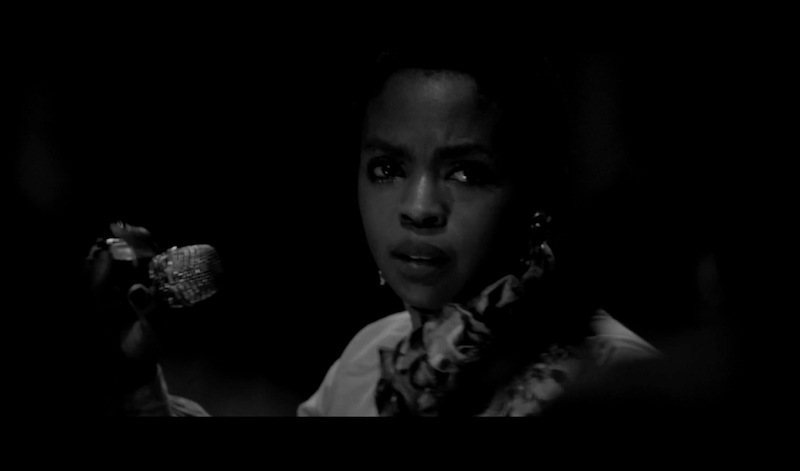
What Makes Arthur Jafa’s Work So Powerful?
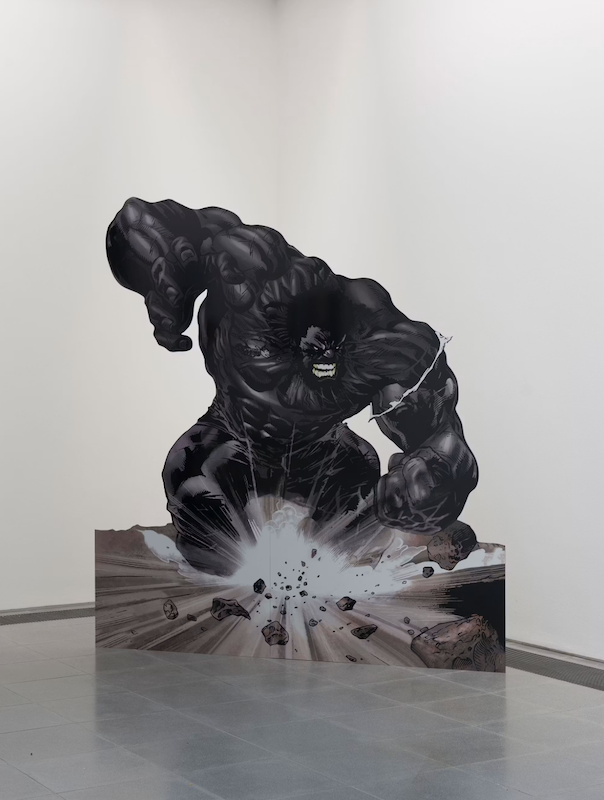
Arthur Jafa’s work is powerful because he turns the accumulated images of Black life into emotionally charged sequences where beauty, violence, joy, virtuosity, grief, intimacy, and historical trauma remain inseparable.
At first, his best-known works may resemble rapidly edited collections of found footage. News broadcasts, home movies, sporting events, music performances, internet clips, historical films, police recordings, religious gatherings, and popular culture pass across the screen in quick succession.
But these images do not function like a documentary archive organized around a stable argument.
They behave more like music.
One image calls to another.
A gesture becomes a rhythm.
A movement becomes an emotional echo.
Beauty is interrupted by violence.
Violence is followed by transcendence.
Private experience collides with public history.
Jafa’s deeper achievement is not simply that he gathers powerful images. He changes what happens between them.
His work asks:
Can moving images achieve the emotional, rhythmic, formal, and cultural force that Black music has achieved?
The Problem Beneath the Work
Jafa’s practice returns to the problem of how Black life can be represented without being reduced to suffering, triumph, identity, documentary evidence, entertainment, or a single historical narrative.
Images of Black people circulate everywhere, but circulation does not guarantee complexity.
Black life has repeatedly been:
stereotyped
commodified
surveilled
sensationalized
idealized
feared
imitated
consumed as entertainment
documented through violence
excluded from dominant visual histories
Jafa’s work does not attempt to correct these distortions by providing one complete or balanced representation.
Instead, he constructs an overwhelming visual field in which radically different expressions of Black life coexist.
In Love Is the Message, The Message Is Death from 2016, footage recorded by Jafa appears alongside material drawn from films, news reports, sports broadcasts, music videos, internet clips, and citizen recordings. The images move across twentieth- and twenty-first-century Black experience against the background of systemic racism and white supremacy. (Smithsonian American Art Museum)
The work includes suffering, but Blackness is not defined only through suffering.
It includes achievement, but Blackness is not resolved into triumph.
It includes celebrity, worship, dance, athleticism, domestic life, rebellion, absurdity, vulnerability, and extraordinary bodily expression.
The deeper problem is:
How can an artwork hold the full emotional and historical density of Black life without reducing that life to a message that can be easily consumed?
Black Visual Intonation
One of Jafa’s important ideas is often described as Black visual intonation.
The concept begins with an observation: Black musical forms developed distinctive relationships to rhythm, timing, repetition, improvisation, intensity, rupture, and emotional expression.
Jafa asks what an equivalent visual language might look like.
This does not mean placing images over Black music and assuming the result becomes Black visual culture. It means studying how images might be organized according to comparable principles:
syncopation
repetition with variation
rupture
acceleration
delay
improvisational association
call and response
compression
intensity
emotional tonal shifts
Jafa has emphasized the significance of the intervals between images, saying that his manipulation happens not simply within individual images but in the gaps between them. (The Museum of Modern Art)
That insight is essential.
A single clip may already possess enormous force. But montage changes its meaning by determining:
what precedes it
what follows it
how long it remains visible
whether it arrives as shock, answer, contradiction, release, or recurrence
how it interacts with sound
what emotional state the viewer is in when it appears
The edit becomes a form of thought.
How the Work Creates Pressure
Jafa’s work creates pressure by refusing to separate experiences that viewers may prefer to keep apart.
Beauty does not exist outside violence.
Joy does not erase grief.
Achievement does not cancel historical injury.
Popular culture cannot be separated from political history.
Private life cannot be protected from public image circulation.
A moment of extraordinary physical grace may be followed by a scene of brutality. A religious expression may collide with celebrity performance. A child’s gesture may appear beside a historical catastrophe. A familiar public figure may suddenly feel vulnerable, strange, ecstatic, or unknowable.
The viewer is repeatedly lifted and dropped.
That movement creates emotional pressure.
The work does not allow a stable emotional position from which the material can be safely interpreted.
One moment may produce awe.
The next may produce horror.
Then humor.
Then tenderness.
Then recognition.
Then helplessness.
This is why the work can feel overwhelming even when it is relatively brief.
The intensity comes from emotional compression.
Montage as an Artistic Language
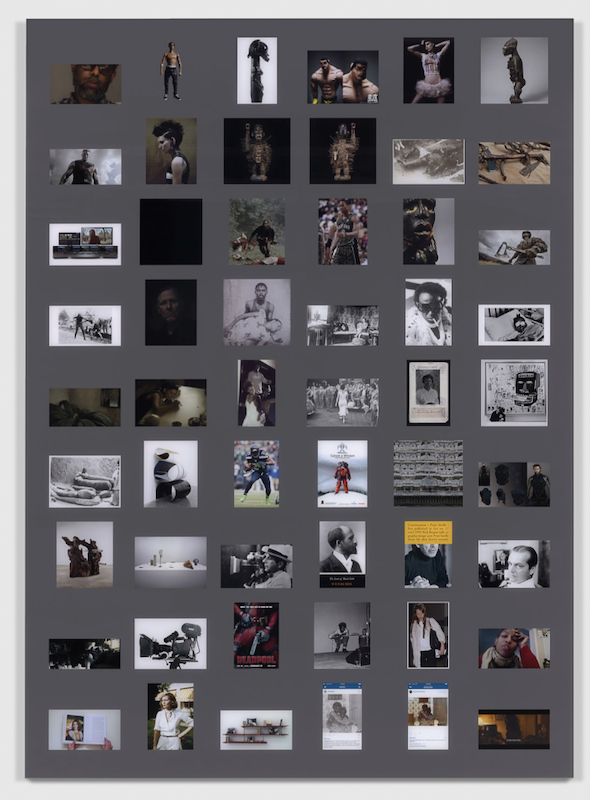
Montage is more than editing separate pieces into a continuous sequence.
In Jafa’s work, montage becomes a method of discovering relationships that ordinary historical narration may conceal.
A conventional documentary often establishes:
a subject
an explanatory structure
a chronology
an argument
evidence supporting that argument
a conclusion
Jafa’s montage operates differently.
It establishes meaning through adjacency.
Two images do not have to come from the same period, source, or event. Their connection may be:
visual
rhythmic
bodily
emotional
historical
symbolic
musical
intuitive
contradictory
A gesture in one clip may continue through a different body in the next.
A movement may rhyme with another movement.
An ecstatic expression may resemble an expression of anguish.
A crowd may become a congregation, protest, audience, or threat depending on the image placed beside it.
The viewer experiences history as a charged network rather than a clean timeline.
Why the Music Matters
Love Is the Message, The Message Is Death is structured around Kanye West’s “Ultralight Beam.” The Smithsonian describes the song as a gospel–hip-hop work that itself brings together multiple voices and strands of Black musical history. (Smithsonian American Art Museum)
The soundtrack does not merely accompany the footage.
It organizes emotional expectation.
Music creates:
anticipation
release
escalation
continuity
spiritual atmosphere
emotional memory
collective feeling
A viewer may hear transcendence while witnessing suffering.
That contradiction changes both the image and the music.
The music can make an image feel sacred, mournful, ecstatic, heroic, or unbearable. The image can make the song’s optimism feel fragile, defiant, or historically burdened.
Sound and image do not simply reinforce one another.
They complicate one another.
This is one reason the work avoids becoming a straightforward political statement. Its emotional register exceeds a single argument.
The Image Archive as Living Material
Like Adam Pendleton, Jafa works with archives, fragments, and cultural materials that already possess histories.
But Jafa’s archive is highly embodied.
It contains:
faces
voices
movement
gesture
dance
violence
performance
athleticism
religious expression
public speech
private recordings
media spectacle
Jafa does not treat these images as neutral documents. Nor does he assume that found footage remains ethically or emotionally unchanged when relocated.
Each clip carries the conditions under which it was originally produced:
Who held the camera?
Who controlled the image?
Was the person performing voluntarily?
Was the recording intimate, commercial, journalistic, celebratory, or surveillant?
Was the image originally circulated as evidence, entertainment, humiliation, memory, or propaganda?
When Jafa brings these images together, he does not erase those questions. He intensifies them.
The archive becomes a contested field of looking.
Beauty and Horror
The most important contradiction in Jafa’s practice may be the relationship between extraordinary beauty and extraordinary violence.
The work refuses the expectation that representations of Black experience should choose one dominant tone.
A celebratory representation can become dishonest if it suppresses historical and ongoing violence.
A representation focused only on brutality can reproduce another kind of reduction, making Black people visible primarily through injury and death.
Jafa keeps both conditions active.
The beauty is not offered as compensation for the horror.
The horror does not invalidate the beauty.
They exist together.
This coexistence produces something closer to the density of lived experience than either celebration or condemnation could accomplish alone.
Intensity Without a Single Narrative
Jafa’s work demonstrates that intensity does not require one continuous story.
A conventional narrative generally builds force by developing characters, conflict, and resolution.
Jafa builds force through accumulation.
Individual fragments gather emotional charge as the sequence continues. Earlier images remain psychologically present as later images appear. Meaning builds through memory, echo, recurrence, contrast, and rhythm.
This creates a different kind of coherence.
The viewer may not be able to summarize the sequence as a plot, but the experience does not feel random.
The coherence is musical rather than literary.
This distinction is important for understanding difficult or nonlinear art.
A work does not always need to explain how every element connects. It can make the viewer feel the connection before being able to name it.
The Central Contradiction
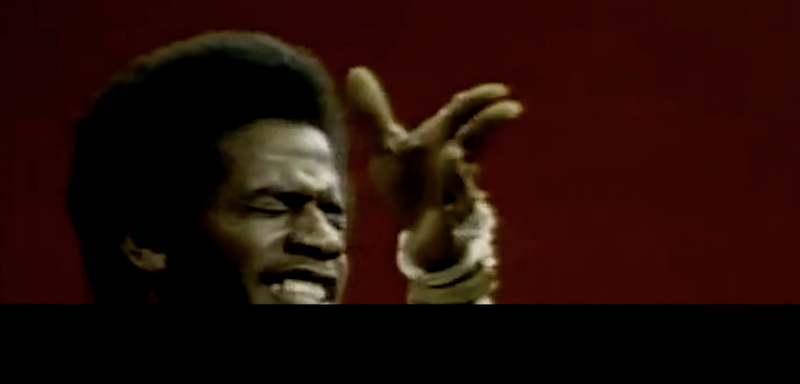
Jafa’s work holds several contradictions simultaneously:
love / death
beauty / violence
transcendence / historical injury
celebration / mourning
individuality / collective history
private life / public circulation
documentary evidence / visual poetry
appropriation / preservation
popular culture / serious historical memory
emotional immediacy / interpretive complexity
recognizable images / unstable meaning
collective identity / irreducible difference
The title Love Is the Message, The Message Is Death contains the structure of the work.
Love and death are not presented as opposites that can be separated.
Love exists under the condition of death.
Death intensifies the urgency of love.
Beauty emerges from a culture shaped by violence, but that beauty cannot be explained only as a reaction to violence.
The contradiction remains unresolved because resolving it would simplify the experience the work is trying to hold.
The Viewer’s Position
Jafa places the viewer inside an emotionally demanding position.
The viewer becomes:
witness
spectator
consumer of circulating images
listener
participant in cultural memory
observer of beauty
observer of suffering
person implicated in how images are distributed and consumed
The work makes it difficult to remain detached.
But it also raises a troubling question:
What does it mean to experience another person’s suffering as part of an aesthetically powerful sequence?
The montage is beautiful, rhythmic, and emotionally compelling. Some of its images record real violence and humiliation.
That creates an ethical contradiction.
The work uses aesthetic force without allowing the viewer to forget that images can also exploit, expose, and injure.
The viewer must confront both the power of the sequence and their own consumption of it.
The World Jafa Has Built
Jafa’s recurring artistic world includes:
found footage
montage
Black popular culture
music
bodily movement
historical archives
internet circulation
religious intensity
celebrity
police violence
intimacy
spectacle
emotional collision
visual rhythm
cinematic scale
repeated cultural images
beauty and horror held together
His work crosses film, video installation, photography, sculpture, music video, and cinematography.
Before becoming widely recognized within contemporary art, Jafa had a substantial career in film, including work as the cinematographer for Julie Dash’s Daughters of the Dust. His broader practice has continually pursued the possibility of a Black cinema possessing the cultural and formal centrality achieved by Black music. (Wikipedia)
The media may change, but the deeper investigation remains consistent:
How can images carry the rhythmic, emotional, historical, and expressive complexity of Black life?
What Artistic Capacity Does This Work Develop?
Jafa’s work develops the capacity to think through sequence rather than through isolated images.
Artists often evaluate images individually:
Is this image strong?
Is this composition resolved?
Does this object work on its own?
Is the subject clear?
Is the focal point effective?
Jafa demonstrates that meaning may emerge from relationships rather than from individual completeness.
An ordinary image may become extraordinary because of where it appears.
A beautiful image may become disturbing because of what follows it.
A traumatic image may become part of mourning, accusation, history, or spectacle depending on the rhythm surrounding it.
Studying Jafa develops several artistic capacities.
The capacity to use rhythm visually
Visual rhythm is not merely repetition of shapes. It can involve acceleration, silence, interruption, recurrence, and release.
The capacity to build emotional intensity through contrast
Intensity does not always come from making every element louder. It can arise from moving between stillness and explosion, intimacy and spectacle, beauty and injury.
The capacity to think relationally
An image does not carry meaning alone. Its meaning changes according to the images, sounds, spaces, and histories around it.
The capacity to allow feeling to precede explanation
The viewer may experience a relationship before intellectually understanding it. That does not make the work vague when the sequence is carefully controlled.
The capacity to construct coherence without conventional narrative
A body of work can be unified by rhythm, atmosphere, recurring pressure, or emotional logic rather than by one continuous story.
The capacity to treat editing as authorship
Selection, timing, juxtaposition, omission, and sequence are not secondary presentation decisions. They are the artistic act.
What Artists Can Learn
The lesson is not to imitate Jafa by assembling dramatic clips, using popular music, or juxtaposing beautiful and traumatic imagery.
The lesson is to understand how he makes relationships carry force.
He does not depend entirely on the inherent power of individual images.
He asks what happens when images:
answer one another
contradict one another
inherit one another’s emotional charge
move according to musical rhythm
collapse historical distance
intensify the viewer’s memory
transform through sequence
For artists working in any medium, this offers a major lesson.
A painting may create rhythm across repeated figures.
A series may make one image revise the meaning of another.
An installation may alternate compression and openness.
Color may function like musical tone.
Empty space may operate like silence.
A visual interruption may function like syncopation.
A body of work may accumulate through echoes rather than explanation.
The larger lesson is:
Energy does not come only from what an artwork contains. It comes from the rhythm of relationships among its parts.
Arthur Jafa reveals an artistic possibility beyond the isolated image:
Art can operate like music—through rhythm, recurrence, rupture, emotional intonation, and the charged space between one experience and the next.