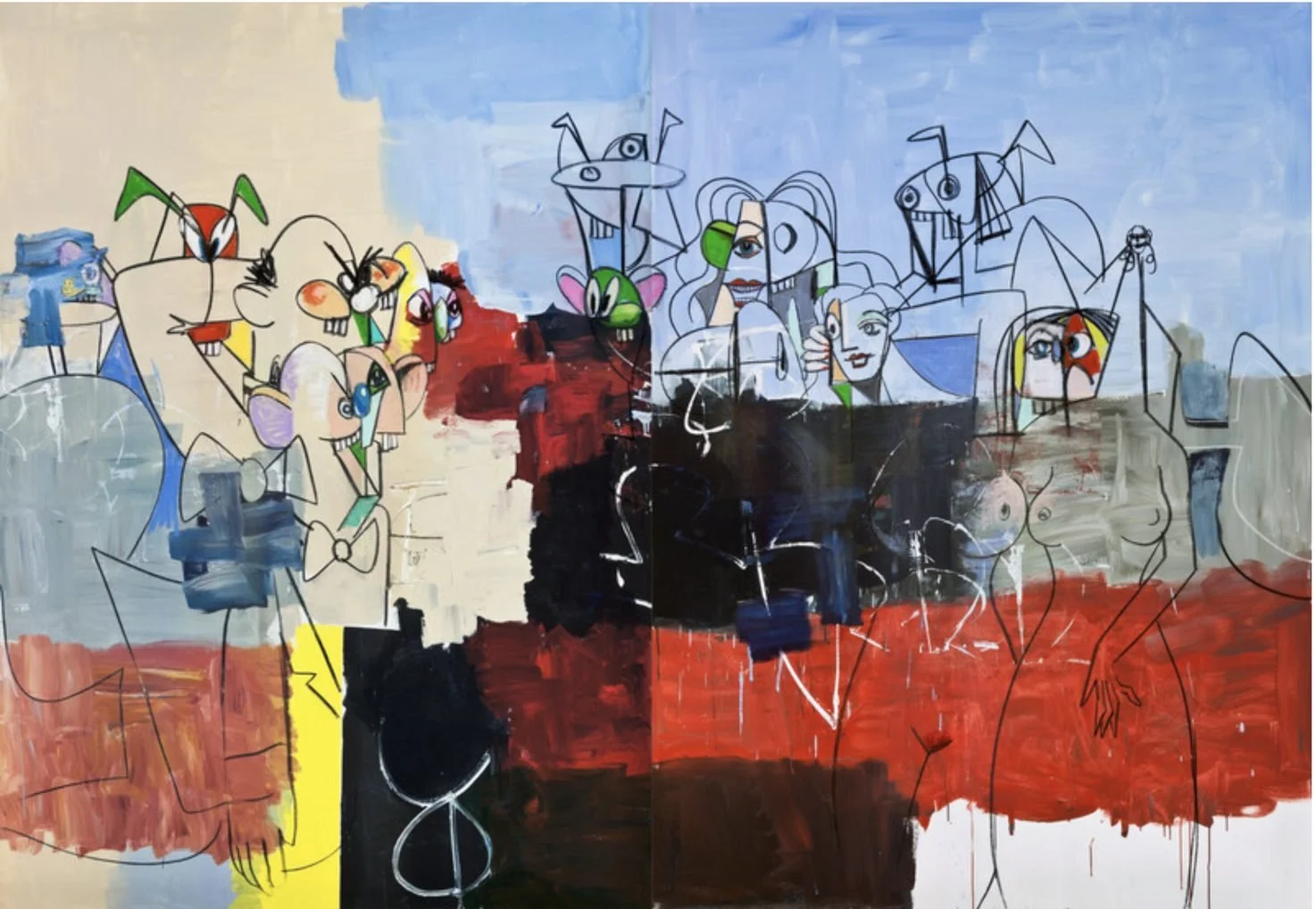
What Makes George Condo’s Paintings So Powerful?
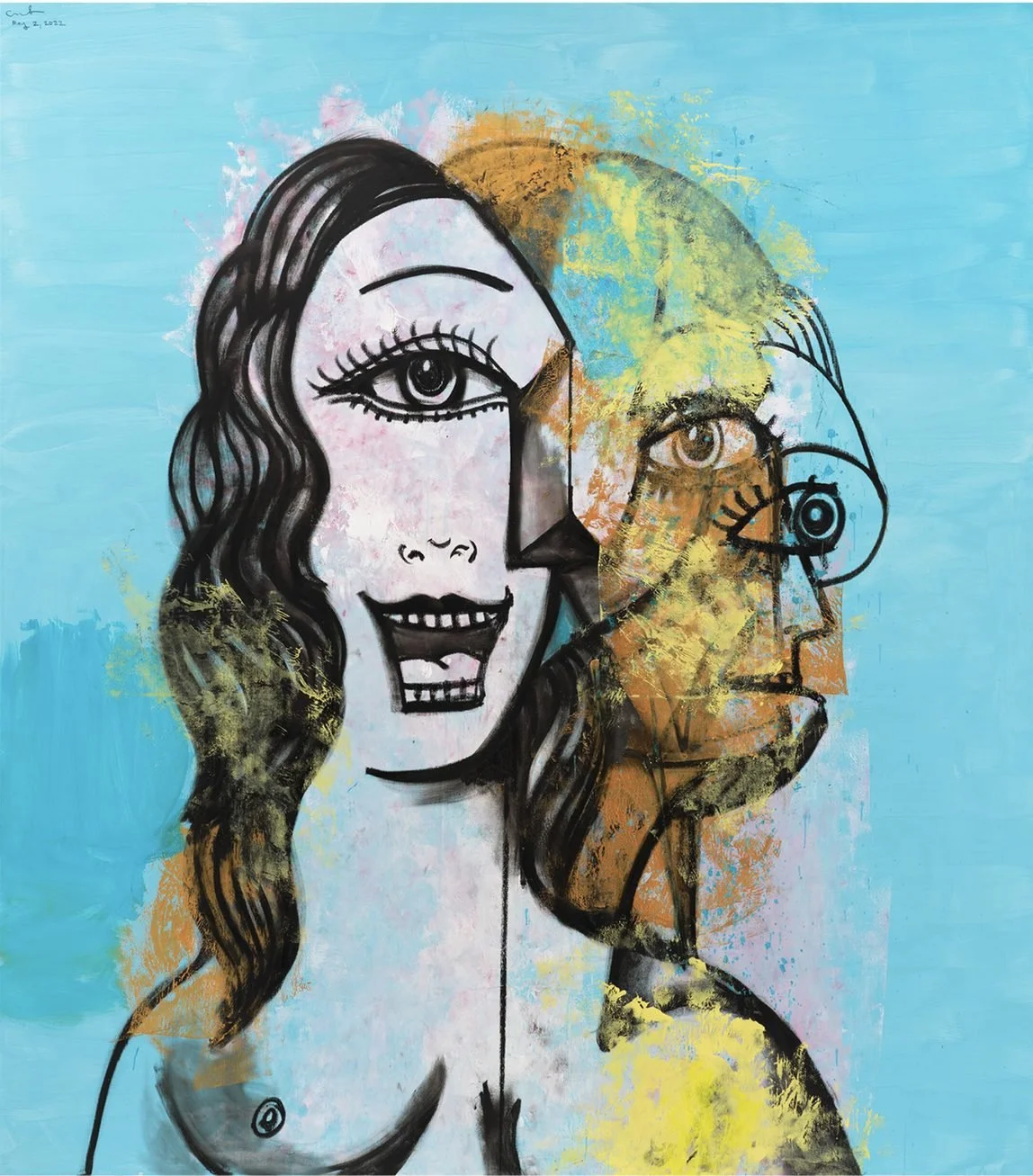
George Condo’s paintings are powerful because they make the human face behave like a crowded psychological space rather than a stable portrait of one person.
His figures may appear:
elegant
foolish
terrified
arrogant
comic
wounded
predatory
vulnerable
socially polished
mentally fragmented
Often, several of these states occupy the same face.
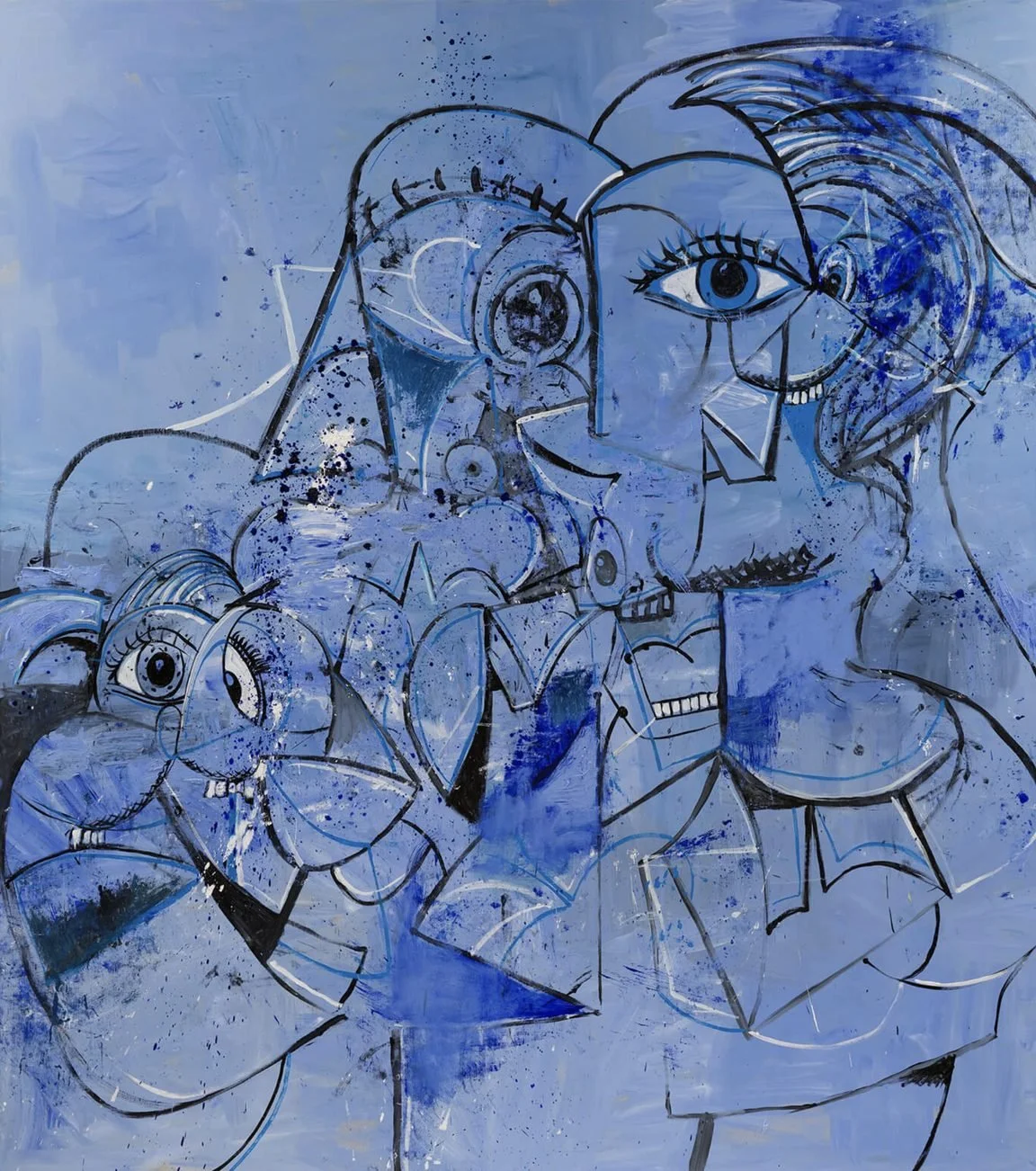
An eye looks in one direction while another seems to belong to a different emotional world. A mouth smiles and grimaces simultaneously. Noses, cheeks, teeth, ears, and brows multiply, collide, or drift out of alignment. Classical portraiture remains visible, but it has been invaded by caricature, Cubism, cartoons, grotesque anatomy, and painterly improvisation.
Condo is a major figure in contemporary American painting whose work has developed through painting, drawing, sculpture, and printmaking. His invented characters and fractured portraits draw upon an extensive knowledge of European painting while also incorporating modernism, popular imagery, improvisation, and caricature.
His work can initially seem absurd.
The faces are funny.
The anatomy is impossible.
The expressions are excessive.
Yet the comedy rarely feels innocent.
The figures often appear trapped inside their own emotional contradictions.
The deeper problem beneath the work is:
How can portraiture represent several incompatible psychological states at once when a person is never as coherent, stable, or singular as a conventional face suggests?
Condo does not merely distort faces.
He breaks apart the assumption that a face should provide one readable identity.
The Conventional Portrait and the Unified Self
Traditional portraiture often presents the sitter as a coherent individual.
The face is expected to reveal:
identity
personality
intelligence
social status
mood
moral character
psychological depth
Even when a portrait contains ambiguity, the features generally belong to one stable body.
The eyes, mouth, nose, posture, clothing, and setting cooperate to produce a recognizable person.
Condo disrupts this cooperation.
His faces may contain:
several viewpoints
conflicting expressions
mismatched features
incompatible emotional signals
references to different artistic styles
simultaneous beauty and deformity
The portrait no longer confirms a unified self.
It becomes a site of internal conflict.
One part of the figure may appear self-assured.
Another seems panicked.
A smile becomes aggression.
Elegance turns ridiculous.
The face behaves less like a window into personality than like an argument among several competing personalities.
Psychological Cubism
Condo’s paintings are frequently connected to Cubism because they fracture and reorganize the face.
But his purpose differs from the original Cubist investigation of objects seen from multiple spatial viewpoints.
Condo uses fragmentation psychologically.
A face may contain several emotional viewpoints simultaneously.
The viewer does not simply see the subject from the front and side.
The viewer encounters:
confidence and fear
politeness and hostility
pleasure and disgust
intelligence and foolishness
control and breakdown
The fractured anatomy becomes a model of fractured interior life.
This could be called psychological Cubism:
Several versions of the self occupy one image without resolving into a stable whole.
Condo’s recent “Diagonal Portraits,” for example, combine multiple viewpoints of fragmented faces with gestural approaches associated with action painting.
The face becomes an emotional structure rather than a likeness.
Invented Characters
Most of Condo’s portraits are not commissioned likenesses of actual sitters. They depict invented characters whose repeated types and exaggerated features create a fictional social world. Hauser & Wirth describes these figures as imaginary people whose fractured psychological states retain a recognizable humanity.
This fiction gives Condo freedom.
He does not have to preserve someone’s actual appearance.
He can construct a figure around:
a social role
a mental state
a behavioral type
a contradiction
a visual joke
an art-historical language
The figures may resemble:
aristocrats
servants
clowns
priests
musicians
queens
bureaucrats
socialites
monsters
patients
performers
They feel familiar even when they are not identifiable.
This familiarity matters.
The viewer may recognize the social behavior before recognizing the person.
A figure appears pompous.
Another looks desperate to maintain composure.
Another smiles with artificial politeness while seeming emotionally unstable.
The invented character becomes a container for recognizable human performance.
The Social Mask
Condo’s figures frequently appear dressed for social roles.
They may wear:
uniforms
formal clothing
theatrical costume
historical dress
official-looking garments
elaborate hairstyles
The clothing suggests social order.
The face undermines it.
A figure may present herself as refined while her features appear chaotic.
A servant looks deranged.
An aristocrat appears foolish.
A queen becomes grotesque.
A formally posed subject seems unable to maintain psychological coherence.
This creates one of Condo’s central contradictions:
The social role remains intact while the person inside it appears to be coming apart.
The portrait becomes an image of performance under pressure.
The figure knows how to stand, dress, and pose.
But the face reveals that no role can contain everything occurring underneath.
Beauty and Grotesque Form
Condo’s work often holds beauty and deformity together.
The paintings may contain:
elegant color
delicate modeling
refined fabrics
balanced composition
graceful brushwork
art-historical references
Yet the figures possess:
oversized ears
multiple mouths
exposed teeth
swollen cheeks
crossed eyes
impossible noses
fractured skulls
distorted bodies
The grotesque does not destroy beauty completely.
Beauty remains close enough to make the distortion more disturbing.
A purely monstrous figure could be dismissed as fantasy.
A purely elegant figure might remain emotionally safe.
Condo combines them.
The viewer experiences attraction and repulsion almost simultaneously.
This reflects the instability of social judgment.
A person may appear ridiculous and sympathetic.
Ugly and tender.
Threatening and frightened.
The grotesque becomes psychologically human because it contains contradiction.
Humor Without Distance
The paintings are frequently funny.
But laughter creates an ethical complication.
Are we laughing at the figure?
With the artist?
At social pretension?
At the absurdity of human psychology?
The figures often seem humiliated by their own faces. Their exaggerated teeth, eyes, noses, and expressions make private instability publicly visible.
Yet Condo rarely presents them as pure objects of contempt.
Even his most ridiculous characters retain vulnerability.
The viewer may laugh and then feel uncomfortable about laughing.
This gives the humor depth.
It does not merely relieve tension.
It creates tension between:
amusement and cruelty
recognition and superiority
caricature and empathy
comedy and psychological pain
The figure may be absurd, but the absurdity feels familiar.
The viewer recognizes something human inside the distortion.
Caricature as Concentration
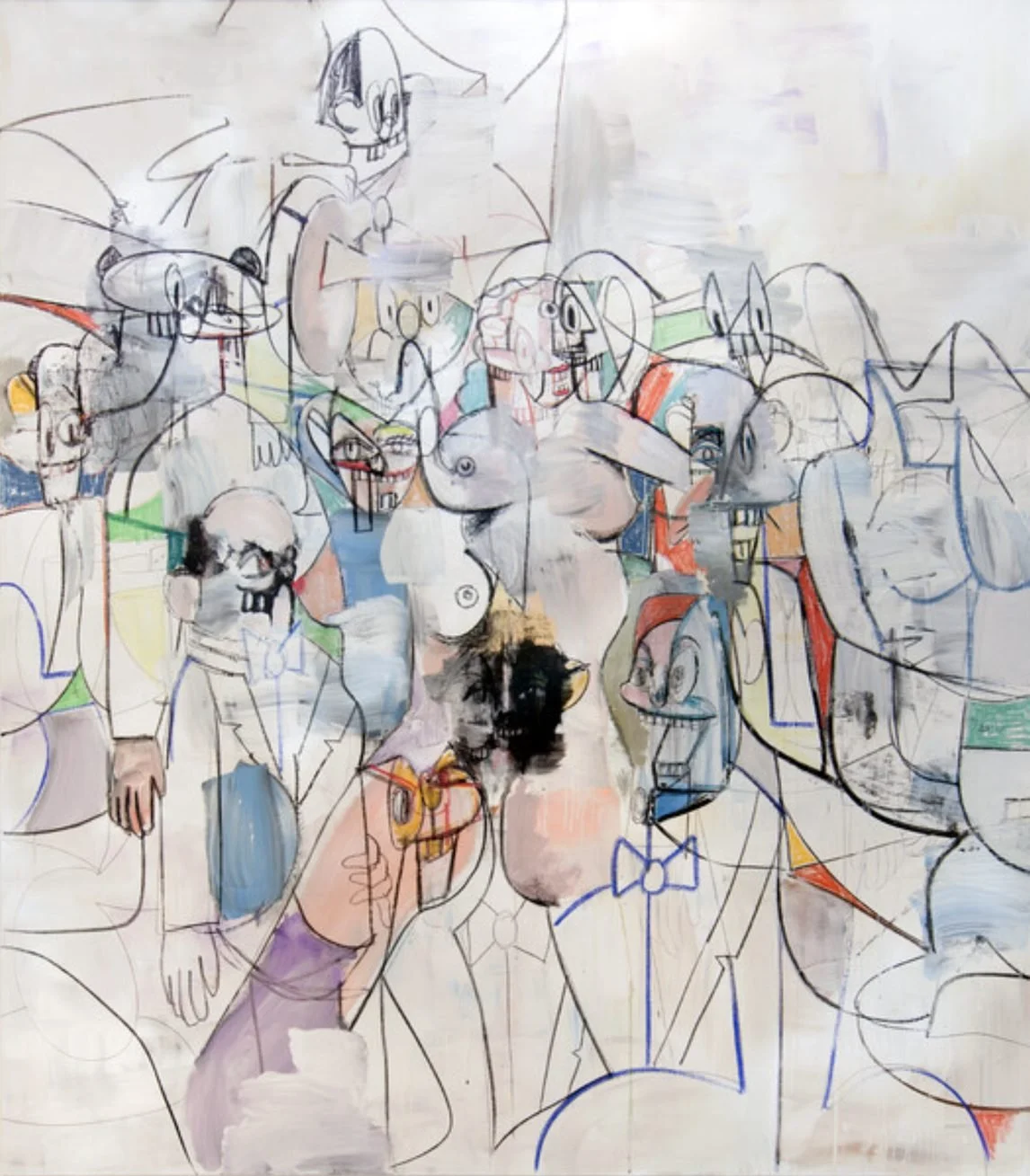
Caricature exaggerates selected features.
A large nose becomes larger.
A nervous smile becomes extreme.
A self-important posture becomes ridiculous.
Caricature is often treated as a simplified or lesser form than serious portraiture.
Condo demonstrates that exaggeration can reveal complexity.
By distorting features, he concentrates psychological pressure.
A conventional portrait may subtly imply arrogance.
Condo allows arrogance to reshape the entire head.
Fear does not remain in the eyes.
It reorganizes the face.
Desire, panic, vanity, repression, and hostility become anatomical events.
The figure’s interior state takes possession of the exterior body.
Distortion therefore becomes necessary.
A realistic face would be too orderly to hold the contradiction.
Artificial Realism
Condo has used the phrase Artificial Realism to describe an approach that represents the artificial as though it were real. His practice developed through intensive engagement with historical painting, especially Baroque and Rococo traditions, while inventing characters and visual worlds that do not exist outside the paintings.
This phrase helps clarify the work.
The paintings do not depict real people realistically.
Instead, they give fictional distortions the authority of traditional painting.
The lighting may be convincing.
The surfaces may feel materially rich.
The pose may recall museum portraiture.
The character does not exist, but the painting treats the character as culturally and psychologically real.
This reverses the logic of realism.
Condo is not asking:
Does this look like an actual person?
He is asking:
Does this impossible figure reveal something recognizable about human behavior?
The artificial image becomes psychologically truthful.
Art History as a Mental Vocabulary
Condo draws from a vast range of art-historical languages.
His paintings may evoke:
Velázquez
Goya
Rembrandt
Picasso
Braque
Matisse
de Kooning
Degas
Toulouse-Lautrec
Cezanne
classical portraiture
Cubism
Abstract Expressionism
caricature
cartoons
He studied art history and music theory, and his practice has long treated historical styles as active material rather than distant influence.
The work does not hide these sources.
It allows them to collide.
A face may combine:
a Cubist structure
Rococo elegance
cartoon features
Expressionist brushwork
old-master lighting
This does more than demonstrate knowledge.
Different styles carry different ideas of the human being.
Classical portraiture suggests order.
Cubism fractures perspective.
Caricature exaggerates behavior.
Expressionism intensifies emotion.
Cartoons simplify and expose.
By placing these languages together, Condo creates a figure whose identity is composed from incompatible histories of representation.
Influence as Internal Conflict
Many artists quote art history by borrowing a pose, composition, or recognizable image.
Condo’s use of history is more psychological.
The styles appear to compete inside the figure.
The painting may seem unable to decide whether the person is:
noble
ridiculous
modern
historical
abstract
cartoon-like
emotionally serious
satirical
That indecision becomes productive.
Art history is not a stable archive behind the work.
It becomes another source of internal fragmentation.
The figure appears made from the accumulated visual languages through which people have been represented.
This raises a larger question:
Are we ever seen directly, or only through inherited images and cultural types?
The portrait becomes crowded not only with emotions but with representational history.
The Face as a Crowd
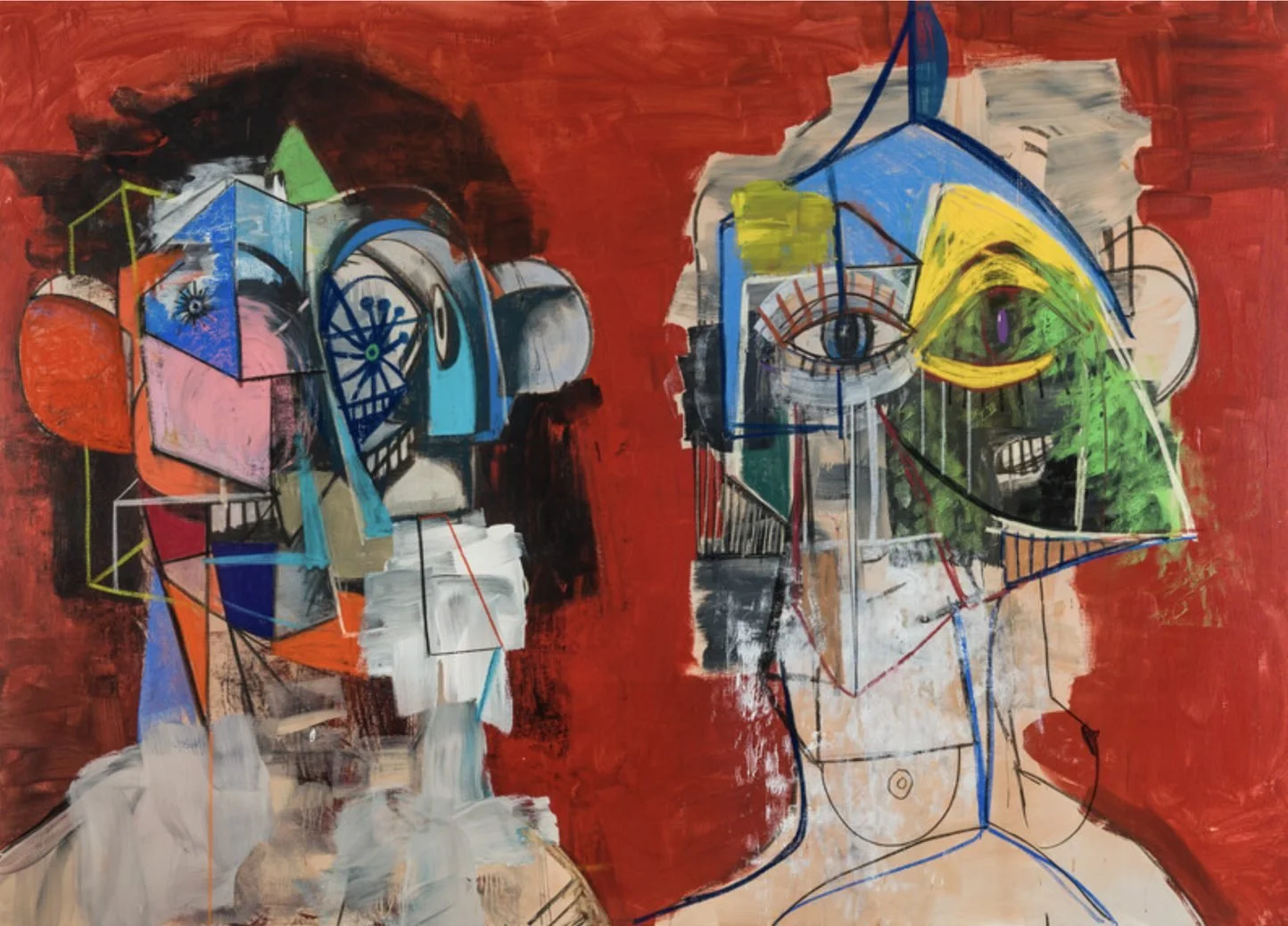
In some paintings, the head appears to contain several people.
Features overlap.
Profiles intersect.
Eyes multiply.
One mouth interrupts another.
The face becomes a crowd compressed inside one body.
This can suggest:
conflicting impulses
several social selves
memory
instability
internal dialogue
public and private identity
emotional contradiction
the pressure of other people’s expectations
The painting gives form to the experience of not feeling singular.
A person may behave differently:
alone
in public
under pressure
in love
in fear
while performing authority
while seeking approval
Conventional portraiture often chooses one state.
Condo allows them to collide.
Internal Riot
The title Internal Riot, used for a major body of Condo’s work, captures this condition directly. The paintings depict invented figures and tangled pictorial structures in which multiple forces appear to compete for control.
The riot is internal because the conflict occurs within:
the face
the body
the composition
the painting’s historical languages
the boundary between abstraction and figuration
The image does not depict a riot as an external event.
The portrait itself becomes disorder.
This is an important distinction.
Psychological instability is not illustrated through a dramatic story.
It is built into the structure of the figure.
Abstraction and Figuration
Condo’s work frequently moves between recognizable faces and abstract arrangements.
A passage may function as:
cheek
shape
color field
shadow
separate face
decorative fragment
pure gesture
The viewer repeatedly shifts between reading the image as a person and reading it as paint.
This instability mirrors the psychological problem.
The figure almost becomes coherent, then dissolves.
Abstraction prevents the portrait from closing around one identity.
Figuration prevents the painting from becoming entirely autonomous.
The work remains suspended between body and structure.
This allows emotion to be experienced without being tied to one realistic expression.
Music and Improvisation
Condo’s training and continuing engagement with music have informed his approach to composition. His work has included “jazz paintings,” imaginary record covers, and paintings described through musical ideas such as improvisation, rhythm, collision, and free association.
The musical comparison is useful.
A figure may function like a theme.
The painting introduces variation.
A line interrupts.
Another form responds.
Several visual voices operate simultaneously.
Some passages feel composed.
Others feel improvised.
This does not mean the work lacks control.
Improvisation depends on accumulated knowledge.
The artist must know the language deeply enough to depart from it without losing coherence.
Condo’s art-historical fluency works like a musician’s knowledge of harmony.
He can distort the structure because he understands what is being distorted.
The Difference Between Distortion and Arbitrary Weirdness
Condo’s work is easy to imitate superficially.
An artist could:
enlarge the ears
multiply the eyes
twist the mouth
combine Cubist shapes
use bright color
produce a grotesque face
But strange anatomy alone does not create psychological complexity.
The strongest distortions feel connected to a specific tension.
A stretched smile may suggest forced politeness.
Several eyes may create hyperawareness or divided attention.
A collapsed face may indicate emotional breakdown.
Elegant clothing may conflict with bodily disorder.
The distortion becomes powerful when it models a condition.
The key question is not:
How can I make the figure stranger?
It is:
What contradiction requires the body to become this way?
Without that necessity, distortion becomes style.
Portraiture Without Recognition
Conventional portraiture depends on likeness.
Condo’s portraiture depends on recognition of another kind.
We do not recognize the person.
We recognize:
vanity
anxiety
pretension
humiliation
desire
authority
repression
loneliness
instability
The paintings replace physical likeness with psychological recognition.
The character may be entirely invented, yet the emotional condition feels real.
This is why the grotesque figures can appear strangely empathetic.
They reveal states people usually attempt to conceal.
Social Hierarchy and Ridicule
Condo often uses historical portrait formats associated with status and authority.
The sitter may appear:
enthroned
formally posed
richly dressed
institutionally important
culturally refined
Then the face becomes ridiculous.
This undermines the portrait’s traditional role as an instrument of prestige.
The painting preserves the signs of authority while exposing the instability beneath them.
Power appears dependent on performance.
The figure must maintain:
posture
dress
expression
decorum
symbolic dignity
But the distorted features reveal that the performance is failing.
Condo does not necessarily offer direct political critique.
His focus is broader and more psychological.
He exposes the absurdity inherent in attempts to present the self as fully controlled.
Empathy for the Grotesque
A major strength of Condo’s work is that grotesque form does not eliminate humanity.
The figures may be monstrous, but they rarely feel completely alien.
Their instability can make them more vulnerable.
The distorted face reveals that composure has become impossible.
The viewer may see:
fear beneath arrogance
loneliness beneath social polish
fragility beneath aggression
confusion beneath authority
desperation beneath humor
This empathy prevents the work from becoming simple mockery.
The paintings suggest that everyone contains unflattering, unstable, or contradictory states.
The grotesque body becomes a truthful body because it refuses the fiction of coherence.
The Risk of the Signature Face
Condo’s greatest strength is also his most obvious risk.
His distorted portraits are immediately recognizable.
Bug eyes, multiple mouths, enlarged teeth, Cubist fragmentation, historical dress, and grotesque humor form a powerful visual signature.
But a recognizable device can become predictable.
The viewer may see a Condo face and understand the operation before engaging with the individual painting.
The critical question is:
Does each distortion produce a distinct psychological condition, or does the work repeat a successful brand of cultivated grotesque?
The strongest paintings make anatomy inseparable from the particular emotional contradiction.
A weaker painting may offer another inventive arrangement of strange features without discovering a new psychological problem.
A lexicon must keep generating difference.
Otherwise, it becomes a logo.
The Risk of Virtuosity
Condo possesses extraordinary control over many visual languages.
That fluency can produce dazzling paintings.
But virtuosity creates another risk.
The viewer may admire:
art-historical knowledge
painterly skill
compositional invention
technical confidence
stylistic range
without experiencing genuine psychological pressure.
The painting can become a demonstration of mastery.
The strongest work uses mastery to create instability.
Skill should not protect the painting from risk.
It should make greater risk possible.
The Risk of Cruelty
Caricature can expose social performance, but it can also dehumanize.
Exaggerated bodies and faces have historically been used to ridicule, stereotype, and diminish people.
Condo’s figures are generally fictional, which gives him distance from direct representation.
Even so, the work must continually negotiate the line between:
psychological exaggeration
comic cruelty
empathy
spectacle
dehumanization
The strongest paintings allow vulnerability to remain visible inside grotesque form.
Without that vulnerability, the figure may become merely an object of sophisticated ridicule.
Why the Work Matters Now
Condo’s portraits belong to a culture that rewards coherent public identity.
People are expected to present:
a recognizable face
a stable brand
consistent opinions
social confidence
emotional control
curated selfhood
Digital profiles compress a person into a manageable public image.
Condo’s figures refuse that compression.
They show identity as:
contradictory
crowded
unstable
performed
emotionally excessive
composed from inherited images
The portraits suggest that the coherent self may be a social convenience rather than a psychological truth.
This feels especially relevant in an era when people continually manage the difference between:
private feeling
public presentation
professional identity
online identity
social role
bodily reality
Condo gives the conflict a face.
What Artists Can Learn
The lesson is not to imitate Condo’s Cubist heads, distorted teeth, multiple eyes, historical costumes, or grotesque humor.
Those are the visible solutions produced by his investigation.
The larger lessons are:
Portraiture does not require a unified self.
Distortion should model a psychological contradiction.
Several emotional states can occupy one figure.
Caricature can concentrate rather than simplify.
Humor becomes deeper when empathy survives inside it.
Fiction can reveal recognizable human behavior without biography.
Social roles can be exposed through conflict between costume and body.
Art history can become an active vocabulary rather than a set of quotations.
Influence should collide and transform inside the work.
Abstraction can keep psychological identity unstable.
Technical mastery should create risk rather than mere polish.
The grotesque becomes human when vulnerability remains visible.
A recurring visual lexicon must continue producing distinct problems.
The viewer should recognize a condition even when the person is invented.
For an artist concerned with identity, performance, environment, and visibility, Condo offers a particularly useful lesson:
The figure does not need to choose between private self and public image; the body can reveal both states fighting for control at the same time.
A useful studio experiment might involve one repeated figure in a socially composed pose.
Rather than changing the entire scene, alter the figure gradually:
The public expression remains controlled.
One feature begins contradicting the pose.
Several expressions appear simultaneously.
Pattern or environment enters the face.
The figure becomes divided between performance and interior pressure.
The surrounding space begins reflecting the conflict.
The purpose would not be to make the body grotesque.
It would be to determine what visual transformation is required to make incompatible selves visible together.
Condo begins with a portrait.
The figure poses.
The costume establishes a role.
The face promises identity.
One expression interrupts another.
The anatomy begins to divide.
Beauty approaches deformity.
Humor approaches pain.
Several selves occupy one body.
The portrait can no longer pretend that a person is singular.
George Condo transforms portraiture into a theater of psychological contradiction, using caricature, art history, fragmentation, and grotesque humor to reveal the human self as crowded, performed, unstable, and never fully contained by one face.