What Makes Gillian Wearing’s Work So Powerful?
Gillian Wearing’s work is powerful because it reveals that identity is neither the private truth hidden behind a public mask nor the outward role presented to society. Identity emerges through the unstable relationship between the two.
A stranger stands in a public place holding a handwritten sign that contradicts everything their appearance seems to communicate.
An apparently ordinary person speaks an intimate confession while wearing someone else’s face.
The artist recreates family photographs by covering herself with meticulously constructed masks resembling her mother, father, brother, uncle, and younger self.
A woman’s face remains still while another person’s voice emerges from her mouth.
A solitary figure dances exuberantly in a shopping center while passersby continue with their ordinary routines.
Across photography, video, performance, sculpture, painting, masks, and public monuments, Wearing repeatedly returns to a central question:
How can portraiture represent a person when outward appearance, private feeling, social performance, memory, fantasy, and the perceptions of others rarely produce the same identity?
Her work does not attempt to remove performance in order to discover an uncontaminated authentic self.
Instead, it asks whether performance may be one of the processes through which the self becomes visible.
What the Viewer Encounters
Wearing’s practice spans photography, video, sculpture, painting, installation, performance, and public art. Since the early 1990s, she has investigated self-representation, confession, family, social behavior, anonymity, surveillance, public appearance, and the psychological effects of photographic and moving-image media. Her major retrospective Wearing Masks brought together more than one hundred works tracing the development of these concerns from her earliest photographs through later self-portraits. (The Guggenheim Museums and Foundation)
The work often appears straightforward at first.
A photograph resembles a street portrait.
A video resembles a documentary interview.
A self-portrait resembles an archival family photograph.
But the apparent simplicity conceals a carefully constructed instability.
The viewer may not know:
whether a statement is sincere or performed;
whether a voice belongs to the visible person;
whether a portrait shows the artist or a relative;
whether anonymity liberates or conceals;
whether the camera exposes private truth or creates another role;
whether the subject controls the image or is controlled by it.
Wearing uses familiar documentary forms while undermining their promise of transparent access to another person.
The Inquiry Beneath the Work
Portraiture often operates through an implicit agreement:
This is what the person looks like, and appearance provides meaningful access to who the person is.
Wearing repeatedly breaks that agreement.
A face can communicate confidence while the person reports fear.
A formal suit can suggest authority while the handwritten message reveals desperation.
An anonymous mask can permit greater honesty than an uncovered face.
A carefully staged performance may expose something emotionally true.
The apparent contradiction is central:
A mask can conceal identity, but it can also create the conditions under which identity becomes expressible.
Wearing does not divide human behavior neatly into truth and deception. She treats identity as something shaped through context, medium, permission, anonymity, expectation, and relation to an audience.
Signs That Say What You Want Them to Say
Wearing’s early series Signs that say what you want them to say and not Signs that say what someone else wants you to say was made in 1992–93 by approaching strangers in public and asking them to write whatever they wished on a sheet of paper before being photographed holding it.
The resulting images pair visible social appearance with self-authored language.
A professionally dressed man holds a sign declaring:
“I’m desperate.”
Other participants express desires, jokes, political positions, emotional disclosures, or statements that remain difficult to reconcile with their outward presentation.
The series does not prove that the sign reveals the person’s true identity while the face presents a false one.
The sign is also a performance.
The participant chooses what to disclose, exaggerate, conceal, invent, or present to the camera.
What changes is the distribution of authorship. Rather than allowing the photographer or viewer to determine the subject’s meaning entirely through appearance, Wearing gives each participant another representational tool. The portrait becomes a negotiation among face, clothing, posture, handwriting, statement, photographer, and viewer. (The Guggenheim Museums and Foundation)
Appearance and Contradiction
The sign portraits reveal how quickly viewers form narratives about strangers.
Clothing, age, gender presentation, occupation, posture, and facial expression activate assumptions before the written statement is read.
The sign then modifies those assumptions.
Sometimes it confirms them.
Sometimes it contradicts them.
Sometimes it creates greater uncertainty.
The person becomes psychologically complex not because the photograph supplies complete information, but because two partial systems fail to align.
The portrait gains depth through contradiction between what appears visible and what becomes verbally disclosed.
This is one of Wearing’s most important discoveries.
Portraiture does not need to reveal more facts in order to become more truthful.
It may become more truthful by showing that different forms of evidence produce incompatible interpretations.
The Camera Does Not Simply Capture Identity
Photography is often described as capturing a person.
The language suggests that the camera takes possession of something already present.
Wearing’s work treats the photographic encounter as productive rather than merely receptive.
The presence of the camera changes behavior.
A subject may:
become self-conscious;
perform confidence;
imitate a familiar photographic pose;
exaggerate emotion;
become guarded;
use the opportunity to disclose something;
invent a temporary persona.
The resulting image does not exist prior to the encounter.
It is created through it.
This means photographic identity is relational:
photographer + subject + camera + context + anticipated audience.
The portrait records not only a person, but a situation in which a person is being represented.
Dancing in Peckham
In the video Dancing in Peckham, Wearing dances alone in a public shopping center without audible music or headphones.
Her movements appear energetic, absorbed, awkward, liberated, exposed, and socially out of place.
Passersby continue walking around her.
Some look.
Others ignore her.
The work emerged from Wearing’s observation of a woman dancing alone in public. By restaging the action herself, Wearing occupies the unstable position between documentation and performance. The camera turns a socially anomalous act into a deliberate artwork while retaining the vulnerability of performing outside expected behavior. Recent museum presentations have emphasized the work’s examination of public and private boundaries and the involuntary participation of surrounding strangers. (MoMA PS1)
The dance may appear sincere, but it is also consciously reconstructed.
It may appear freeing, but the public environment makes that freedom risky.
The work asks:
What version of a person becomes possible when ordinary social coordination is temporarily abandoned?
Social Composure and Its Breakdown
Public behavior depends upon countless unwritten agreements.
People regulate:
volume;
movement;
facial expression;
emotional intensity;
proximity;
bodily exposure;
attention to strangers.
These rules create social order, but they also limit what parts of the self may appear.
Wearing’s dancing body breaks several of these agreements without directly harming anyone.
The act reveals how tightly behavior is governed even in apparently open public space.
A person may feel free internally while remaining socially disciplined externally.
When the discipline breaks, the result can look joyous, embarrassing, threatening, comic, or irrational depending upon the observer.
The same action therefore produces several possible identities.
Confession and Anonymity
Wearing’s video works frequently invite people to describe experiences, desires, fears, traumas, and fantasies while concealing their identities through masks or other forms of disguise.
Confession is often imagined as the removal of concealment.
A person reveals what was hidden.
Wearing complicates that model by making concealment the condition of disclosure.
Anonymity can reduce the social consequences of speaking.
The mask may protect the speaker from:
shame;
judgment;
recognition;
retaliation;
damage to family or professional relationships.
The concealed face can permit the voice to say what the uncovered person cannot.
This produces a paradox:
The person becomes less visually identifiable and more psychologically revealing at the same time.
The Mask Does Not Eliminate Performance
Anonymity does not guarantee truth.
A masked speaker can still:
exaggerate;
omit;
invent;
rehearse;
manipulate;
protect a preferred self-image;
construct a dramatic narrative.
Wearing does not treat confession as unquestionable evidence.
The spoken account remains a representation.
Memory reorganizes events.
Language simplifies experience.
The audience changes how the story is told.
The mask permits speech while also generating another theatrical role.
Rather than separating authentic confession from false performance, Wearing shows how closely they depend upon one another.
2 into 1
In the video 2 into 1, a mother and her two sons appear separately while their voices are exchanged.
The sons lip-sync statements made by the mother about them.
The mother lip-syncs statements made by the sons about her.
The visible person becomes inhabited by another family member’s interpretation.
A face appears to speak, but the identity expressed through the words belongs partly to someone else.
The work turns family identity into a structure of mutual projection.
Each family member exists as:
a private self;
a visible body;
a role within the household;
a memory held by the others;
a character produced through family narrative.
The person hears an external interpretation emerging from their own mouth.
This is both intimate and unsettling.
The self becomes inseparable from the versions of it carried by other people.
Family as a System of Character Production
Families do not merely know one another.
They assign roles.
A person may become:
the responsible child;
the difficult child;
the favored child;
the absent parent;
the fragile parent;
the family success;
the disappointment;
the caretaker;
the outsider.
These roles may contain truth while also becoming restrictive.
A behavior repeated in one period of life can solidify into an identity preserved by the family long after the person has changed.
Wearing’s work reveals that identity is not privately authored.
It is distributed across memory and relation.
A person may leave the family home but continue encountering the character the family has assigned.
Wearing the Family
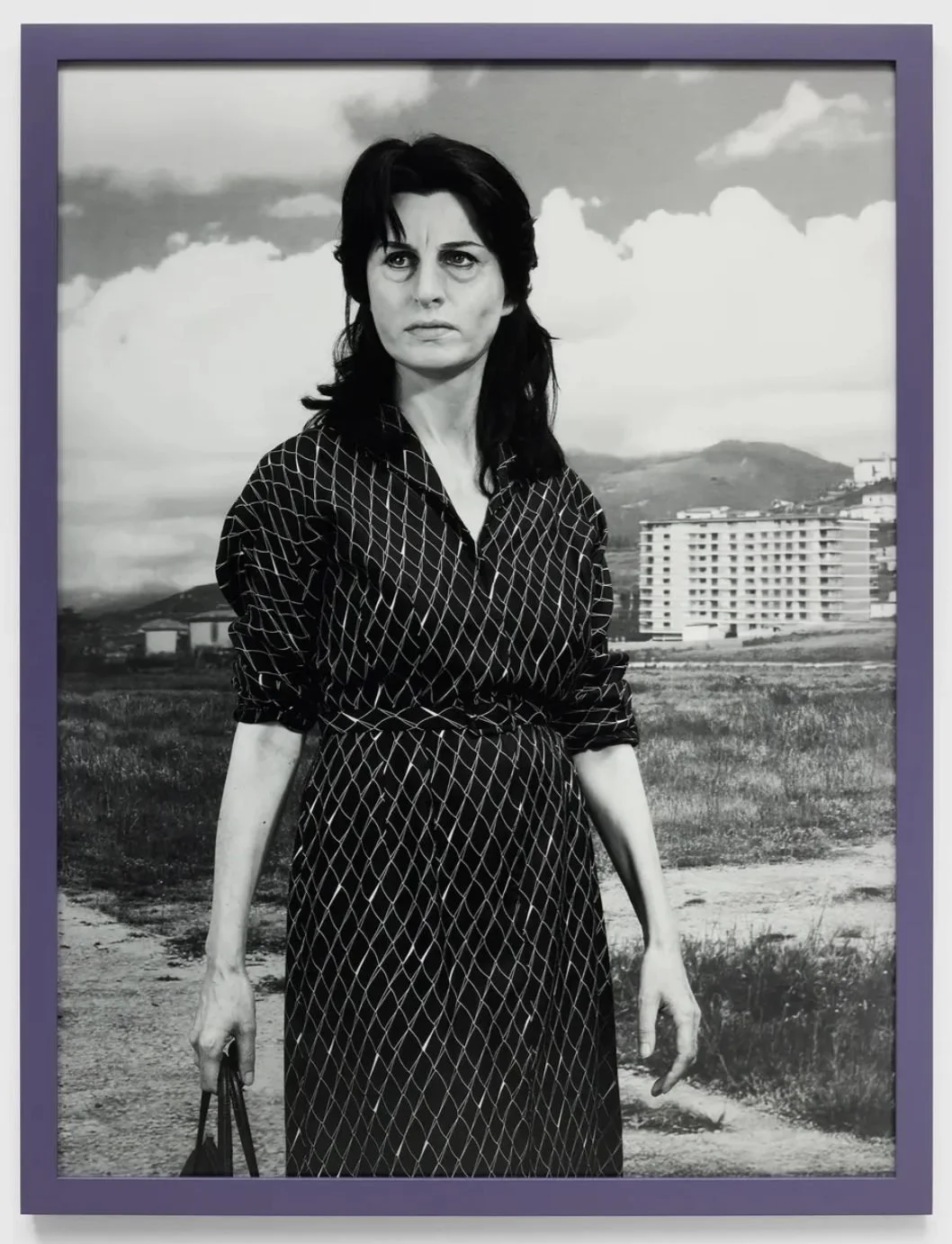
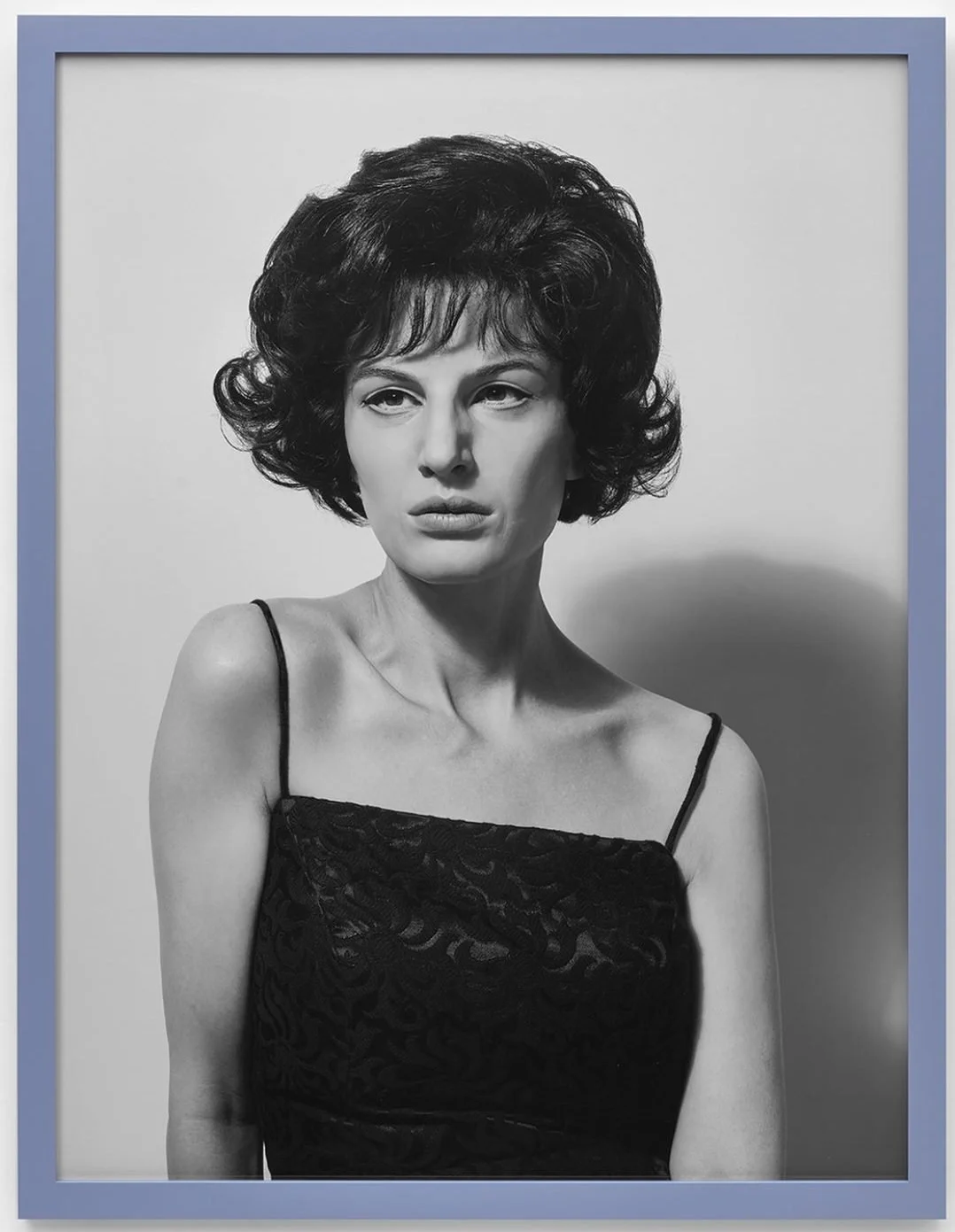
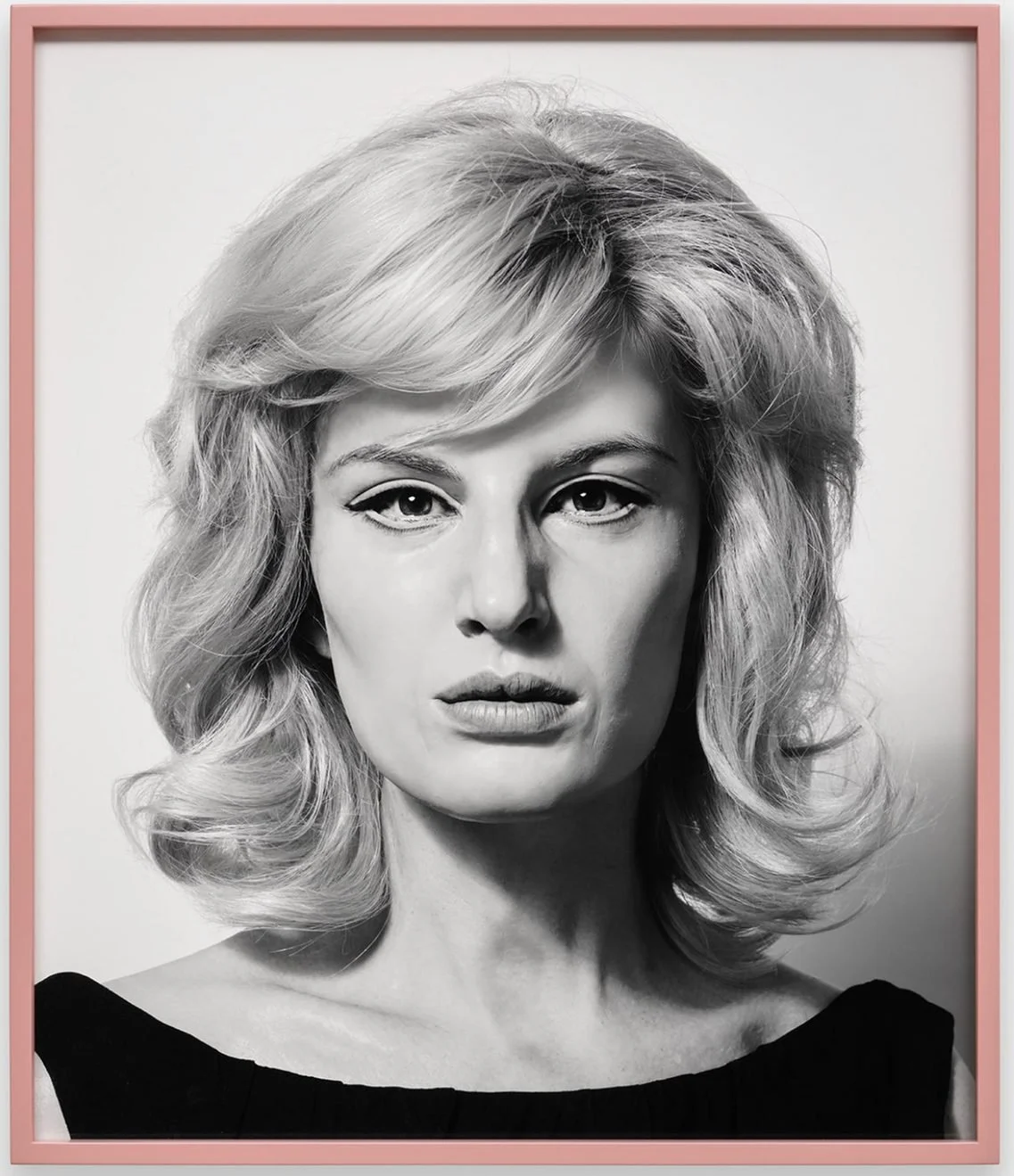
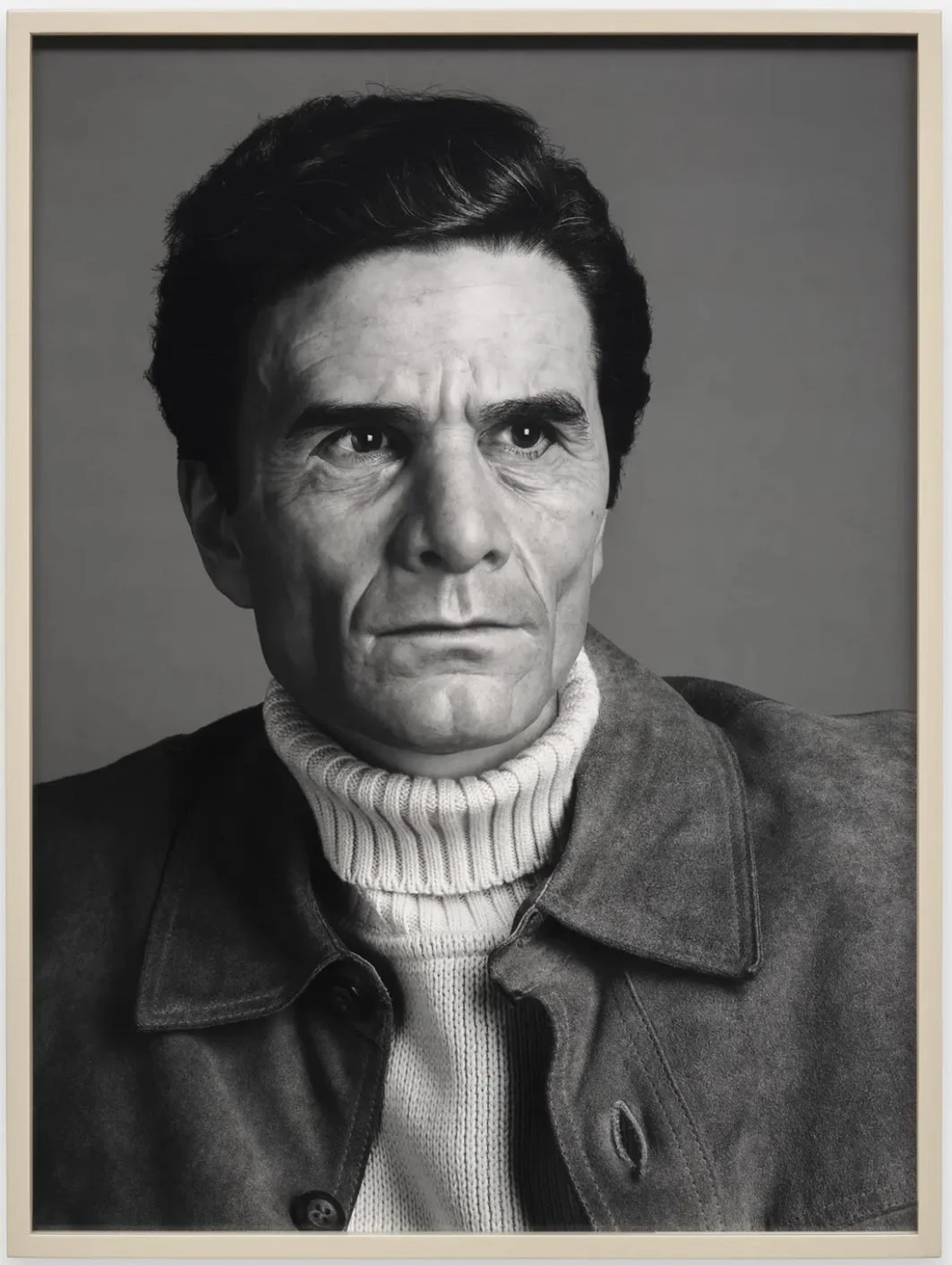
In her photographic self-portraits, Wearing has used highly detailed masks, prosthetics, wigs, clothing, lighting, and reconstructed settings to transform herself into members of her family and into earlier versions of herself.
The images initially resemble ordinary archival photographs.
Closer examination reveals the visible edges and eye openings of the mask.
The artist is simultaneously:
herself;
the relative being portrayed;
a performer;
a descendant;
a reconstruction of a photograph;
a contemporary body entering family history.
The work does not claim that Wearing can become her mother, father, brother, or younger self.
Instead, it stages the impossibility and desire contained in that attempt.
Resemblance and Distance
Family resemblance creates a peculiar relationship between identity and inheritance.
A person may recognize:
a parent’s eyes;
a sibling’s expression;
a grandparent’s posture;
a familiar gesture;
an emotional pattern.
Resemblance can produce intimacy, continuity, anxiety, pride, or resistance.
Wearing’s masks make resemblance deliberate and artificial.
She does not merely discover the family inside her face.
She constructs herself into the family through labor, materials, and photographic reenactment.
The resulting portrait is both close and distant.
The eyes belong to the artist in the present.
The face belongs to a relative or earlier self reconstructed from the past.
The image becomes a meeting point between biological inheritance, memory, fantasy, and performance.
The Eyes and the Mask
The eye openings in Wearing’s masks are especially important.
They reveal that the transformation is incomplete.
The artist looks outward from inside another face.
The mask does not fully replace her.
This prevents the image from becoming seamless impersonation.
Two identities remain simultaneously visible:
the represented person;
the person performing the representation.
The eyes become evidence of continuity within transformation.
They also create unease because the face appears almost convincing but not entirely alive.
The viewer is asked to occupy the gap between recognition and artificiality.
Self-Portraiture Without a Stable Self
Traditional self-portraiture often promises introspection.
The artist looks inward and represents who they are.
Wearing’s self-portraits suggest that the self cannot be isolated from:
family images;
inherited features;
cultural expectations;
photographic conventions;
memories;
imagined futures;
earlier versions of the body.
To portray herself, she becomes someone else.
But becoming someone else also reveals something about her.
This produces another central proposition:
The self may be most visible not when stripped of performance, but when observed moving between performances.
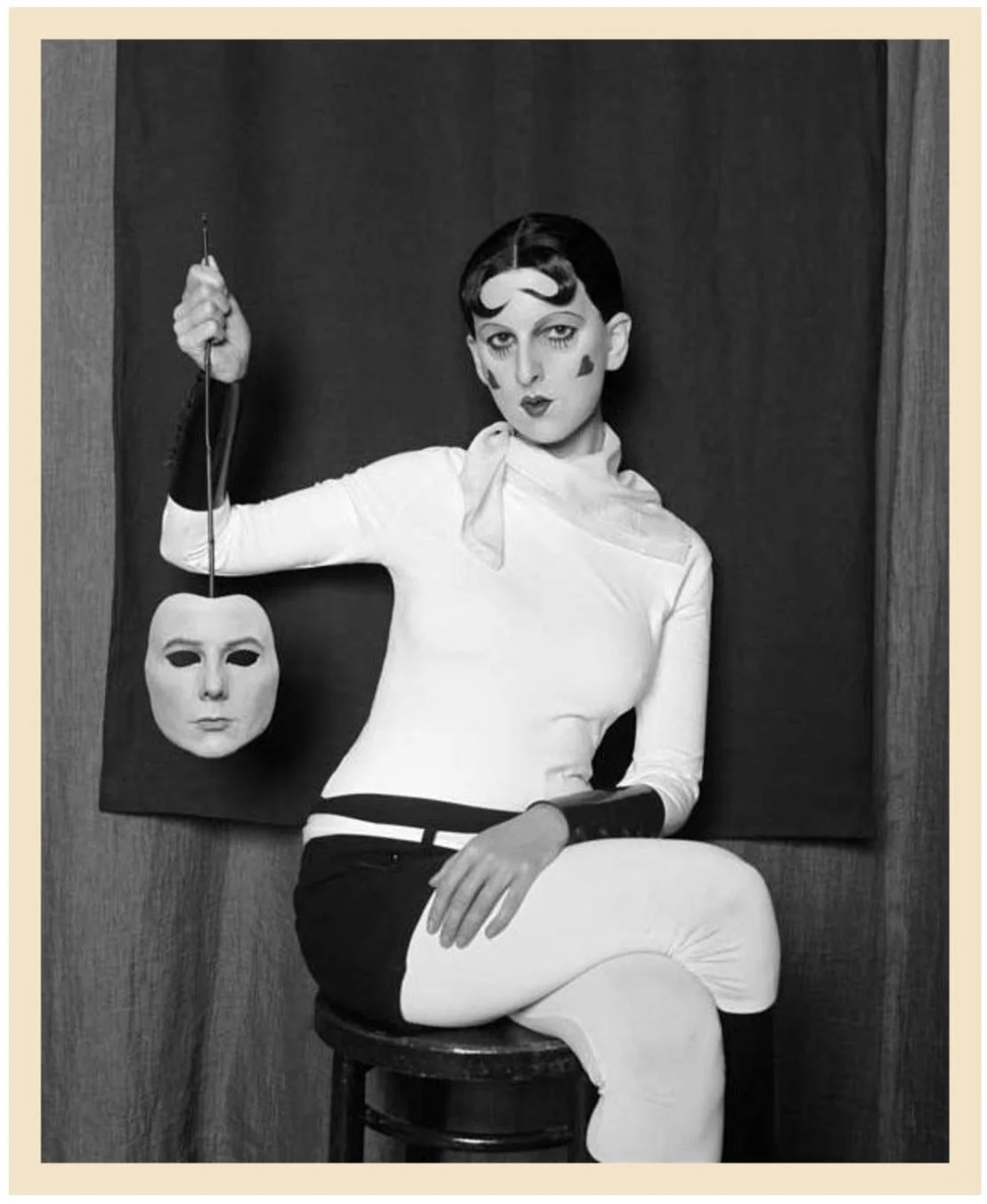
Claude Cahun and the Mask Behind the Mask
Wearing has been exhibited in dialogue with Claude Cahun, whose photographs explored gender, masquerade, doubling, theatrical self-presentation, and the instability of identity decades earlier.
The title Behind the mask, another mask captures a principle shared across both practices.
Removing one role does not necessarily reveal an original self beneath it.
Another role appears.
Behind social composure may be anxiety.
Behind anxiety may be performance.
Behind performance may be desire.
Behind desire may be another inherited image.
The process has no guaranteed final layer.
Identity becomes recursive.
Public Self and Private Self
Wearing’s work repeatedly stages the boundary between public and private life.
Public identity is shaped through:
appearance;
occupation;
social behavior;
photographic convention;
class and gender codes;
expectations of normality.
Private identity includes experiences and impulses that may remain:
unspoken;
contradictory;
embarrassing;
traumatic;
socially unacceptable;
difficult to understand even privately.
But Wearing does not treat the private realm as automatically more authentic.
Private experience is also shaped by language, memory, fantasy, media, and social expectation.
The public and private selves continually produce one another.
Media and Borrowed Identity
Contemporary people learn how to perform emotion partly through media.
Television, photography, film, advertising, social media, and family albums supply models for:
happiness;
grief;
romance;
success;
rebellion;
vulnerability;
confession.
A person may experience an emotion sincerely while expressing it through a familiar cultural script.
Wearing’s work does not dismiss that emotion as false.
It asks how much of the self becomes available through already existing images and roles.
Performance can be borrowed and still become personally meaningful.
Trauma
In works involving masked adults recounting traumatic childhood experiences, Wearing separates the apparent age of the visible face from the age and memory of the speaker.
The mask can resemble a child while the adult voice narrates experiences preserved across time.
The image creates temporal instability.
The speaker is:
the adult remembering;
the child who experienced the event;
the masked performer;
the person created through the present act of narration.
Trauma complicates chronological identity because an earlier self can remain emotionally active inside the later person.
The past does not simply stay behind.
It can reorganize the present body, voice, relationships, and sense of self.
Voice and Face
Wearing frequently disconnects the voice from the visible face.
This breaks one of the most basic assumptions of portraiture: that body, face, and speech belong to one unified subject.
When another person’s voice emerges from a face, the viewer searches for coherence.
Does the face now seem to express the borrowed words?
Does the voice change the emotional meaning of the expression?
Which source receives greater authority—the visible body or the spoken account?
The mismatch reveals how eagerly observers construct unity from conflicting evidence.
Authenticity as an Unstable Ideal
Wearing’s work belongs to a period increasingly preoccupied with authenticity.
People are encouraged to:
be themselves;
speak their truth;
reveal vulnerability;
reject artificial roles;
appear unfiltered.
But authenticity can itself become a performance.
Confession can be rehearsed.
Vulnerability can create social authority.
The unfiltered image can be carefully chosen.
A person can sincerely inhabit a constructed persona.
Wearing does not respond with cynicism.
She does not claim that everything is fake.
Instead, she proposes a more complicated possibility:
Sincerity and performance can coexist within the same act.
The Social Mask
The mask in Wearing’s work is not merely an object placed over the face.
Social behavior itself can function as a mask.
Politeness, professionalism, femininity, masculinity, confidence, normality, and emotional composure can all become forms worn in relation to others.
These forms may conceal.
They may also protect, enable, and organize social life.
A professional role can suppress private distress while creating real competence.
A confident performance can precede and help produce confidence.
A family role can become restrictive while preserving belonging.
The mask is therefore neither simply false nor simply liberating.
Its meaning depends upon what it permits and what it prevents.
Public Monuments and Collective Identity
Wearing has also produced public sculptures, including monuments to suffragist Millicent Fawcett in Parliament Square and photographer Diane Arbus in New York.
These works extend her inquiry from individual portraiture into collective memory.
A public monument constructs a social identity for its subject.
It decides how the person will be remembered through:
pose;
scale;
clothing;
inscription;
location;
institutional context.
The monument presents one version of a complex life as publicly durable.
Wearing’s engagement with monuments therefore continues her interest in how representation stabilizes identity—and what may be excluded in the process. (Public Art Fund)
Painting and the Constructed Portrait
Although Wearing is best known for photography and video, her practice has also moved into painting.
This shift is significant because painting makes construction visible in a different way.
A photograph carries a residual association with having captured something that stood before the camera.
A painting declares mediation more openly.
Every surface, expression, color, and relationship has been fabricated.
Painting allows Wearing to continue investigating portraiture while loosening the expectation of documentary evidence.
The portrait becomes less a record of who was present and more an inquiry into how identity is assembled.
The Central Contradiction
The deepest contradiction in Wearing’s practice is:
A person may need a mask in order to reveal something true, yet the revelation immediately becomes another performance.
Her work is:
documentary and staged;
intimate and mediated;
confessional and controlled;
anonymous and revealing;
empathetic and voyeuristic;
socially specific and psychologically uncertain;
autobiographical and inhabited by other people;
concerned with truth while skeptical of transparent access to it.
Wearing does not resolve these contradictions.
She creates structures in which they remain visible.
The Viewer’s Position
Wearing places the viewer in an ethically unstable position.
The viewer becomes:
witness;
interpreter;
voyeur;
judge;
confidant;
participant in the production of identity.
A confession may produce empathy, discomfort, disbelief, or fascination.
A masked face may protect the subject while increasing the viewer’s curiosity.
A sign may interrupt one stereotype while activating another.
The viewer cannot encounter the subject innocently because interpretation is one of the forces constructing the portrait.
The observer does not merely discover character. The observer helps produce it.
How the Medium Thinks
Each medium contributes differently to Wearing’s inquiry.
Photography
Photography activates assumptions about evidence, appearance, recognition, and captured identity.
Video
Video introduces voice, duration, confession, behavior, repetition, and the possibility of separating speech from the body.
Masks and prosthetics
Masks allow simultaneous concealment, transformation, protection, impersonation, and incomplete identification.
Performance
Performance reveals how identity is produced through action, audience, social convention, and risk.
Text
Handwritten language gives the subject a representational system that can support or contradict appearance.
Sculpture and monuments
Sculpture turns temporary representations into durable public identities.
Painting
Painting foregrounds fabrication and releases portraiture from the expectation of documentary transparency.
The practice remains coherent because each medium tests how people become visible to themselves and others.
What the Practice Has Discovered
Across photography, video, masks, performance, and public sculpture, Wearing’s work appears to have produced several major discoveries.
1. Appearance and interior experience do not align reliably
A person’s visible social identity may contradict what they feel, remember, or choose to disclose.
2. Self-representation does not eliminate performance
Giving subjects greater control produces different constructions of identity, not unmediated truth.
3. Masks can reveal as well as conceal
Anonymity may permit speech that visible identity prevents.
4. Identity is partly held by other people
Families, photographers, viewers, and institutions carry versions of a person that affect who that person can become.
5. Earlier selves remain active
Childhood, trauma, family photographs, and inherited roles continue shaping present identity.
6. Sincerity and performance can coexist
A constructed act can express real desire, emotion, or psychological conflict.
7. The viewer participates in portraiture
Interpretation, projection, stereotype, and expectation help produce the character perceived in the image.
8. Removing one mask does not reveal a final self
Identity remains layered, relational, and continually reconstructed.
The Artistic Capacity
Wearing has developed the capacity to make portraiture hold contradictory forms of identity without resolving them into a single explanation.
She can make:
a handwritten statement destabilize appearance;
a mask make confession possible;
another person’s voice reorganize a visible face;
a family photograph become an inhabitable identity;
a public dance expose social discipline;
a self-portrait contain several generations;
anonymity become psychologically specific;
documentation reveal its own theatrical construction.
Her work depends upon giving every representational system enough credibility to compete with the others.
The face, voice, sign, mask, memory, and viewer must each remain partially convincing.
The World Wearing Has Built
Wearing’s artistic world includes recurring:
strangers;
handwritten signs;
confessions;
masks;
family photographs;
borrowed voices;
public behavior;
private memories;
social roles;
reenactments;
monuments;
self-portraits.
These elements belong together because they all ask:
Who controls the portrait?
What can appearance reveal?
When does concealment produce freedom?
Can performance be sincere?
How do others participate in identity?
What remains of earlier selves?
Is there a final self behind the masks?
Is the Language Still Learning?
Wearing’s language is highly recognizable.
Masks, confessional structures, identity exchanges, reenactments, public participation, and reconstructed portraits now immediately signal her central concerns.
This creates a risk.
The mask can become a ready-made metaphor for identity.
A work may appear psychologically complex simply because one face covers another.
The critical question is:
Does each new use of concealment create a distinct relationship among subject, medium, audience, and power—or does the mask merely repeat the general idea that identity is unstable?
The practice remains alive when:
a new medium changes who controls representation;
a family relation creates a specific conflict;
public space changes the meaning of performance;
voice and body produce an unfamiliar ethical tension;
painting complicates photography’s documentary authority;
monumentality reveals how collective memory fixes identity.
Wearing’s ongoing Spiritual Family presentation at London’s National Portrait Gallery extends her family and self-portrait inquiries into 2026–27, suggesting that family resemblance, inheritance, and psychological relation remain active areas of development. (Tanya Bonakdar Gallery)
Risks and Limits
Wearing’s practice faces several important pressures.
Confession becoming spectacle
Private suffering can become emotionally compelling material for public consumption.
Anonymity increasing voyeurism
Concealing identity may protect the speaker while intensifying fascination with the disclosure.
Masks becoming predictable symbols
The literal mask can oversimplify the complexity of performed identity if its function does not change.
Participation appearing more equal than it is
Subjects may contribute language and performance, but the artist and institution still control selection, editing, framing, and circulation.
Psychological ambiguity becoming generalized
Not every contradiction demonstrates profound multiplicity; some may remain visually or conceptually unresolved.
Empathy becoming assumed
Exposure to testimony does not guarantee understanding, ethical relation, or meaningful change.
These risks establish the standard of the practice.
The strongest works make the structure of representation as visible as the person represented.
What the Work Expands
Wearing expands what portraiture can contain.
A portrait can include:
contradictory evidence;
another person’s memory;
a borrowed voice;
an anonymous confession;
a social role;
a family inheritance;
a performed transformation.
She expands what a mask can mean.
A mask can be:
protection;
exposure;
permission;
disguise;
empathy;
impersonation;
another form of selfhood.
She expands what authenticity can mean.
Authenticity need not require behavior untouched by performance.
A performed act may become the form through which something sincere is experienced or communicated.
Most importantly, Wearing reveals that identity is not a possession carried intact inside the individual.
It is continually produced among private experience, public appearance, social roles, media, family memory, and the interpretations of others.
What Artists Can Learn
The lesson is not simply to place masks on figures or add contradictory text to portraits.
The deeper lesson is to construct encounters in which different systems of identity remain active simultaneously.
A portrait might ask:
What does appearance imply?
What does language contradict?
Who controls disclosure?
What role does anonymity permit?
How does another person’s memory reshape the subject?
What does the observer project?
What remains unresolved after the revelation?
Wearing demonstrates that psychological complexity does not require an increasingly expressive face.
It can emerge through conflict among:
face and voice;
image and text;
appearance and confession;
person and family role;
private memory and public behavior;
concealment and revelation.
Gillian Wearing’s achievement is to make portraiture behave like a social encounter: identity appears not as a stable essence captured by the camera, but as a provisional construction formed among performance, disclosure, disguise, memory, medium, and the unstable interpretations of others.