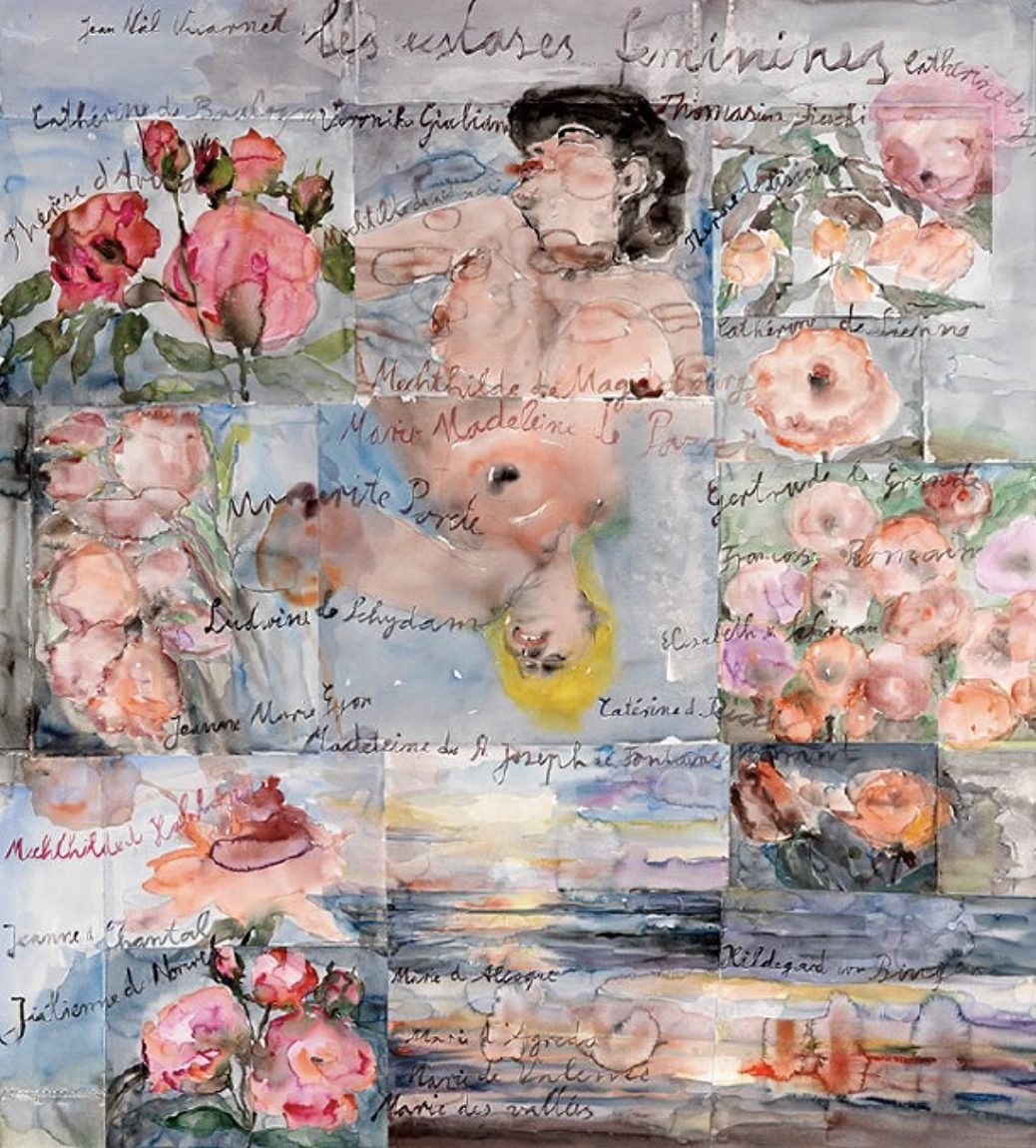
What Makes Anselm Kiefer’s Work So Powerful?
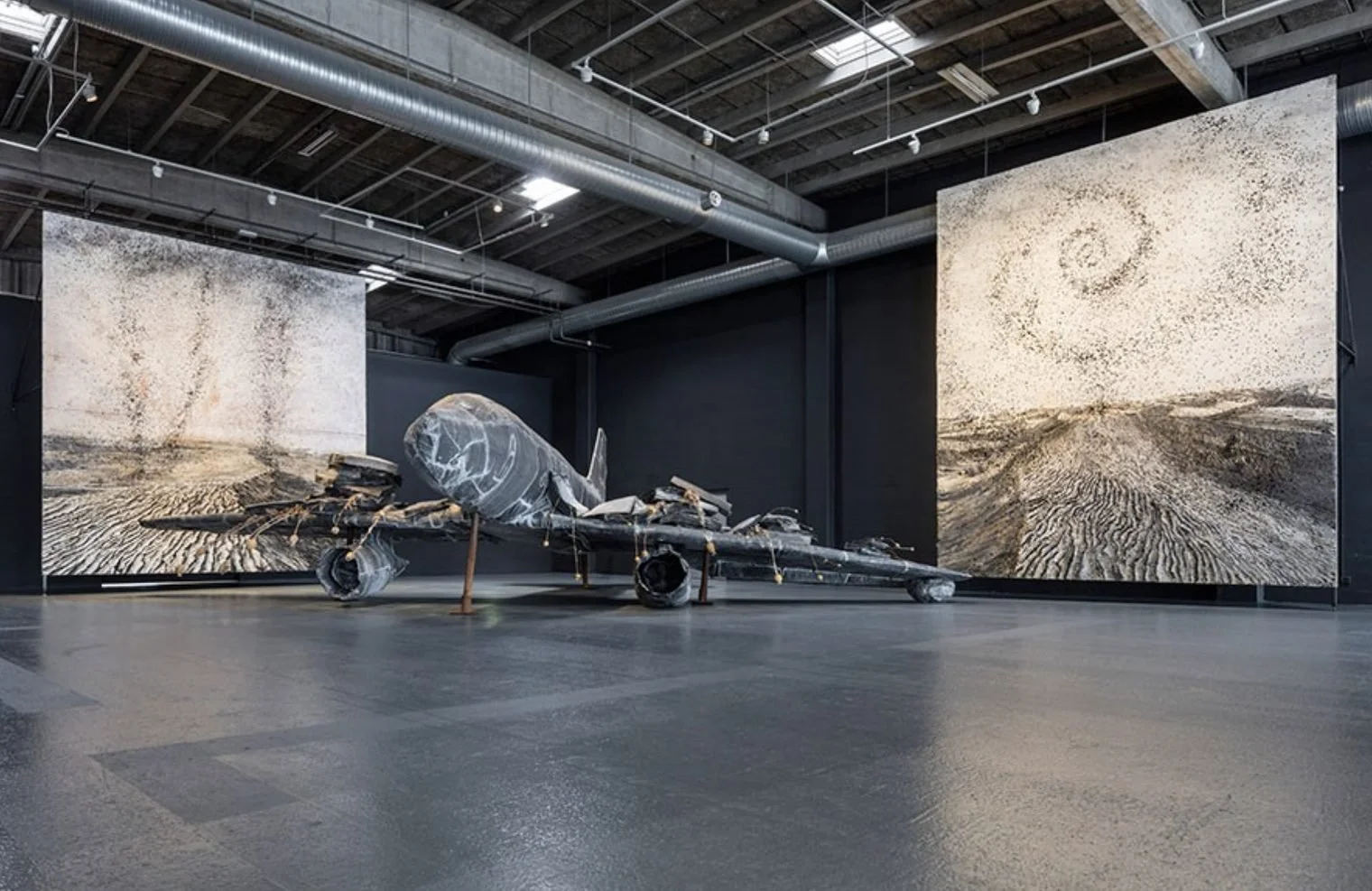
Anselm Kiefer’s work is powerful because he turns painting into a physical confrontation with history: something buried, damaged, mythologized, inherited, and still active beneath the present.
At first, the work can feel overwhelming.
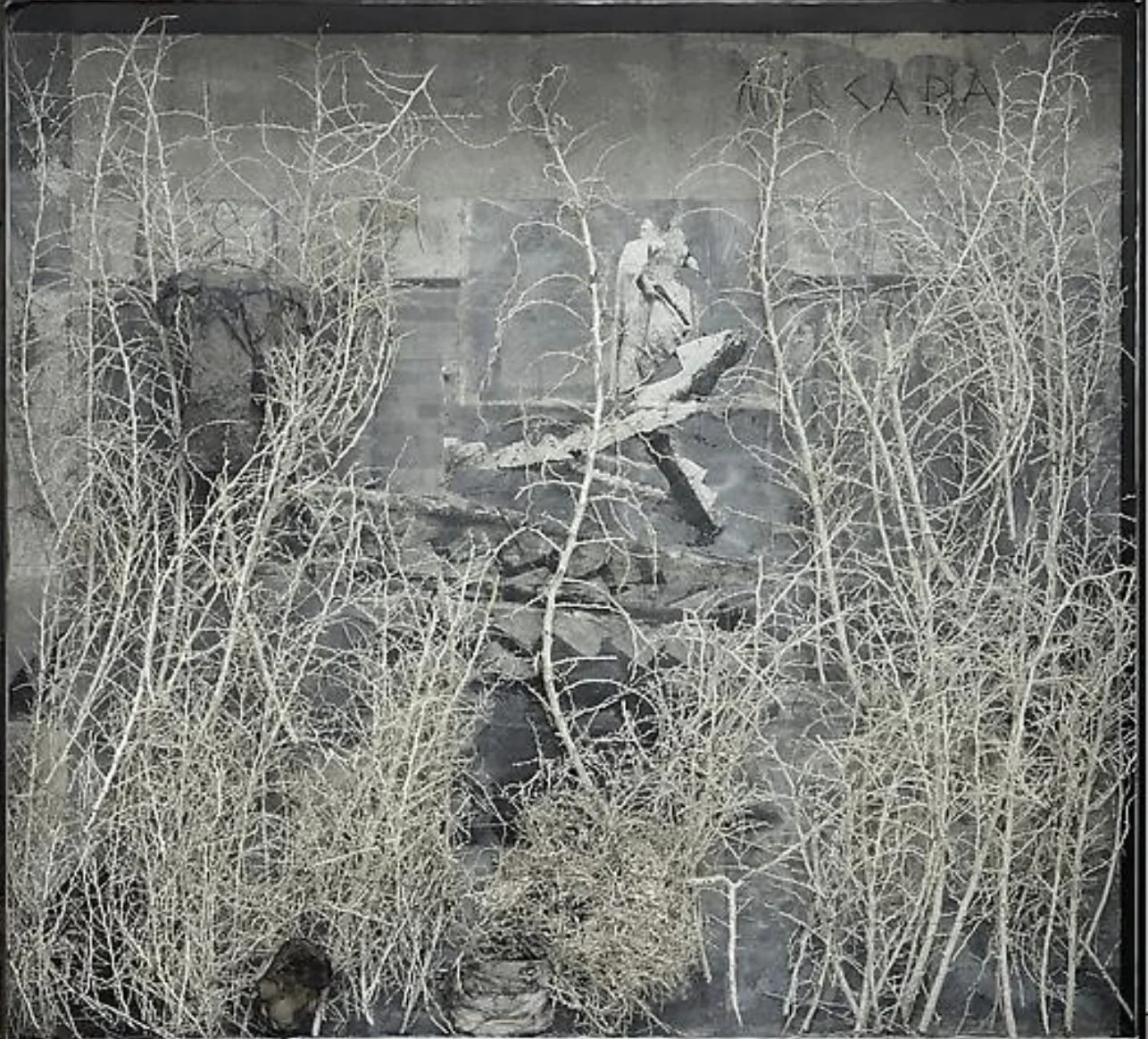
Paintings stretch across entire walls. Their surfaces are loaded with lead, straw, ash, soil, sand, wood, shellac, concrete, fabric, metal, gold leaf, dried plants, and thick deposits of paint. Books appear burned, sealed, corroded, or made impossibly heavy. Sunflowers rise from devastated landscapes. Empty architectural interiors resemble abandoned halls of power. Fields extend toward unreachable horizons. Towers appear ruined before they have finished being built.
The work often looks less like an image than the remains of an event.
Its surfaces may appear:
Burned
Eroded
Buried
Fossilized
Irradiated
Flooded
Scarred
Abandoned
Excavated
Slowly returning to nature
Kiefer does not represent history as a sequence of completed events safely contained in the past.
He treats history as matter.
It accumulates.
It decays.
It contaminates the present.
It is covered and uncovered.
It changes form without disappearing.
White Cube describes Kiefer’s practice as navigating the immensity of history and humanity, especially the political inheritances of postwar Germany, while rejecting the idea that history progresses in a clean, linear sequence. Traditions, beliefs, myths, and political narratives remain tangled together in its construction. (White Cube)
The work asks what happens when a culture cannot simply leave its history behind.
The Problem Beneath the Work
Kiefer repeatedly returns to a central artistic problem:
How can art confront catastrophic history without pretending that history can be fully understood, repaired, or escaped?
This problem emerged from a specific historical condition.
Kiefer was born in Germany in 1945, during the final months of World War II. He came of age in a postwar culture marked by physical destruction, moral catastrophe, national shame, and widespread silence about the Nazi period. (Gagosian)
The question facing his generation was not simply how to remember the past.
It was how to live inside a national identity whose inherited myths, symbols, landscape, philosophy, literature, and artistic traditions had been exploited by fascism.
German forests, heroic legends, monumental architecture, Wagnerian mythology, Romantic landscape, military imagery, and national symbolism could no longer be treated as culturally innocent.
Yet abandoning those traditions completely would leave them uncontested.
Kiefer’s work enters this impossible position.
He returns to compromised histories rather than avoiding them.
He asks:
Can a damaged culture examine its own myths without repeating them?
Can art address atrocity without turning suffering into spectacle?
Can beauty remain possible after historical catastrophe?
Can destruction become transformation without becoming redemption?
Can memory resist erasure without claiming to restore what has been lost?
Can inherited symbols be used after they have been politically contaminated?
Can a nation confront its past without converting guilt into another form of self-mythology?
The paintings do not solve these questions.
They build a world in which the questions remain materially present.
History Is Not Behind Us
A conventional understanding of history places the past behind the present.
An event happens.
Time moves forward.
The event becomes memory, documentation, education, or commemoration.
Kiefer’s work resists that clean sequence.
In his paintings, the past remains embedded in:
Land
Architecture
Language
Materials
Myths
Books
National symbols
Cultural memory
Repeated forms
Damaged objects
History behaves more like geology than chronology.
One layer covers another but does not eliminate it.
A later civilization occupies the remains of an earlier one.
A new ideology reuses an old myth.
A building survives the political system that created it.
A landscape conceals what occurred there.
A book preserves an idea while also becoming vulnerable to burning, censorship, or decay.
The present is therefore not separate from history.
It stands on top of it.
Kiefer’s surfaces make that condition physical. Paint, earth, metal, and plant matter accumulate until the canvas resembles a historical site rather than a transparent image.
Painting as Ruin
Many paintings attempt to create the illusion of a complete world.
Kiefer’s paintings often appear already ruined.
Their surfaces crack, collapse, flake, corrode, and extend beyond conventional pictorial space. Objects may be attached directly to the canvas. Material hangs outward, casting shadows and threatening to fall.
The painting appears to have undergone time.
It may resemble:
An archaeological wall
A battlefield
A scorched field
An abandoned monument
A damaged manuscript
A religious relic
An industrial ruin
A geological cross-section
This changes the status of the artwork.
It is not merely an image of destruction.
It has been constructed to behave like something that has survived destruction.
The distinction is essential.
A painted image of a ruined landscape might depict damage.
Kiefer’s damaged material allows the object itself to carry weight, fracture, instability, and decay.
The surface does not describe history from a distance.
It appears subjected to history.
Material as Historical Language
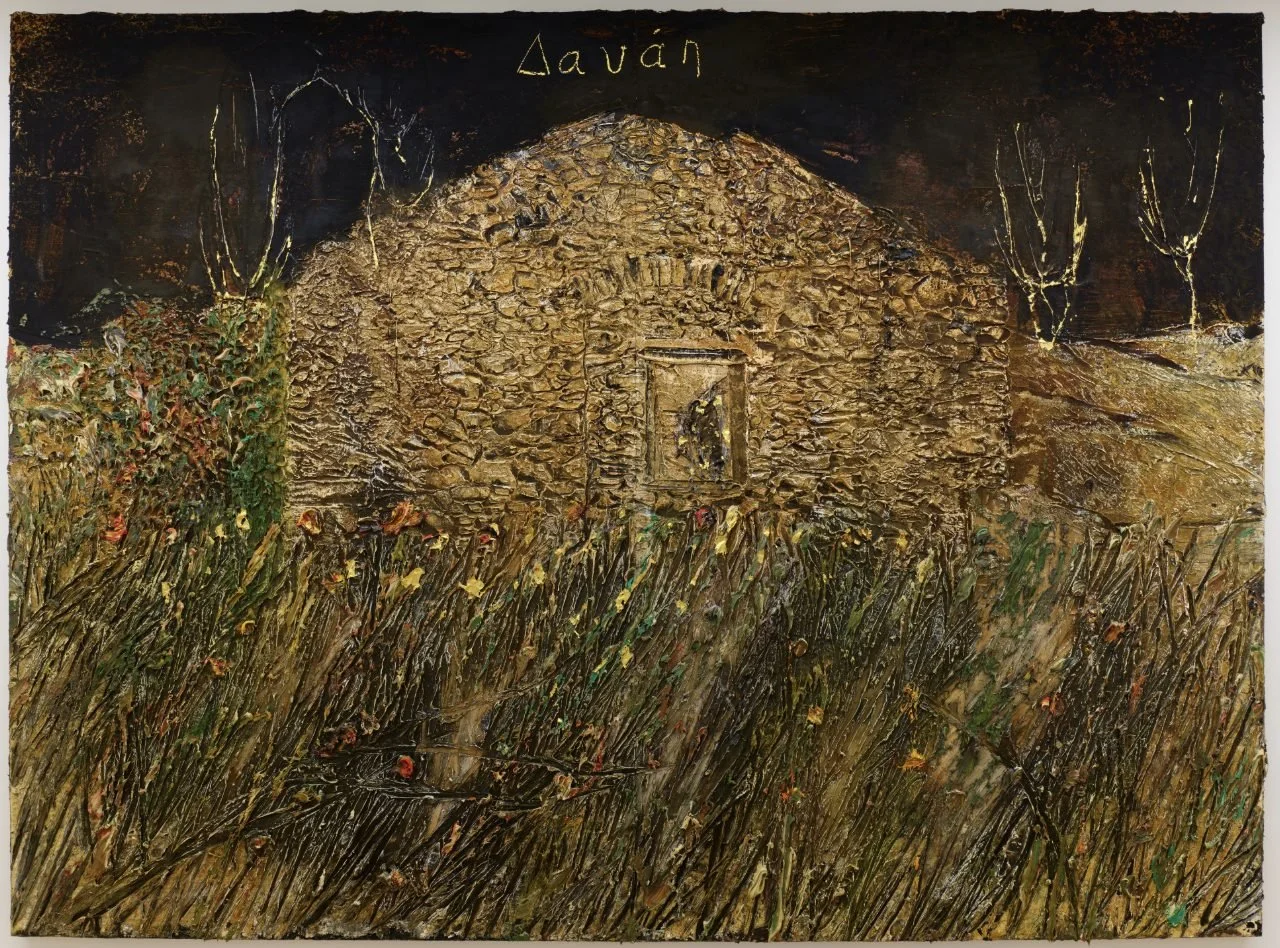
Kiefer’s materials are never neutral.
They arrive with physical properties and cultural associations already inside them.
Lead
Lead is heavy, toxic, protective, malleable, and associated with alchemy, industry, warfare, radiation shielding, and transformation.
It can be folded like fabric but retains enormous weight.
In Kiefer’s books, aircraft, sculptures, and installations, lead often produces a contradiction between knowledge and silence.
A book promises access to meaning.
A lead book cannot easily be opened or read.
Knowledge becomes physically present but inaccessible.
The object resembles an archive whose contents have survived while becoming unusable.
Lead can therefore suggest:
Burden
Historical weight
Protection
Contamination
Permanence
Transformation
Failed knowledge
Cultural memory sealed shut
Straw
Straw is light, dry, agricultural, temporary, and highly combustible.
It can evoke:
Fields
Harvest
Rural labor
Human fragility
Fire
Decay
Bedding
Gold
Hair
Seasonal cycles
When straw enters a monumental painting, it introduces the possibility that the artwork may continue to age and deteriorate.
Its golden color can appear luminous, but its physical vulnerability remains visible.
Beauty and destruction occupy the same material.
Ash
Ash is what remains after fire.
It is evidence of transformation, but also of irreversible loss.
Ash can suggest:
Burning
Death
War
Cremation
Destroyed books
Ruined cities
Purification
Resurrection
Matter returning to dust
It cannot reveal exactly what existed before the fire.
Ash preserves the fact of destruction while erasing the original form.
That makes it an ideal material for work concerned with memory.
Earth and sand
Earth carries place, burial, agriculture, territory, and physical history.
It is the ground on which events occur and the material that eventually covers their remains.
When earth enters painting, landscape stops being merely represented.
The landscape becomes physically present.
Gold
Gold can signify:
Divinity
Sacred light
Wealth
Power
transcendence
immortality
alchemical transformation
imperial splendor
But in Kiefer’s work, gold often appears beside ash, corrosion, dead plants, damaged figures, and devastated land.
It does not escape ruin.
The sacred and the destroyed remain together.
Recent works have continued this material tension, incorporating oil, acrylic, shellac, collaged canvas, gold leaf, and industrial sediment into thick surfaces concerned with nature, myth, growth, and transformation. (Gagosian)
Destruction and Creation Occur Together
Kiefer’s work repeatedly blurs the distinction between making and destroying.
He builds surfaces and then subjects them to processes that may include:
Burning
Weathering
Breaking
Burying
Oxidation
Exposure to rain
Scraping
Covering
Reopening
Leaving works outdoors
The finished object may continue changing after the artist has stopped working on it.
This introduces time into the material.
The artwork does not simply symbolize transformation.
It undergoes transformation.
That process creates one of the central contradictions of the practice:
Destruction can erase history, but destruction can also reveal what a stable surface was concealing.
A cracked surface exposes lower layers.
Burning changes one material into another.
Decay makes time visible.
A ruined object loses its original function but may acquire the force of evidence.
Kiefer does not romanticize destruction as automatically healing. The work rarely offers clean renewal.
Instead, creation and destruction remain inseparable.
Every new form contains the possibility of collapse.
Every ruin contains the possibility of another beginning.
Landscape After Catastrophe
Landscape is one of Kiefer’s central forms.
His fields often extend toward high horizons beneath enormous skies. Furrows lead the eye into depth. Roads, railway-like lines, or scorched rows organize the terrain. The land may contain straw, ash, flowers, burned books, names, numbers, towers, or fragments of machinery.
These are not peaceful landscapes.
Even when no human figure is present, the earth appears historically occupied.
The viewer may sense:
Agriculture
Battlefields
mass graves
national territory
burned villages
industrial contamination
mythological terrain
spiritual pilgrimage
The absence of figures does not empty the landscape.
It increases the force of what may have happened there.
The land becomes witness.
This is important because landscapes are often used to naturalize national identity. A country may imagine itself through forests, rivers, mountains, fields, and rural traditions.
Kiefer makes national landscape unstable.
The ground carries beauty and guilt.
It can nourish life while concealing death.
It can become homeland and crime scene simultaneously.
The German Forest and Contaminated Myth
The forest has a deep place in German cultural history.
It has been associated with:
Folklore
Romanticism
National origins
Myth
Spiritual encounter
Isolation
Heroic identity
Cultural purity
Those associations were later appropriated by nationalist and fascist ideology.
Kiefer’s use of forests and Germanic myth therefore cannot function as innocent nostalgia.
When trees, branches, names, and legends appear, they carry the pressure of cultural misuse.
The question is not merely whether a symbol is beautiful.
It is what that beauty has been asked to serve.
Kiefer returns to contaminated imagery because abandoning it might allow its ideological use to remain unexamined.
The work enters the symbol and makes its damage visible.
Architecture and the Theatre of Power
Kiefer’s early paintings frequently depict vast wooden halls, monumental interiors, or architectural spaces associated with state power, ritual, memory, and fascist spectacle.
These spaces may appear empty.
That emptiness is crucial.
The architecture remains after the bodies, speeches, ceremonies, and political system have disappeared.
An empty hall can suggest:
Authority without an occupant
Power surviving its leaders
A stage after propaganda
Cultural memory stripped of witnesses
The persistence of institutional form
A tomb
A ruined temple
Monumental architecture attempts to make political power feel permanent.
Kiefer paints that ambition after its failure.
The building survives as a haunted image.
Books That Cannot Speak
Books recur throughout Kiefer’s practice as paintings, sculptures, lead objects, and installation elements.
A book conventionally represents:
Knowledge
Cultural transmission
Law
Religion
History
Poetry
Memory
Authority
Civilization
But Kiefer’s books are often unreadable.
They may be:
Burned
Sealed
Made of lead
Filled with ash
Damaged
Oversized
Fossil-like
Abandoned
Placed inside vitrines
This creates another central contradiction:
The book survives as an object while failing as a carrier of accessible language.
The work asks what happens when knowledge exists but cannot be recovered, believed, or communicated.
In Cette obscure clarté qui tombe des étoiles, cracked paintings and a toppled bookcase filled with decaying manuscripts evoke historical trauma, cultural destruction, and the burning or erasure of literature.
A damaged book can become a memorial to knowledge.
But it can also reveal the fragility of civilization’s claim to preserve truth.
Language, Poetry, and the Limits of Images
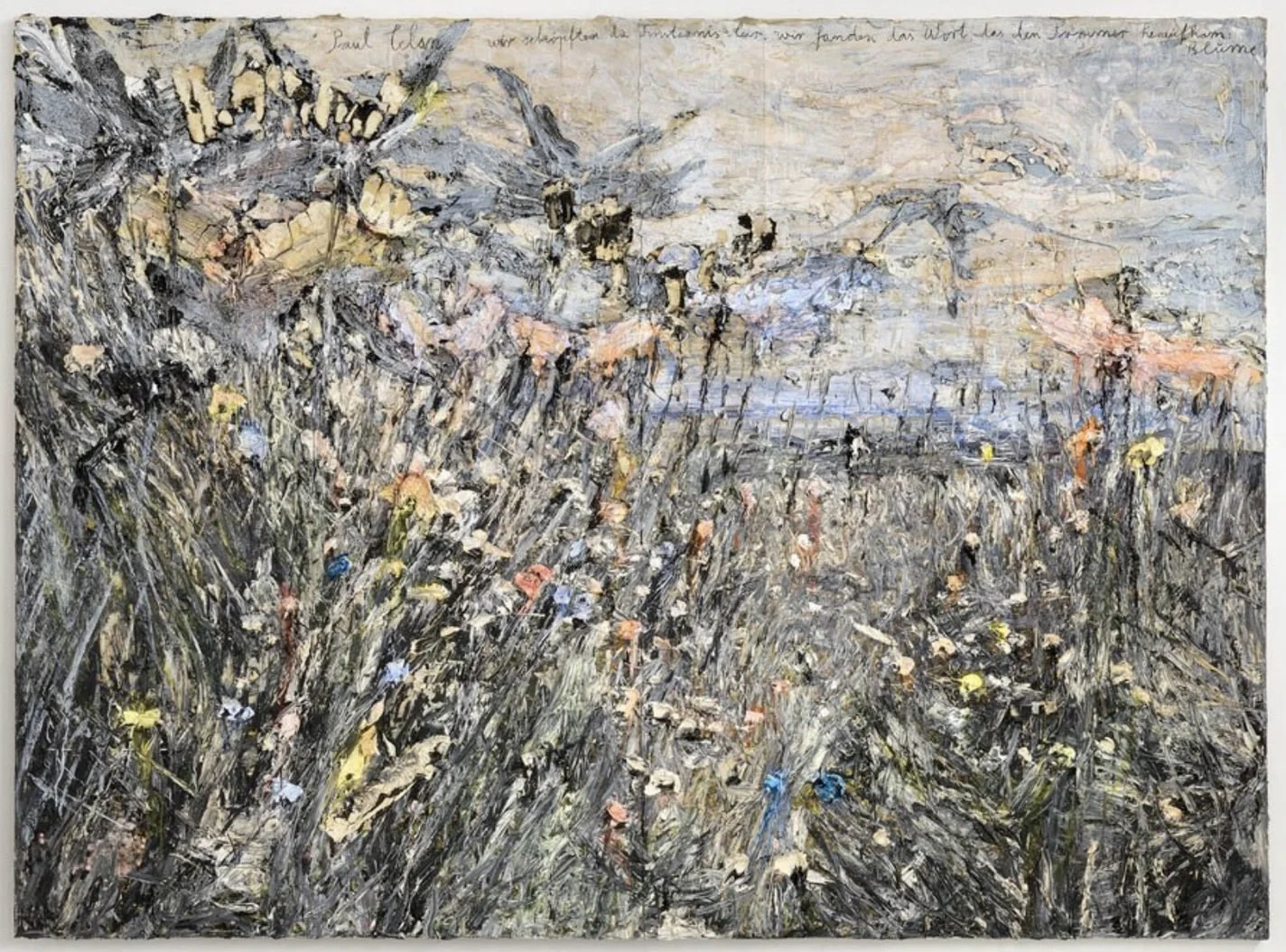
Kiefer frequently writes names, quotations, titles, and poetic fragments directly onto paintings.
His sources include poets, philosophers, religious texts, mythology, mysticism, alchemy, astronomy, and history.
Language in the work can function as:
Title
Invocation
Citation
Memorial
Spell
Historical clue
Contradiction
Another material layer
The words do not necessarily explain the image.
They may make it more difficult.
A name can summon an absent person.
A quotation can connect the landscape to a distant myth.
A handwritten phrase can create intimacy inside monumental scale.
Poetry is useful to Kiefer because it allows meaning to remain compressed, suggestive, and unresolved.
Historical explanation seeks clarity.
Poetry can hold contradiction.
Kiefer’s engagement with poets and mythological figures continues in recent work, where literary sources connect landscape to memory, allegory, growth, and mortality. (Gagosian)
Myth as a Dangerous Resource
Kiefer draws heavily from mythology.
This includes:
Germanic legend
Greek and Roman mythology
Jewish mysticism
Christian imagery
Mesopotamian stories
Alchemy
Cosmology
Ancient symbols of death and rebirth
Myth allows the work to move across historical periods.
A contemporary disaster can echo an ancient story.
A field can become a site of national history and cosmic transformation.
A material process can become alchemical.
But myth is not politically innocent.
Myths can create belonging.
They can also justify nationalism, exclusion, hierarchy, conquest, and fantasies of cultural destiny.
Kiefer uses myth from inside this danger.
The work asks whether myths can be transformed after they have been politically abused.
His answer is never secure.
The symbols remain wounded.
Alchemy and Material Transformation
Alchemy is one of Kiefer’s most persistent intellectual structures.
Historically, alchemy sought the transformation of matter: base metal into gold, decay into purification, physical substance into spiritual knowledge.
For Kiefer, alchemy offers a way to think about artistic process.
Lead becomes sculpture.
Ash becomes pigment.
Straw resembles gold.
Decay produces new surfaces.
A ruined object becomes a carrier of meaning.
But Kiefer’s alchemy does not promise easy transcendence.
Matter does not simply rise from impurity into perfection.
Gold remains attached to destruction.
Rebirth remains dependent on death.
The transformed material remembers what it was.
The Met describes one early work involving a lifeless branch emerging from a wounded body as connected to Kiefer’s long interest in historical images of death, rebirth, and alchemical transformation. (The Metropolitan Museum of Art)
The work therefore holds transformation and trauma together.
Sunflowers: Life Facing Death
Sunflowers recur throughout Kiefer’s work.
They can signify:
Solar energy
Growth
Fertility
Seeds
Cyclical time
Van Gogh
Human bodies
Cosmic order
Death after flowering
A sunflower turns toward light while alive.
After maturity, its head bends downward.
The flower contains its future through seeds, but its visible form is already entering decay.
This makes it a powerful image for Kiefer.
Life and death are not separate moments.
One is already present inside the other.
The flower grows, blackens, collapses, and produces the possibility of further growth.
Kiefer’s sunflowers often appear dried, enormous, charred, or humanlike. They can rise above figures or connect bodies to cosmic systems.
The Met notes that he has juxtaposed fossilized sunflower forms with the human body, strengthening the connection among organic cycles, mortality, and transformation. (The Metropolitan Museum of Art)
Why the Formal Choices Matter
Kiefer’s work is visually spectacular, but the major formal choices are tied closely to the deeper problem.
Monumental scale makes history bodily
History can become abstract when presented through dates, summaries, or statistics.
Kiefer’s scale returns history to the body.
The viewer stands before something too large to comprehend from one position.
A painting may resemble:
A wall
A landscape
An institution
A monument
A ruin
A field extending beyond vision
The viewer becomes physically small.
This creates a relationship between individual experience and forces larger than the individual:
National history
War
religion
mythology
time
death
cultural inheritance
Scale does not merely make the work impressive.
It makes limited understanding physical.
Heavy material gives history weight
Lead, earth, concrete, wood, ash, and thick paint make the object visibly heavy.
History ceases to be an abstract idea.
It becomes burden.
Fragile material prevents monumentality from becoming stable
Straw, dried plants, cracked paint, ash, and corroding metal introduce vulnerability.
The monumental object may be physically unstable.
This prevents scale from becoming a simple celebration of power.
High horizons reduce escape
Many landscapes use strong perspective lines leading toward a distant horizon.
The viewer may feel pulled into the field.
But the destination remains unreachable.
The landscape becomes a journey without arrival.
Earth colors create historical atmosphere
Browns, blacks, grays, ochres, whites, rusts, and metallic tones connect the paintings to soil, ruin, ash, architecture, and damaged photographs.
When bright color or gold appears, it becomes charged because it emerges from devastation.
Attached objects break pictorial distance
Branches, dresses, books, tools, plants, and pieces of metal may project from the canvas.
The image enters the viewer’s physical space.
The painting can no longer remain a window.
It becomes an object with consequences.
Handwritten text makes monumentality personal
A small handwritten name or phrase can sit inside an enormous field.
The contrast creates intimacy inside historical scale.
The human gesture survives within the ruin.
The Central Contradictions
Kiefer’s work holds opposing forces together:
Monumental and fragile
Beautiful and devastated
Historical and mythological
Material and spiritual
Ruined and generative
Heavy and transcendent
Nationally specific and cosmological
Scholarly and bodily
Memorializing and uncertain
Constructed and decaying
Sacred and contaminated
Dead and capable of rebirth
The deepest contradiction may be:
The work searches for transformation while refusing to pretend that transformation erases destruction.
This prevents the art from becoming optimistic restoration.
The wound remains visible.
The new form carries the old damage.
The Viewer’s Position
Kiefer gives the viewer several roles.
The viewer becomes physically small
Monumental scale makes the individual confront forces that cannot be mastered from one position.
The viewer becomes an archaeologist
Layers, inscriptions, objects, materials, and references invite excavation.
The viewer looks for evidence inside the surface.
The viewer becomes a witness after the event
The paintings frequently resemble aftermath.
The viewer arrives too late to see what happened but must confront what remains.
The viewer becomes a reader
Titles, names, quotations, myths, and literary references require interpretation.
But reading does not produce final certainty.
The viewer becomes morally uncertain
Beauty, devastation, sacred imagery, and historical trauma coexist.
The viewer may feel awe before work concerned with catastrophe.
That aesthetic pleasure becomes ethically complicated.
The viewer becomes conscious of limited knowledge
No viewer can decode every mythological, historical, religious, poetic, and material reference.
The work makes incomplete understanding unavoidable.
The World Kiefer Has Built
Kiefer’s recurring lexicon includes:
Scorched fields
High horizons
Forests
Towers
monumental halls
lead books
sunflowers
ash
straw
gold
earth
aircraft
ships
ladders
dresses
snakes
palettes
written names
stars
ruins
vitrines
broken architecture
mythological figures
These motifs create a recognizable world, but they do not remain fixed.
A book may represent knowledge, silence, destruction, or burden.
A sunflower may represent growth, mortality, cosmic order, or artistic inheritance.
A tower may suggest ambition, civilization, imprisonment, collapse, or spiritual striving.
Gold may signify transcendence or the danger of false grandeur.
A landscape may be homeland, battlefield, grave, mythic terrain, or psychological condition.
The lexicon remains alive because the symbols continue to change under historical and material pressure.
La Ribaute: The Artistic World Becomes a Place
Kiefer’s former studio estate at La Ribaute in Barjac, southern France, expands his visual world into architecture and landscape.
The site contains studios, tunnels, towers, underground chambers, installations, sculptures, storage spaces, and works integrated with the surrounding environment. It has been maintained by the Eschaton–Anselm Kiefer Foundation and opened for guided public access. (White Cube)
La Ribaute makes clear that Kiefer is not only producing individual paintings.
He is building a total environment.
The site behaves like:
An archaeological ruin
A future civilization
A memory palace
A destroyed city
A private mythology
An evolving archive
A landscape artwork
A laboratory of decay
Works remain exposed to time and weather.
Architecture becomes sculpture.
Movement through space becomes part of interpretation.
The viewer does not simply look at the world Kiefer has created.
The viewer enters it.
The Risk of Monumental Seriousness
Kiefer’s work carries substantial risks.
Its scale, materials, historical subjects, mythological references, and ruined appearance can create immediate grandeur.
That grandeur may become seductive.
The work could risk becoming:
Operatic
Overwhelming
Self-mythologizing
Theatrically profound
Monumental for its own sake
Visually predictable
Burdened by excessive symbolism
Too willing to convert catastrophe into beauty
A scorched landscape is not automatically historically serious.
Lead is not automatically meaningful.
Ash is not automatically memory.
A mythological reference is not automatically deep.
Large scale is not automatically necessary.
The critical question is:
Does each material and symbol make a specific historical, philosophical, or spiritual pressure physically active, or does the work merely reproduce the established Kiefer atmosphere of ruin and transcendence?
The strongest works make material, source, title, scale, and historical problem inseparable.
The weaker possibility would be generalized apocalypse.
Can Catastrophe Become Too Beautiful?
This is one of the most difficult questions raised by Kiefer’s work.
The paintings can be extraordinarily beautiful.
Gold shines across damaged surfaces.
Straw catches light.
Ruined fields become visually magnificent.
Cracked materials create rich textures.
Monumental scale produces awe.
But the work often addresses war, genocide, nationalism, cultural destruction, and historical trauma.
The viewer therefore encounters a troubling contradiction:
Can beauty deepen historical attention, or can it make catastrophe aesthetically consumable?
Kiefer does not eliminate this danger.
He works inside it.
The materials attract viewers and then confront them with weight, decay, toxicity, unreadable language, and unresolved history.
Beauty becomes serious only when it fails to provide relief.
The gold does not repair the ruin.
It illuminates it.
Why the Work Belongs to the Present
Kiefer’s work remains urgent because contemporary societies continue to struggle with:
Historical denial
National mythology
Political extremism
War
Cultural memory
Disinformation
Destruction of archives
Environmental devastation
Contested monuments
Religious conflict
The return of authoritarian symbols
The difficulty of collective accountability
The question of how nations narrate their past has not been resolved.
History is continually revised, weaponized, erased, simplified, commemorated, and denied.
Kiefer’s work refuses historical cleanliness.
It shows that culture is built from overlapping inheritances, some beautiful and some catastrophic, often inseparable from one another.
The work also speaks to ecological instability.
Fields, plants, earth, fire, water, metal, and decay connect political history to natural cycles. Human civilizations appear temporary beside geological and cosmic time.
The ruined monument eventually becomes matter.
The book decays.
The tower collapses.
The field grows again, but not as though nothing happened.
What Artists Can Learn
The lesson is not to imitate Kiefer’s scorched landscapes, monumental scale, lead books, straw, ash, sunflowers, ruined towers, handwritten quotations, or mythological imagery.
Those are the visible solutions produced by his particular investigation.
The larger lesson is that material can become a form of historical thinking.
Kiefer demonstrates that:
History can be embedded in the object rather than merely depicted.
Material should carry meaning through its actual behavior.
Weight can make burden physical.
Fragility can destabilize monumentality.
Decay can introduce real time into the work.
Landscape can become witness.
Architecture can reveal the persistence of power.
Myth can be examined without being treated as innocent.
Books can represent the survival and failure of knowledge.
Beauty can confront catastrophe without resolving it.
Scale can make limited understanding bodily.
Repetition can build a symbolic lexicon across decades.
A body of work can expand into an entire physical world.
Transformation becomes meaningful when it does not erase the evidence of damage.
Kiefer does not treat the past as a subject that can be completed.
History enters matter.
Matter decays.
Decay exposes another layer.
The layer becomes memory.
Memory becomes myth.
Myth becomes politically dangerous.
Art returns to the ruin and begins again without declaring it healed.
The lesson is not to copy the appearance of the work. It is to understand the pressure that made the appearance necessary.
Anselm Kiefer turns painting into a material archaeology of history, where destruction, memory, myth, and the possibility of transformation remain inseparable.