What Makes Lynette Yiadom-Boakye’s Paintings So Powerful?
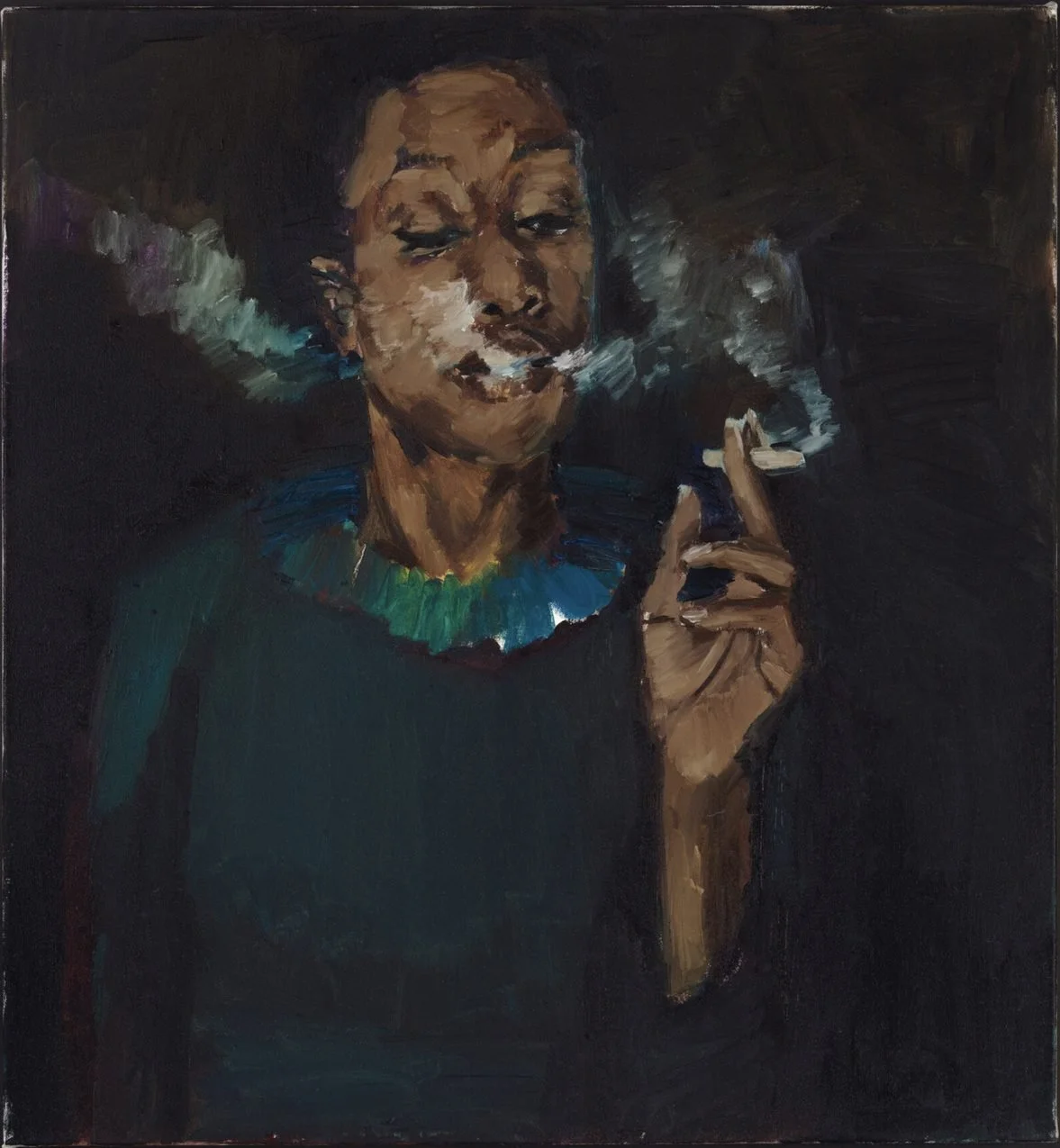
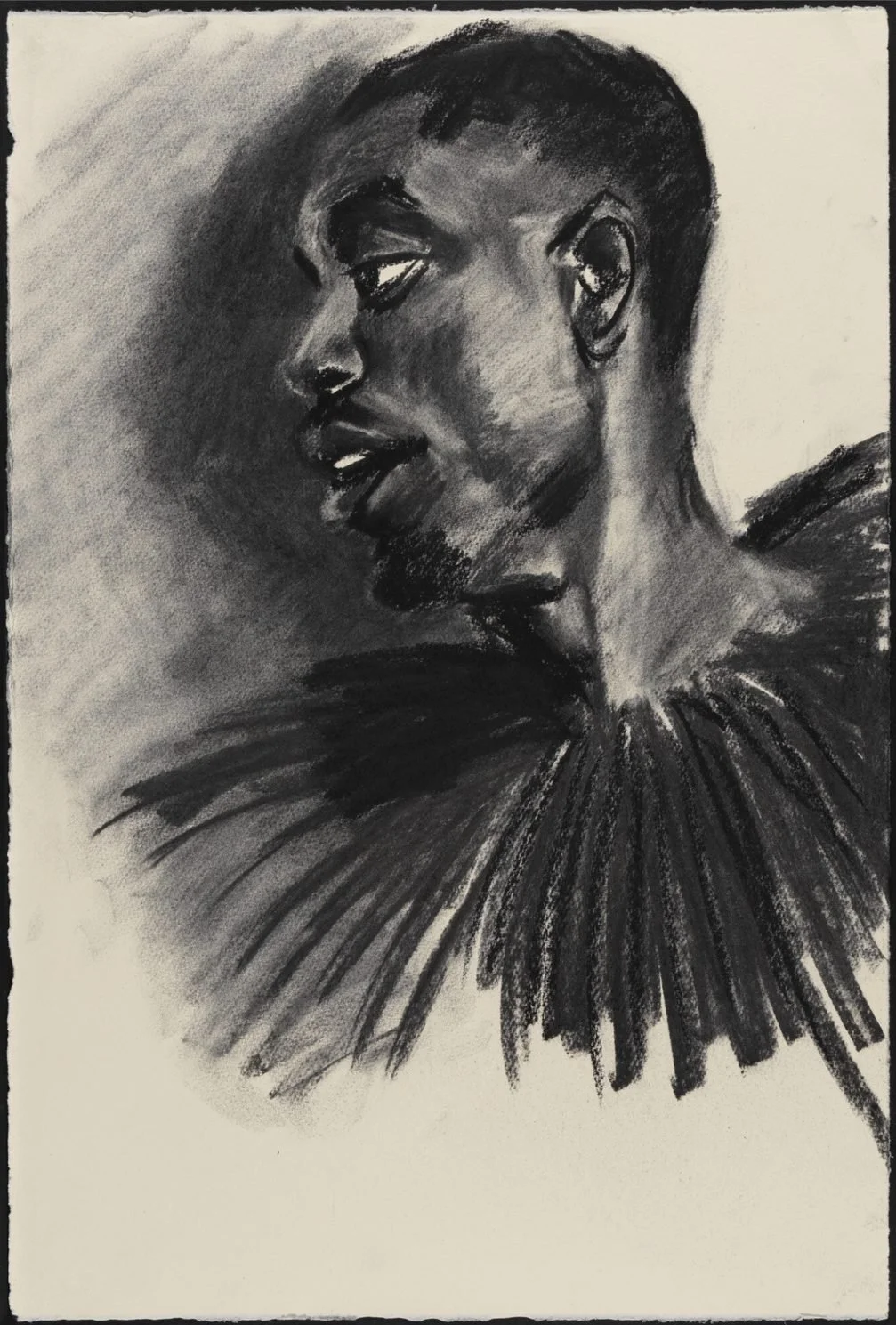
Lynette Yiadom-Boakye’s paintings are powerful because they create Black figures with undeniable presence while refusing to confine them within biography, historical explanation, or a single interpretation.
At first, the works resemble portraits.
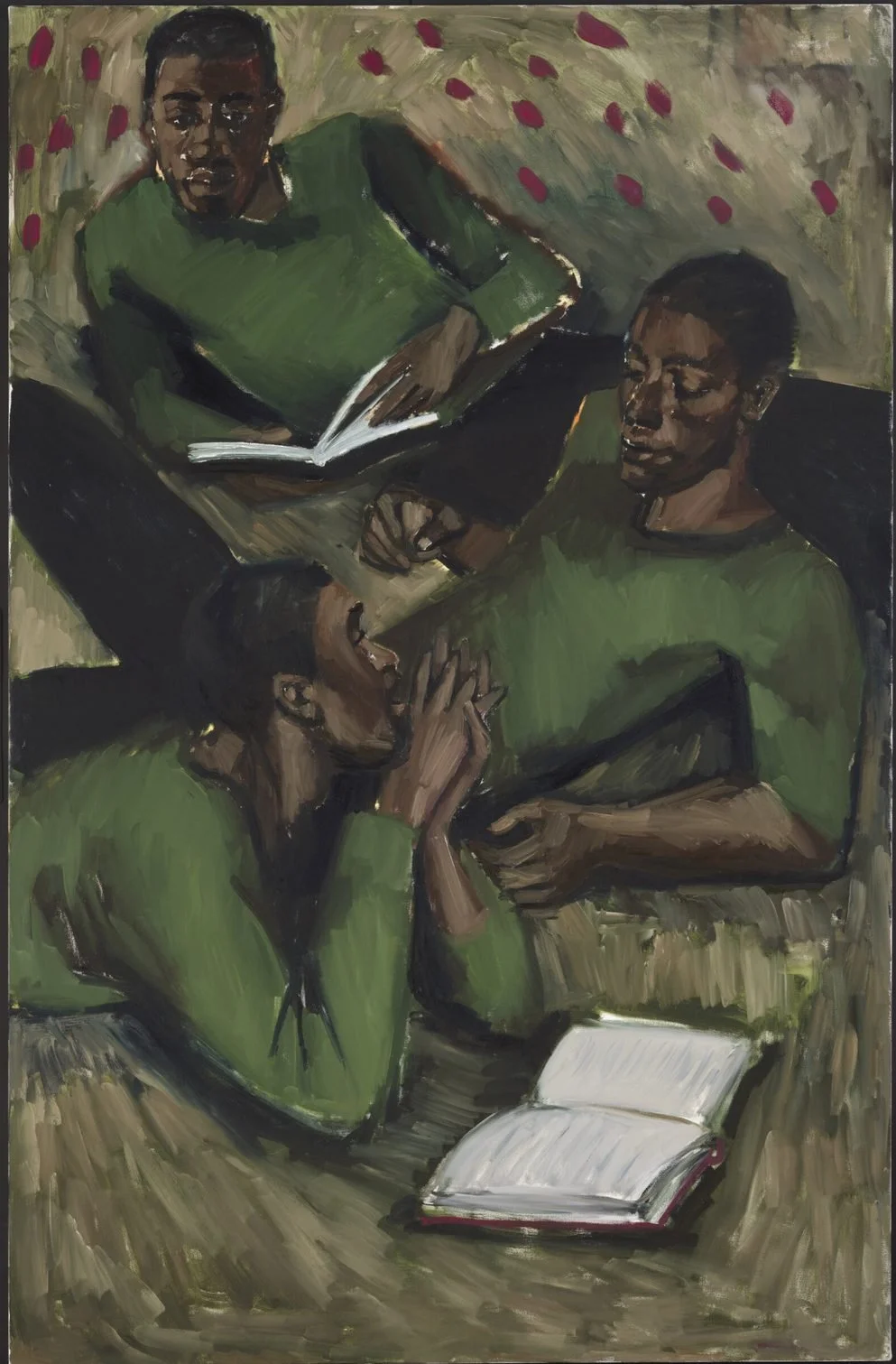
A man sits in a dark room. Two women dance. A group gathers against an empty field. A figure reclines, watches, sings, stretches, smiles, or stands in quiet concentration. Clothing is usually simple. Backgrounds remain sparse. The figures possess distinct postures, temperaments, gestures, and relationships.
They appear convincingly alive.
Yet none of them is an identifiable sitter.
Yiadom-Boakye constructs her subjects from imagination, memory, observation, drawings, photographs, scrapbooks, and fragments of other images. They are composites rather than portraits of existing individuals. (Tate)
This fiction gives the figures an unusual freedom.
They do not arrive carrying a documented life that explains them.
They are not illustrations of historical events.
They are not required to represent a profession, social problem, heroic achievement, trauma, or recognizable public identity.
They simply occupy the painting.
That simplicity is radical because the history of Western painting has so often denied Black figures the privilege of appearing without explanation.
The Problem Beneath the Work
Yiadom-Boakye repeatedly returns to a central artistic problem:
How can painting give Black figures complete presence while freeing them from biography, historical duty, social category, and the viewer’s demand for explanation?
Her paintings are not merely fictional portraits.
Fiction is the formal and conceptual condition that makes another kind of visibility possible.
A real sitter arrives with facts:
A name
A profession
A family
A period
A social position
A location
A documented history
Those facts can deepen a portrait, but they can also determine how the figure is interpreted.
The fictional figure cannot be reduced so easily.
The viewer sees posture, expression, clothing, gesture, and relationship, but no stable biography arrives to organize those details.
The figure remains specific without becoming fully explained.
This creates one of the work’s central achievements:
A person can feel psychologically real without being historically identifiable.
The lack of biography is not an absence that weakens the figure.
It is the space in which the figure becomes free.
Fiction as a Form of Freedom
Fiction allows Yiadom-Boakye to invent social and psychological conditions that history did not preserve adequately.
The history of European portraiture contains countless images of aristocrats, merchants, rulers, soldiers, saints, scholars, and wealthy families. Their poses, clothing, objects, interiors, and scale established who deserved to be remembered and how authority should appear.
Black figures often entered that tradition differently:
As servants
Enslaved people
Exoticized bodies
Supporting characters
Anonymous laborers
Ethnographic subjects
Symbols rather than individuals
Yiadom-Boakye does not simply insert Black figures into existing historical narratives.
She removes the obligation to explain why they are there.
Her subjects read, rest, gather, converse, dance, pose, and think. They inhabit the visual authority of portraiture without needing to earn it through exceptional accomplishment or historical significance.
They are not present because something dramatic has happened.
They are present because presence itself is sufficient.
Fiction therefore becomes more than invention.
It becomes a way of expanding pictorial possibility.
The artist can construct a world in which Black figures have always belonged at the center of painting.
Presence Without Biography
Portraiture traditionally promises some connection between appearance and identity.
The viewer assumes that the face belongs to someone whose life exists beyond the canvas. Even without knowing the sitter, the portrait suggests an underlying biography.
Yiadom-Boakye preserves the psychological force of portraiture while removing that guarantee.
The figures appear to have histories.
They seem to possess habits, friendships, moods, private thoughts, and social relationships.
But these remain inaccessible.
This is different from creating generic figures.
A generic figure lacks enough specificity to feel individual.
Yiadom-Boakye’s subjects are highly particular:
One figure leans with casual confidence.
Another appears wary or distracted.
One group shares an unspoken intimacy.
Another seems connected but psychologically separate.
A smile may feel joyful, performative, mocking, or defensive.
A lowered gaze may suggest concentration, privacy, sadness, or simple rest.
The figure feels like someone.
The painting refuses to say exactly who.
That distinction keeps the work alive.
Blackness Without Representational Duty
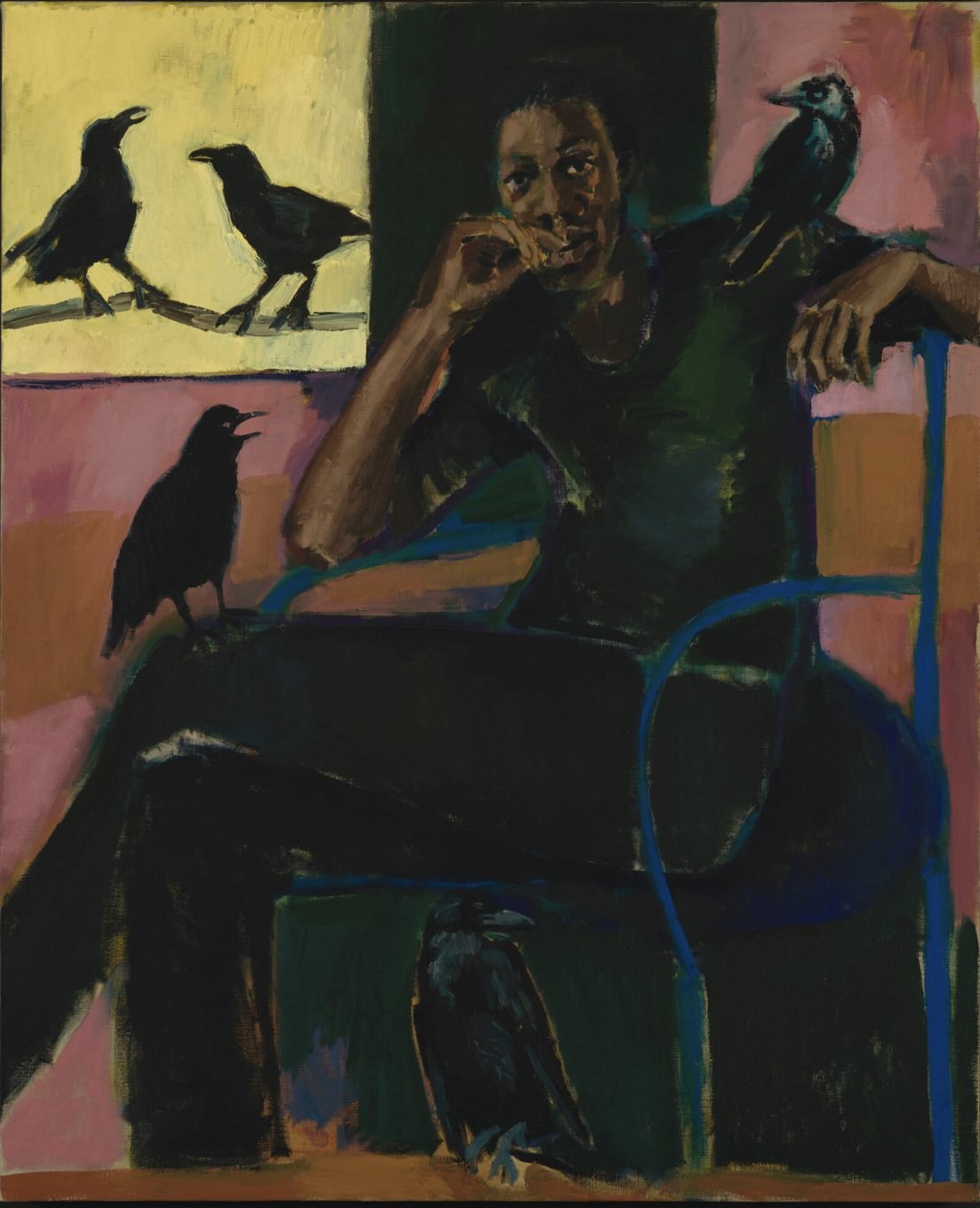
The figures in Yiadom-Boakye’s paintings are Black, and their Blackness matters.
Yet the paintings resist the expectation that Black representation must always perform a clear explanatory, educational, corrective, or political function.
The figures are not denied social meaning.
But neither are they required to symbolize an entire people or historical condition.
They can be:
Quiet
Awkward
Elegant
Serious
Playful
Ordinary
Strange
Restless
Self-conscious
Graceful
Aloof
Intimate
Bored
Joyful
This range is significant because representational scarcity creates pressure.
When few images of a group are available, each image is asked to carry too much. It may be expected to provide dignity, correction, authenticity, uplift, protest, history, and social explanation simultaneously.
Yiadom-Boakye creates abundance of another kind.
Her figures do not need to represent Blackness correctly.
They are allowed to be particular.
The political force lies partly in the refusal to make political legibility the condition of their existence.
Timelessness and the Refusal of Historical Fixity
Yiadom-Boakye usually avoids details that would locate her figures in a precise time.
Their clothing is often simple and difficult to date. Backgrounds contain few contemporary objects. Technology, brands, recognizable architecture, and explicit historical references rarely establish a fixed period.
The figures may seem contemporary, but they could also belong to an earlier decade or an invented time outside ordinary chronology. Tate and the Guggenheim Bilbao describe these imagined subjects as timeless figures engaged in everyday moments of companionship, movement, rest, and solitude. (Tate)
This timelessness performs several functions.
It prevents clothing and setting from becoming explanatory shortcuts.
It allows the figures to enter into dialogue with the long history of painting.
It also denies the viewer the ability to classify them securely through period.
The subjects seem to belong to painting rather than to one documented historical moment.
But timelessness is not neutrality.
The very appearance of Black figures inside the visual language of European portraiture creates historical pressure.
The figures seem as though they have always belonged there, while their presence also reveals how often they were excluded.
Why the Formal Choices Matter
Yiadom-Boakye’s formal restraint is essential to the freedom and psychological force of her figures.
Fiction prevents biography from closing the image
Because the subjects are invented, viewers cannot resolve the painting through external information.
There is no factual biography waiting to answer the questions raised by the pose or expression.
Interpretation must remain inside the encounter.
Sparse backgrounds protect the figure from narrative
The environments are often dark, open, or minimally described.
A patch of floor, a bench, a chair, a wall, or an ambiguous landscape may be enough to establish space.
This restraint prevents setting from becoming a story.
The background does not explain:
Where the figures are
What they do professionally
What event is occurring
What social class they occupy
What year it is
Why they have gathered
The figure remains the primary fact.
Sparse environments also create psychological space. The body, gaze, and gesture gain intensity because fewer competing details direct interpretation.
Simple clothing withholds social classification
Clothing is one of the fastest ways viewers classify people.
It can reveal occupation, wealth, generation, nationality, subculture, gender performance, or historical period.
Yiadom-Boakye’s clothing often remains understated:
Plain shirts
Dark trousers
Simple dresses
Leotards
Basic jackets
Unadorned shoes
Occasional flashes of red, white, yellow, pink, or blue become visually powerful because they emerge from otherwise restrained palettes.
The clothing gives the figures character without converting them into social types.
Loose brushwork keeps the figure alive
The paintings are rendered with visible, economical brushwork.
Edges remain open.
Hands, faces, clothing, and backgrounds may be established through relatively few marks. Paint does not conceal the fact that the figure is invented.
This looseness prevents the image from becoming frozen or overdetermined.
The figure appears complete enough to command presence but unresolved enough to remain mobile in the viewer’s imagination.
Yiadom-Boakye is known for working quickly and has often completed paintings within a day, allowing concentrated decisions and immediacy to remain visible in the finished work. (Vogue)
Darkness creates presence rather than disappearance
Her palette frequently includes deep browns, blacks, grays, greens, burgundies, ochres, and muted blues.
The figures may emerge from similarly dark environments.
This can make boundaries between body and background unstable, but the figures do not disappear.
Light catches:
An eye
A cheek
A forehead
A hand
A shirt
A collar
A shin
The edge of a face
Visibility becomes selective.
The viewer must remain attentive.
Darkness is not simply an atmospheric effect. It determines how access is granted.
The body becomes present gradually rather than immediately surrendered.
Scale changes the nature of encounter
Yiadom-Boakye moves between intimate portraits and larger group paintings.
A small painting may create a private, concentrated relationship with one figure.
A larger work can make several invented people occupy the viewer’s physical world with collective authority.
The group paintings are especially significant because the figures appear to share relationships the viewer cannot enter fully.
They belong to one another before they belong to the audience.
Gesture carries narrative without explaining it
A raised arm, crossed leg, bent back, tilted head, turned shoulder, or extended hand can suggest an event.
But gesture rarely resolves into a complete story.
In Willow Strip, two figures appear engaged in a shared movement that may be dancing, play, instruction, or affectionate contact. The work gives enough bodily information to create relation without fixing what that relation means.
The gesture becomes a narrative opening rather than a narrative conclusion.
The Returned Gaze
Many of Yiadom-Boakye’s figures look outward.
But their gaze does not necessarily offer access.
A direct gaze may feel:
Confident
Suspicious
Amused
Challenging
Patient
Indifferent
Curious
Withholding
The viewer becomes visible to the figure.
This reverses the conventional structure in which the viewer observes a painted subject without consequence.
The figure seems to assess the person looking.
That returned gaze is especially important within the history of representing Black bodies.
The subject does not remain passively available.
The viewer must confront another consciousness—even though that consciousness is fictional.
The figure’s interiority cannot be proven, but the painting makes it difficult to deny.
Looking Without Possession
The work establishes a careful balance between access and refusal.
Viewers are allowed to observe bodies, expressions, social relationships, and private moments.
But they are not given enough information to possess the figures conceptually.
The lack of biography prevents ownership through knowledge.
The sparse setting prevents ownership through context.
The ambiguous expression prevents ownership through psychological diagnosis.
The invented nature of the figures prevents ownership through documentary truth.
The viewer can look.
The viewer cannot finish them.
This is one reason fiction makes the figures feel free rather than insubstantial.
They remain beyond the viewer’s reach.
Stillness as an Active Condition
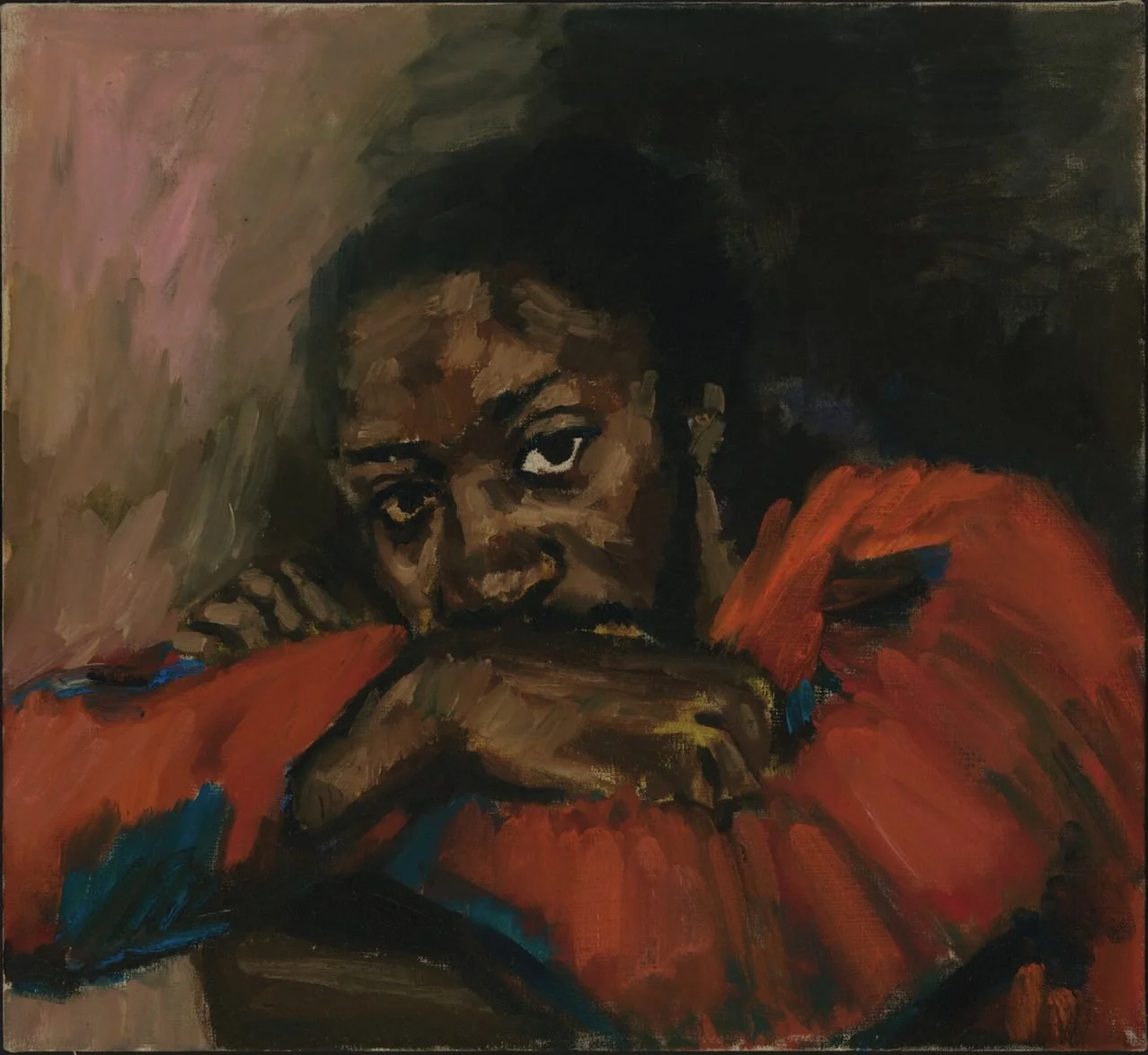
Many of Yiadom-Boakye’s figures are seated, standing, resting, or waiting.
Stillness might appear to indicate inactivity.
In these paintings, it becomes concentrated presence.
A seated figure does not need to perform.
A reclining figure does not need to entertain.
A person standing alone does not need a visible task.
Rest becomes pictorially legitimate.
This matters because Black bodies have often been represented through work, struggle, athletic performance, suffering, entertainment, or social conflict.
Yiadom-Boakye permits her subjects another condition:
They can exist without performing usefulness for the viewer.
Stillness can therefore carry autonomy.
The figure owns time.
Movement Without Spectacle
Other paintings contain dancers, singers, swimmers, athletes, or figures caught in energetic poses.
Yet movement does not necessarily become spectacle.
In a large group painting shown in the Tate survey, several figures stand, lean, gesture, and move across a pale field. One seated figure in red and white extends dramatically, while the others occupy quieter postures. The scene feels socially connected but narratively unresolved.
The movement appears self-contained.
The figures may be performing for one another, but they do not clearly perform for the viewer.
This protects action from becoming display.
The viewer witnesses a world that seems to have its own internal life.
Groups and Unspoken Social Worlds
Group paintings expand Yiadom-Boakye’s problem beyond individual presence.
When several figures occupy the canvas, relationships appear through:
Distance
Orientation
Touch
Shared attention
Mirrored posture
Rhythmic movement
Differences in gaze
Clothing
Proximity and separation
The group may feel intimate without revealing the source of intimacy.
The figures know one another in ways the viewer does not.
This creates an important power relationship:
The viewer is outside a social world that does not require their inclusion.
The figures do not appear assembled to represent community as an abstract idea.
They seem to have actual relationships, even though those relationships are invented.
Fiction creates social density.
Titles as Parallel Fictions
Yiadom-Boakye is also a writer, and her titles often possess unusual poetic force.
Titles such as Fly in League with the Night, No Twilight Too Mighty, The Generosity, or Many A Moonlit Caveat do not describe the paintings literally.
They introduce:
Rhythm
Atmosphere
Humor
Narrative possibility
Literary distance
Emotional temperature
Another layer of fiction
Her major Tate survey assembled around eighty paintings and used the title Fly In League With The Night, underscoring the relationship between painting and language across her practice. (Tate)
A title may make an image feel more mysterious, tender, ominous, comic, or lyrical.
But it does not decode the scene.
The text and image remain adjacent rather than explanatory.
This allows language to deepen the figure’s world without turning it into biography.
Art History Without Submission
Yiadom-Boakye’s paintings engage deeply with European portraiture and figurative painting.
Her work has been discussed in relation to artists such as:
Édouard Manet
Edgar Degas
Diego Velázquez
Francisco Goya
Walter Sickert
John Singer Sargent
These influences can be felt through:
Dark grounds
Economical brushwork
Informal poses
Dramatic light
Cropping
Figure placement
Group arrangements
Painterly incompleteness
But the work does not simply insert Black figures into old compositions.
It changes what the inherited language is allowed to do.
The authority, dignity, psychological privacy, leisure, and pictorial centrality historically granted to selected white subjects become available to invented Black lives.
The historical form survives.
Its social world changes.
This is transformed influence rather than imitation.
Painting Against Documentary Expectation
Contemporary Black figuration is often read through documentary expectations.
Viewers may ask:
Who is this?
What community is being represented?
What historical story is being corrected?
What political condition does the figure embody?
Is this an authentic image of lived experience?
Yiadom-Boakye refuses that documentary demand.
Her paintings are not evidence of particular lives.
They do not claim that fiction is more truthful than reality, but they demonstrate that fiction can reveal possibilities reality has not preserved visibly.
An invented figure can establish presence without being tied to one example.
The work opens a space between representation and documentation.
The Central Contradictions
Yiadom-Boakye’s paintings hold several opposing forces together:
Fictional and psychologically real
Visible and unknowable
Timeless and historically charged
Intimate and withheld
Ordinary and monumental
Painterly and bodily convincing
Quiet and authoritative
Specific and without biography
Socially significant and resistant to political instruction
Art-historical and newly liberated from art history
Accessible and resistant to possession
Still and intensely alive
The deepest contradiction may be:
The figures feel fully present even though everything that might normally establish their identity has been withheld.
The viewer does not receive facts.
The viewer receives presence.
The Viewer’s Position
Yiadom-Boakye assigns the viewer several roles.
The viewer becomes a portrait viewer without a biography
The conventions of portraiture encourage inquiry into identity, but no factual answer exists.
The viewer becomes a projector
The lack of context encourages viewers to invent relationships, emotions, and histories.
The painting exposes that act of projection.
The viewer becomes the object of a gaze
Many figures look back, making the viewer conscious of being observed.
The viewer becomes an outsider
Groups often seem to share a world that predates the viewer’s arrival and will continue after the viewer leaves.
The viewer becomes aware of interpretive appetite
The desire to know the figure may begin to resemble a desire to classify or possess.
The work refuses satisfaction.
The viewer becomes a witness to freedom
The figures occupy painting without needing to justify their presence through biography, achievement, suffering, or symbolic responsibility.
The World Yiadom-Boakye Has Built
Her recurring lexicon includes:
Solitary figures
Pairs and small groups
Seated bodies
Dancers
Readers
Singers
Swimmers
Watchers
Athletes
Plain clothing
Dark backgrounds
Pale open fields
Returned gazes
Loose brushwork
Selective light
Sparse interiors
Ambiguous landscapes
Poetic titles
These motifs create a recognizable world without becoming a fixed narrative system.
A seated figure may be resting, waiting, thinking, or refusing performance.
A dancer may embody joy, discipline, intimacy, or self-absorption.
A dark ground may protect, isolate, dramatize, or suspend.
A white garment may create light, vulnerability, ritual, or visual rhythm.
The lexicon remains alive because the figures retain individual differences even within a coherent pictorial world.
The Risk of Poetic Withholding
Yiadom-Boakye’s method carries real risks.
Timeless clothing, dark palettes, ambiguous settings, fictional sitters, restrained expressions, and poetic titles can become a recognizable formula.
Withholding can become habitual.
Mystery can become elegance.
Psychological privacy can become emotional distance.
The absence of narrative can become a lack of pressure.
A critical review of the Tate survey praised the paintings’ beauty and painterly fluency while questioning whether their continuous atmosphere and inscrutability sometimes became too uniform or comfortable. (The Guardian)
That is a serious criticism worth retaining.
The important question is:
Does each figure produce a distinct encounter, or does the established atmosphere of fictional mystery do too much of the work?
The strongest paintings give each figure a particular bodily and psychological condition.
The gaze, posture, scale, color, and relationship feel necessary.
A weaker painting might rely on the general elegance of dark, enigmatic portraiture.
This is the danger inside coherence:
A protected visual world can preserve freedom, but it can also become too insulated from risk.
Why the Work Belongs to the Present
Yiadom-Boakye’s paintings belong to a contemporary conversation about visibility, representation, identity, and who is permitted to occupy cultural history.
But they resist the demand for complete legibility that often accompanies representation.
Contemporary culture frequently asks people to make themselves explainable through:
Profiles
Categories
Biographies
Identity labels
Public statements
Political positions
Personal disclosure
Documentary evidence
Visibility is often treated as meaningful only when accompanied by information.
Yiadom-Boakye offers another possibility:
A person can be visible without becoming fully available.
The figures do not disappear into anonymity.
They remain distinct, embodied, socially alive, and pictorially authoritative.
But their identities are not surrendered.
This makes the work relevant far beyond portraiture.
It asks whether recognition can exist without classification and whether presence can be respected without being converted into knowledge.
What Artists Can Learn
The lesson is not to imitate Yiadom-Boakye’s dark palette, fictional Black subjects, loose brushwork, sparse settings, simple clothing, poetic titles, or enigmatic gazes.
Those are the visible solutions produced by her particular investigation.
The larger lesson is that fiction can create freedom when reality arrives with too many predetermined meanings.
Yiadom-Boakye demonstrates that:
A figure can be psychologically specific without biography.
Visibility does not require complete access.
Withholding can preserve interiority.
Sparse settings can prevent narrative from controlling the subject.
Simple clothing can reduce social classification.
Gesture can suggest a world without explaining it.
Stillness can become a form of autonomy.
Group relationships can create social depth without documentary narrative.
Fiction can correct historical absence without recreating history literally.
Art-historical influence becomes powerful when the social order inside the inherited form changes.
Dark color can regulate access rather than merely establish mood.
A returned gaze can destabilize the viewer’s authority.
Representation becomes stronger when the subject remains more complex than the image.
Yiadom-Boakye does not give viewers identities to decode.
She gives them people who never existed and makes their presence difficult to deny.
The figure appears.
Biography remains absent.
The gaze returns.
The viewer begins inventing a story.
The painting withholds confirmation.
The figure remains free from the story imposed upon it.
The lesson is not to copy the appearance of the work. It is to understand the pressure that made the appearance necessary.
Lynette Yiadom-Boakye uses fictional portraiture to create Black figures whose presence is complete even though their identities remain permanently beyond possession.