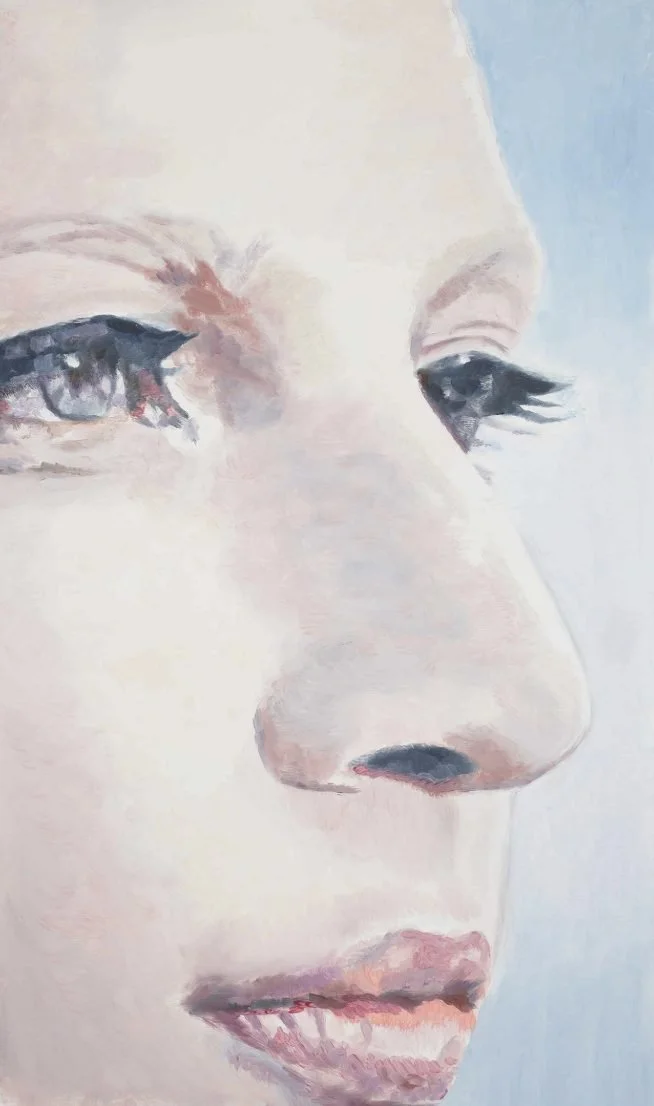
What Makes Luc Tuymans’s Paintings So Powerful?
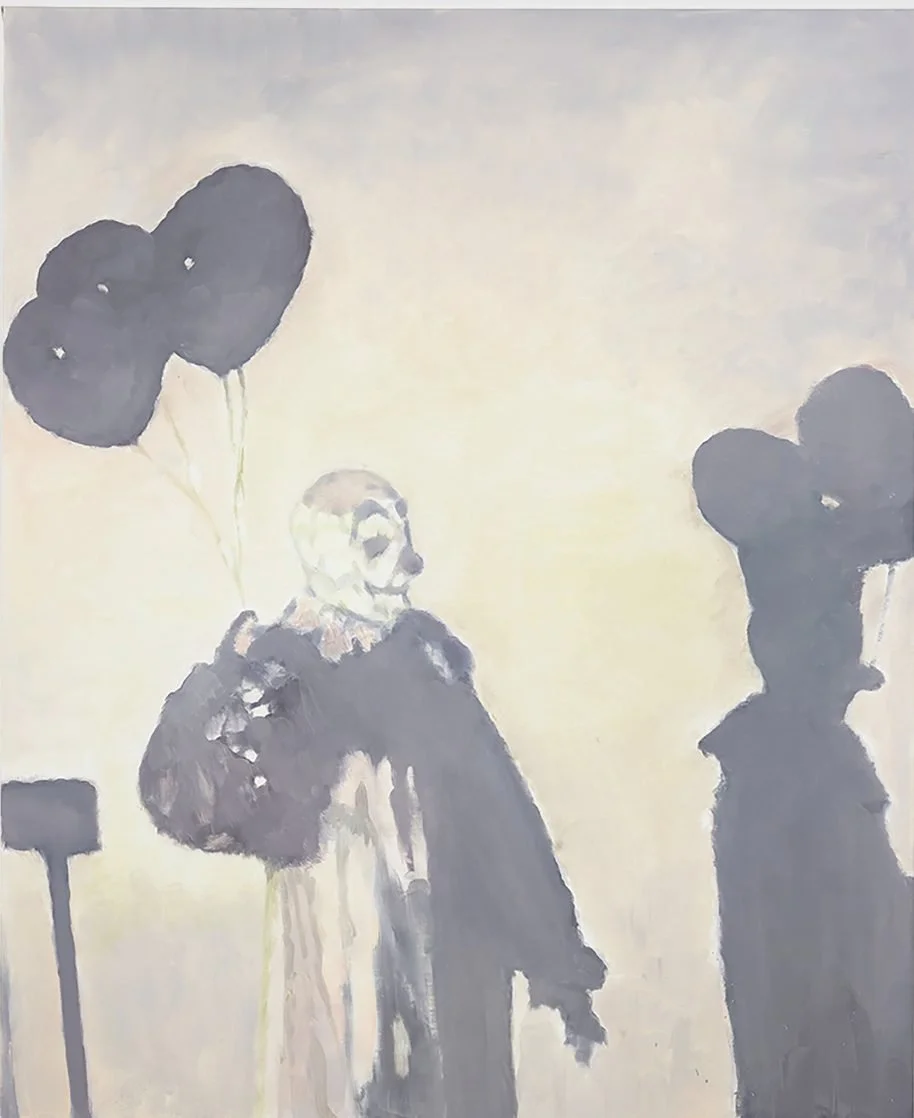
Luc Tuymans’s paintings are powerful because they turn weak, degraded, secondhand images into unsettling encounters with history, memory, violence, and the limits of knowledge.
At first, the paintings can appear almost disappointingly slight.
The colors are pale. The surfaces are thin. Faces look blurred or washed out. Objects appear ordinary. Important historical events may be represented through an empty room, an indistinct face, a fragment of architecture, a cloud of smoke, or a detail whose significance is impossible to recognize without context.
The paintings rarely announce their importance through spectacle.
They often resemble:
Faded photographs
Paused television images
Damaged film stills
Newspaper reproductions
Overexposed snapshots
Medical illustrations
Security-camera footage
Images remembered incorrectly
Pictures copied too many times
Their apparent weakness is deliberate.
Tuymans does not paint history as clear, monumental, or fully recoverable. He paints the compromised images through which history reaches the present.
His gallery describes his work as demonstrating painting’s ability to communicate and withhold at the same time. His canvases are generally based on preexisting imagery and rendered in restrained palettes whose apparent calm conceals moral and historical complexity. (David Zwirner)
The viewer is not given the past itself.
The viewer is given a damaged visual remainder.
The Problem Beneath the Work
Tuymans repeatedly returns to a central artistic problem:
How can painting confront historical violence and political power when the past is available only through incomplete, mediated, and potentially deceptive images?
His paintings are not simply about memory, photography, or history.
They examine the failure of images to deliver secure knowledge.
A photograph appears to document something that happened. But it also crops, selects, freezes, and removes context. Television converts events into consumable sequences. Newspapers compress catastrophe into reproducible images. Archives preserve certain records while excluding others. Propaganda makes constructed appearances feel factual.
By the time an event reaches a viewer, it may already have passed through:
A camera
An editor
An institution
A political narrative
A printing process
A television screen
An archive
Reproduction
Cultural memory
Personal interpretation
Tuymans begins from this compromised condition.
He does not attempt to restore the original event in full.
Instead, he paints the distance between the event and the image that survives it.
The deeper problem becomes:
How can a painting acknowledge that images are inadequate while still asking them to carry historical responsibility?
Weak Images Carrying Heavy History
Tuymans often chooses images that appear visually unremarkable.
A room may look empty.
A face may appear expressionless.
A household object may seem banal.
A landscape may look quiet.
Yet these images can be connected to histories of colonialism, fascism, the Holocaust, political violence, nationalism, or institutional power.
This creates a profound mismatch:
The image looks weak, but the history behind it is overwhelming.
That mismatch is central to the work.
Historical violence does not always survive as a dramatic image. It may remain inside architecture, family photographs, official portraits, bureaucratic documents, ordinary objects, forgotten places, and apparently neutral records.
Tuymans refuses to make the past visually heroic.
He often represents the residue rather than the event.
This can make the paintings initially frustrating. Viewers may expect important subjects to produce powerful imagery. Tuymans reverses that expectation.
The image is inadequate because historical understanding is inadequate.
The faded surface does not minimize the past.
It exposes the difficulty of reaching it.
Painting After Photography
Tuymans belongs to a generation for whom painting could no longer pretend that photography, cinema, television, and mass media had not transformed visual experience.
His relationship to Northern European painting remains important, but so does growing up inside a culture increasingly organized by reproduced images. The Museum of Contemporary Art Chicago described his work as shaped both by the tradition of European painting and by photography, television, and cinema. (Museum of Contemporary Art Chicago)
Tuymans does not usually paint directly from life.
He works from images that already exist:
Photographs
Film stills
Television frames
Newspaper pictures
Digital images
Archival documents
Images he photographs from screens
Reproductions of earlier artworks
This means the subject has already been converted into representation before painting begins.
The painting is not the first image.
It is an image of an image.
That distinction creates distance, but it also makes mediation visible.
Tuymans asks viewers to notice not only what is represented, but how reality has already been filtered before reaching the canvas.
The Failure of Clear Vision
Traditional representational painting can suggest that looking produces knowledge.
A carefully painted face appears to reveal character.
A historical painting appears to explain an event.
A landscape appears to present a place.
Tuymans undermines that confidence.
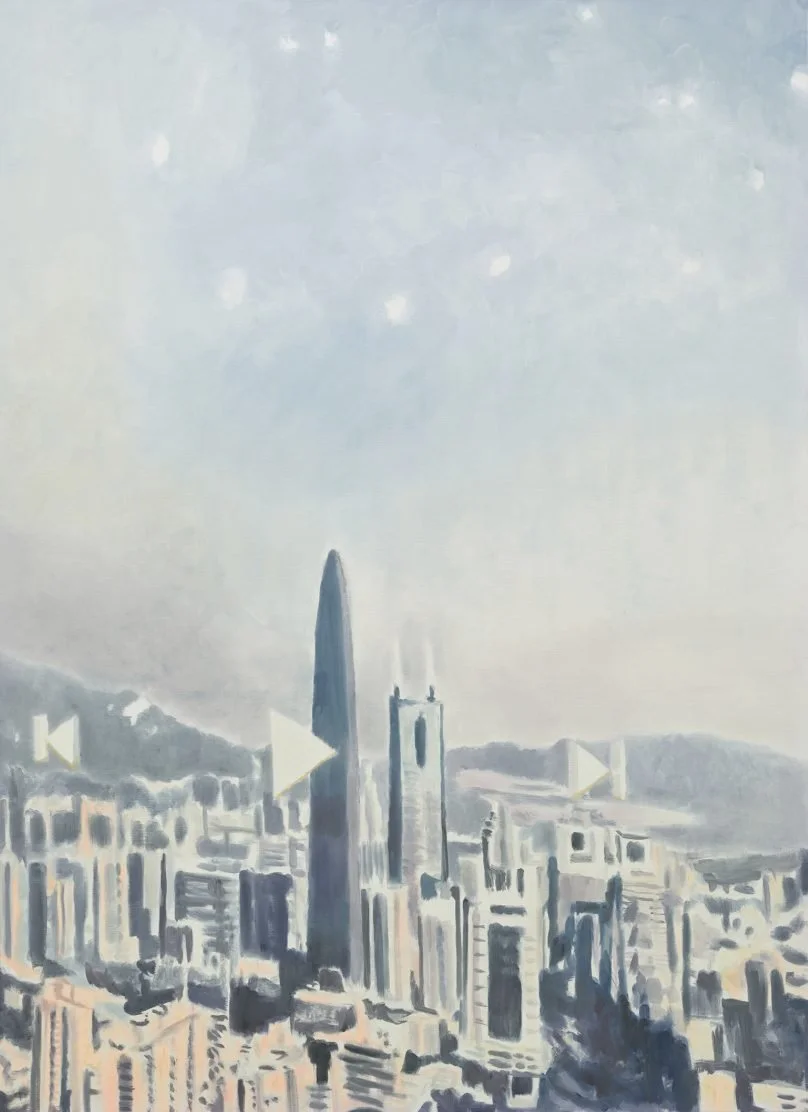
His images are often cropped, enlarged, blurred, flattened, faded, or stripped of explanatory context. The viewer can see something, but seeing does not produce understanding.
A face may be recognizable without becoming psychologically legible.
An object may be visible without revealing its historical role.
A room may be clearly depicted while withholding what happened there.
The paintings create a distinction between visibility and knowledge:
Something can be completely visible and still remain historically, psychologically, or morally inaccessible.
This is one reason Tuymans’s weak image is not merely a style.
It represents the failure of vision to guarantee truth.
Why the Formal Choices Matter
Tuymans’s restrained visual language can appear simple, but nearly every formal decision supports the deeper problem.
Pale color creates historical distance
His paintings frequently use washed-out whites, grays, pale blues, dusty pinks, faded yellows, bruised greens, and muted browns.
These colors can resemble:
Old photographs
Faded film
Fluorescent light
Television glare
Overexposure
Institutional interiors
Chemical deterioration
Memory losing intensity
The palette makes the image feel as though it has already passed through time.
Color does not bring the subject closer.
It registers separation.
Yet the pale colors can also be unexpectedly beautiful. This creates discomfort. The viewer may enjoy delicate harmonies while confronting subjects connected to violence or political power.
Beauty and moral uncertainty remain active together.
Thin paint denies material comfort
Tuymans often applies paint thinly and quickly.
The surface does not offer the sensual abundance associated with artists such as Cecily Brown, Jenny Saville, or Chris Ofili. Paint rarely becomes lush flesh, heavy matter, or expressive excess.
Instead, it can feel depleted.
The image seems barely present.
This thinness matters because it prevents painting from claiming too much authority. The object does not pretend to restore the lost reality completely.
The paint acknowledges its own inadequacy.
Blur weakens factual certainty
Blur can suggest poor focus, motion, reproduction, memory, concealment, or degraded source material.
In Tuymans’s work, it also frustrates the viewer’s desire to extract definitive information.
The blur does not simply make the image atmospheric.
It places doubt inside representation.
Edges fail to secure objects.
Features do not become fully distinct.
The image appears recognizable but unreliable.
Cropping removes narrative context
Tuymans often isolates fragments.
A face may be enlarged beyond comfortable portrait scale.
A room may be shown without its occupants.
An object may be separated from its original setting.
A historical event may appear through one peripheral detail.
Cropping forces the viewer to confront incomplete evidence.
It also mirrors how mass media works. Public events are often remembered through one selected image that comes to stand for a much larger reality.
The fragment gains enormous power while remaining insufficient.
Scale destabilizes importance
Tuymans does not always match physical scale to historical significance.
A politically powerful figure may appear in a modest canvas.
A trivial object may be enlarged.
A seemingly ordinary still life may become monumental.
This creates uncertainty about hierarchy.
What deserves attention?
What has been inflated?
What has been minimized?
Who determines which image becomes historically important?
Scale makes these questions physical.
Empty space makes absence active
Tuymans often leaves broad areas visually quiet.
The painting may contain one isolated head, object, room, or architectural fragment surrounded by pale emptiness.
This gives absence compositional force.
What is missing becomes as important as what remains.
The empty area may suggest:
Lost context
Suppressed history
Emotional vacancy
Institutional silence
Missing witnesses
Unrecoverable experience
The painting does not fill the historical gap.
It gives the gap a visible form.
Painting in One Day
Tuymans is known for frequently completing individual paintings in a single concentrated day, often after substantial preparation through drawings, photographs, selection, cropping, and planning. His speed is therefore not spontaneous improvisation in the usual sense. It is the final stage of a longer process of conceptual and visual compression. (David Zwirner)
This method matters.
The paintings retain immediacy, but they also risk failure.
A passage cannot be endlessly polished.
The image must remain somewhat unresolved.
The rapid execution helps preserve:
Thinness
Hesitation
Abrupt decisions
Visible correction
Uneven focus
Material vulnerability
The paintings can feel complete and provisional at once.
This supports their historical problem. The past cannot be perfected into certainty. The painting must remain an incomplete attempt.
History Through Peripheral Evidence
Tuymans frequently approaches major history indirectly.
Rather than depicting the dramatic center of an event, he may paint:
A room connected to atrocity
A political figure’s public image
A detail from a propaganda photograph
Smoke after destruction
An apparently harmless object
A place whose violence is no longer visible
A face connected to a larger system
This strategy prevents viewers from receiving history as spectacle.
A spectacular image can produce immediate emotion, but it may also allow the viewer to consume catastrophe quickly and move on.
Tuymans makes the encounter slower and more uncertain.
The viewer first sees something ordinary.
Then context changes the image.
The ordinary surface becomes contaminated by knowledge.
This delayed recognition is one of his strongest devices.
The painting changes after the viewer learns what it represents.
But the visual object itself remains quiet.
History enters the image without becoming completely visible.
Demolition: Catastrophe Without the Icon
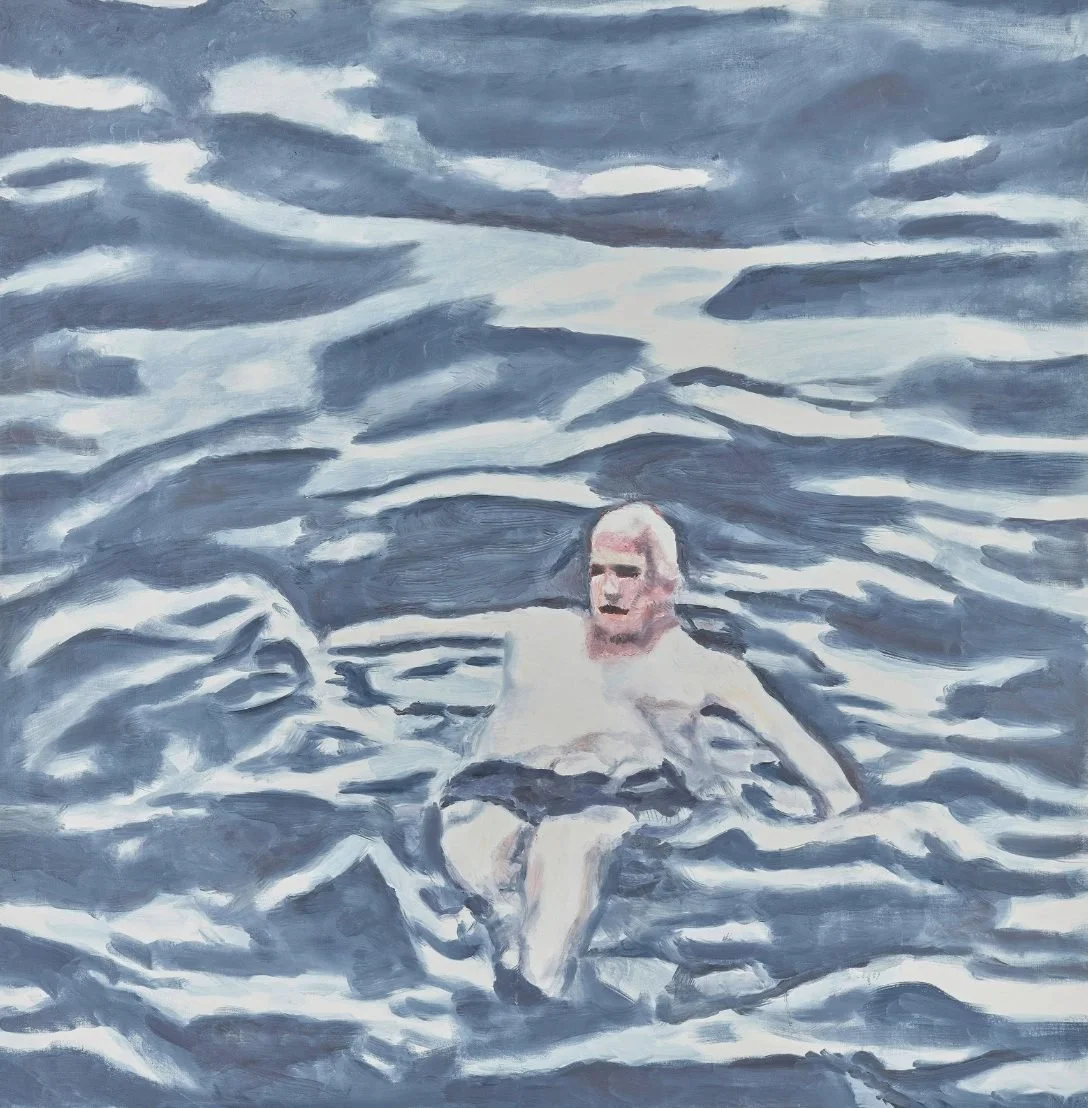
Tuymans’s Demolition from 2005 was based on a photograph of the cloud produced during the collapse of one of the World Trade Center towers in 2001.
Yet the painting removes most identifying information. Only small fragments of a streetlamp and flagpole remain at the edges. Without context, the cloud might resemble smoke, weather, dust, or abstraction. (The Museum of Modern Art)
This transformation is significant.
Widely circulated images of catastrophe can become icons. Repetition makes them instantly recognizable, but familiarity can also reduce their force.
Tuymans removes the iconic structure.
The image becomes uncertain again.
The viewer no longer receives a complete visual symbol of September 11. Instead, the viewer encounters an unstable cloud whose meaning depends on contextual knowledge.
The catastrophe is present and absent simultaneously.
The work asks:
How does an event become an image?
What happens when the image becomes familiar?
Can familiarity weaken moral attention?
What remains after identifying information is removed?
Is abstraction a form of concealment or a more honest acknowledgment of uncertainty?
The painting does not answer these questions.
It keeps them active.
Portraiture Without Psychological Access
Tuymans paints public figures, historical subjects, anonymous people, and faces extracted from photographs.
But his portraits rarely promise intimacy.
The face may appear flattened, blurred, cropped, mask-like, or strangely vacant.
This resists the expectation that portraiture reveals character.
A face can conceal as much as it communicates.
This becomes especially disturbing when the subject is associated with political power or historical violence. Viewers may search the face for evidence of morality, evil, fear, guilt, intelligence, or authority.
The painting refuses to provide it.
Evil does not necessarily have a visually identifiable face.
Power may look ordinary.
A calm expression may conceal devastating consequences.
The face therefore becomes evidence of the limits of physiognomic judgment.
The Secretary of State: Power as Image
Tuymans’s The Secretary of State from 2005 depicts Condoleezza Rice in a tightly cropped, pale portrait based on mediated source imagery. The modestly sized painting isolates her face while denying the surrounding political context. (The Museum of Modern Art)
The work does not tell viewers what to think about Rice.
It focuses instead on the production of public authority through imagery.
Political figures are known through:
Press photographs
Television
Official portraits
Repeated facial expressions
Carefully managed appearances
Public memory
The person becomes inseparable from the circulated image.
Tuymans weakens that image without destroying it.
Rice remains recognizable, but her authority becomes visually unstable.
The portrait is intimate in scale yet impersonal in effect. It brings the face closer while preserving distance from the person and the political systems surrounding her.
Colonial History and Lumumba
In Lumumba from 2000, Tuymans painted Patrice Lumumba, the first democratically elected prime minister of the independent Republic of the Congo, whose assassination became inseparable from Belgian colonial history and international political intervention.
MoMA describes the painting as intertwining history, myth, memory, and cultural identity rather than functioning as straightforward photographic representation. (The Museum of Modern Art)
The painting carries special pressure because Tuymans is Belgian.
The work participates in a historical relationship between Belgium and the Congo that cannot be treated as neutral subject matter.
Yet Tuymans does not attempt to offer complete historical explanation through one portrait.
The face becomes a point where national memory, colonial violence, political mythology, photographic mediation, and personal interpretation collide.
The portrait is insufficient.
That insufficiency is part of its ethical seriousness.
One image cannot contain the history, but refusing the image entirely would create another form of erasure.
The Holocaust and the Problem of Representation
Tuymans has repeatedly addressed the Holocaust and the legacy of fascism.
This presents an extreme artistic problem:
How can art represent historical horror without turning suffering into spectacle, aesthetic pleasure, or false understanding?
Tuymans often approaches the subject through indirect, weak, or peripheral imagery.
He avoids reconstructing atrocity as a dramatic scene.
Instead, he may present the architecture, the visual residue, the administrative world, the memory, or the apparent normality surrounding violence.
This indirectness is not emotional neutrality.
It reflects distrust toward images that claim to make incomprehensible events fully visible.
The work recognizes a moral limit:
Representation may be necessary, but it cannot repair or completely explain what happened.
Banal Appearance and Hidden Violence
Tuymans often places historical pressure inside ordinary appearances.
This reflects something important about power.
Violence is not always visually dramatic before it occurs.
Political systems operate through offices, paperwork, meetings, architecture, portraits, homes, schools, symbols, and routine administration.
Historical horror may develop inside normal-looking environments.
The banality of Tuymans’s subjects therefore becomes ethically charged.
An ordinary room is not necessarily innocent.
A pleasant landscape may conceal what happened there.
A composed public face may belong to a destructive system.
A decorative object may carry ideological history.
The paintings train viewers to distrust visual innocence.
The Central Contradictions
Tuymans’s work holds several opposing forces together:
Visible and unknowable
Weak and historically heavy
Beautiful and morally disturbing
Figurative and close to disappearance
Calm and violent
Ordinary and contaminated
Intimate and impersonal
Factual and unreliable
Historical and mediated
Specific and incomplete
Restrained and psychologically intense
Present and already fading
The central contradiction may be:
The paintings appear to reveal almost nothing, yet their emptiness becomes charged by everything the image cannot adequately contain.
The visual weakness creates conceptual pressure.
What has been removed begins to matter.
What cannot be represented becomes part of the work.
The Viewer’s Position
Tuymans places the viewer in an uncomfortable relationship to knowledge.
The viewer becomes an investigator
The image often appears incomplete.
The viewer searches for context, source, title, and historical reference.
The viewer becomes dependent on outside information
The painting may change radically after its source is understood.
This dependence raises a difficult question:
Is the context deepening the painting, or rescuing an otherwise weak image?
Tuymans deliberately keeps that tension alive.
The viewer becomes aware of interpretive desire
The viewer wants the image to explain itself.
Its refusal can produce frustration.
That frustration exposes the expectation that seeing should create understanding.
The viewer becomes historically distant
The painting makes clear that the viewer arrives after the event.
The past cannot be experienced directly.
The viewer becomes morally implicated
To look at historical suffering through art is to confront the danger of consuming it aesthetically.
Tuymans denies the viewer easy emotional release.
The viewer becomes suspicious
Ordinary subjects begin to appear contaminated.
The viewer learns that visual calm may conceal political or historical pressure.
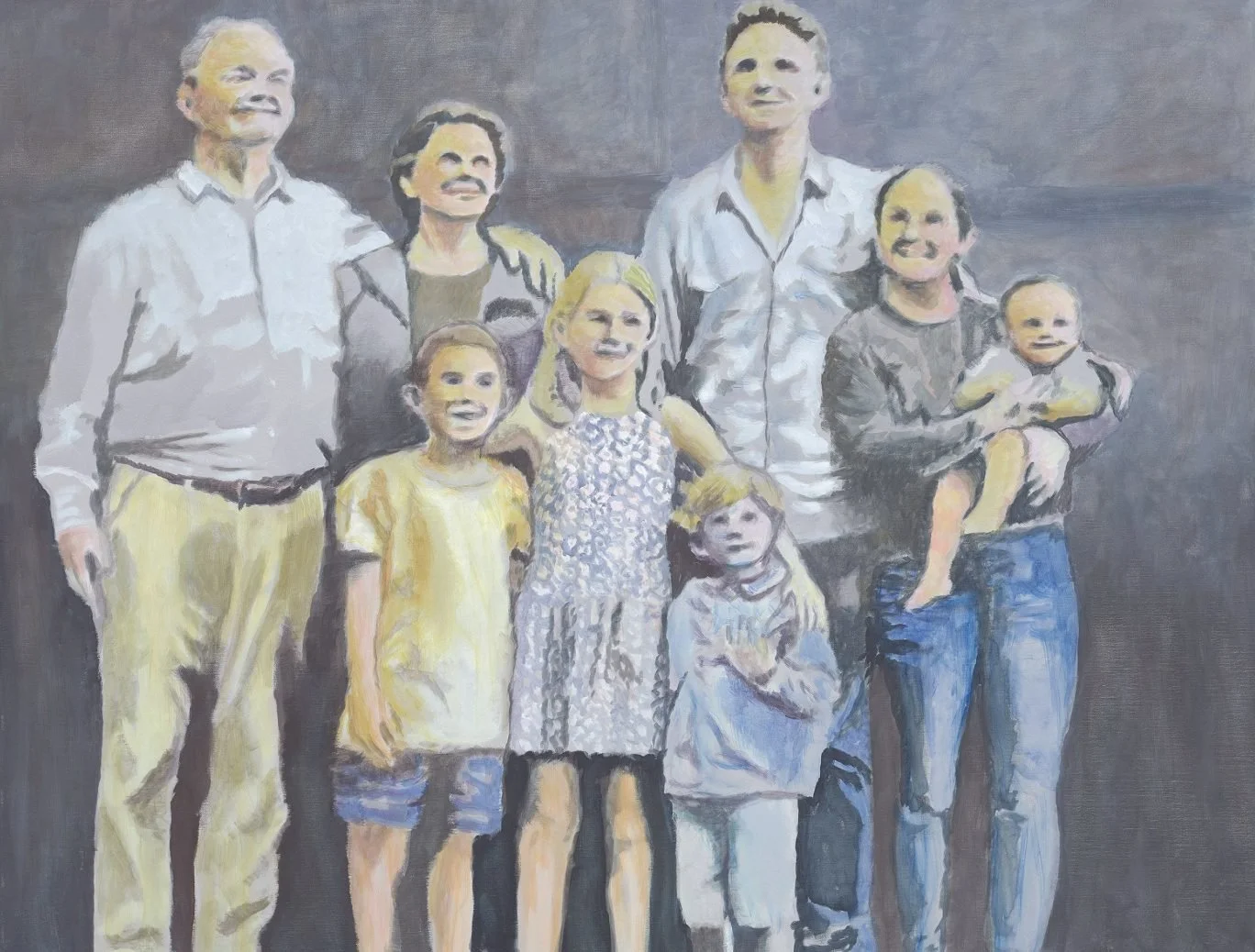
The World Tuymans Has Built
Tuymans’s recurring lexicon includes:
Pale faces
empty rooms
curtains
lamps
ceilings
smoke
political figures
flowers
domestic objects
institutional interiors
cropped bodies
architectural fragments
historical photographs
screens
faded landscapes
masks
ordinary objects carrying hidden histories
These motifs create a visual world in which representation has lost its innocence.
A face may become public propaganda.
A room may become a container of absence.
Smoke may become historical evidence.
A flower may become decorative concealment.
A domestic object may carry political contamination.
An empty space may contain an event that can no longer be seen.
The recurring elements form a lexicon of compromised vision.
The Risk of Weak Painting
Tuymans’s work takes a real risk because weakness can become merely weak.
A faded palette is not automatically profound.
Blur is not automatically historical memory.
An ordinary source image is not automatically politically charged.
Thin paint can become mannerism.
Ambiguity can become emptiness.
Context can do too much of the work.
The critical question is:
Does the painting make the inadequacy of the image perceptually meaningful, or does the explanation supply an importance the object cannot carry?
This is where independent judgment matters.
Tuymans’s strongest paintings create unease before the viewer understands the historical context. The image already feels compromised, withheld, eerie, or ethically unstable.
The context then deepens that feeling.
A weaker work might depend almost entirely on the title or source story.
The distinction is important:
Explanation should intensify what the object has already begun, not manufacture the work’s entire force.
The Influence of the Weak Image
Tuymans has had enormous influence on subsequent figurative painting, particularly on artists who work from photographs, film stills, archives, and degraded media imagery. His approach helped establish a contemporary language in which painting could appear restrained, uncertain, and deliberately anti-heroic while still addressing politically and historically charged subjects. (David Zwirner)
But his influence also creates a danger.
The pale photographic painting has become a recognizable contemporary style.
Many weaker descendants borrow:
Muted color
Blur
banal source material
cropped photography
emotional coolness
unfinished surfaces
without carrying Tuymans’s deeper historical problem.
This produces a useful distinction:
Weak Tuymans imitation uses faded images as atmosphere.
Strong Tuymans uses faded images to question whether history can still be seen.
The appearance is transferable.
The necessity is not.
Why the Work Belongs to the Present
Tuymans’s paintings are highly relevant to a culture overwhelmed by images.
Contemporary viewers encounter history through:
News feeds
Viral photographs
Video clips
Search results
Screenshots
Memes
Compressed digital files
AI-generated imagery
Edited archives
Political media
Repeated iconic photographs
Images circulate faster than viewers can understand them.
Repetition may make an event more visible while gradually emptying the image of emotional force.
False images can look persuasive.
Authentic images can be cropped or stripped of context.
Political authority is produced through visual management.
Historical memory increasingly depends on unstable digital records.
Tuymans’s paintings understand this condition.
They ask:
What remains of truth when every event reaches us as an image that has already been selected, altered, circulated, and interpreted?
Painting cannot solve this crisis.
But it can slow the image down.
It can make mediation visible.
It can prevent recognition from becoming certainty.
What Artists Can Learn
The lesson is not to imitate Tuymans’s pale palette, blurred photographs, thin paint, ordinary subjects, cropped faces, or historical references.
Those are the visible solutions produced by his investigation.
The larger lesson is that an image’s weakness can become meaningful when it reveals the limits of representation.
Tuymans demonstrates that:
Historical importance does not require visual spectacle.
A quiet image can carry enormous pressure.
Mediation should become part of the subject rather than being hidden.
Blur can question knowledge rather than merely create mood.
Cropping can turn missing context into active meaning.
Pale color can make distance visible.
Thin paint can acknowledge the inadequacy of representation.
Ordinary objects can carry concealed histories.
Absence can become formal structure.
Context should deepen the visual encounter rather than replace it.
Political art does not need to illustrate a political message.
Viewers can be implicated through uncertainty rather than accusation.
Painting can remain ethically serious by refusing the fantasy of complete understanding.
Tuymans does not paint history as something available for recovery.
He paints what remains after history has been converted into images.
The event becomes a photograph.
The photograph becomes an archive.
The archive becomes cultural memory.
The memory fades, distorts, and loses context.
The painting returns that damaged image without pretending to repair it.
The lesson is not to copy the appearance of the work. It is to understand the pressure that made the appearance necessary.
Luc Tuymans turns the weakness of mediated images into a way of confronting history’s resistance to complete visibility or understanding.