What Makes Torkwase Dyson’s Work So Powerful?
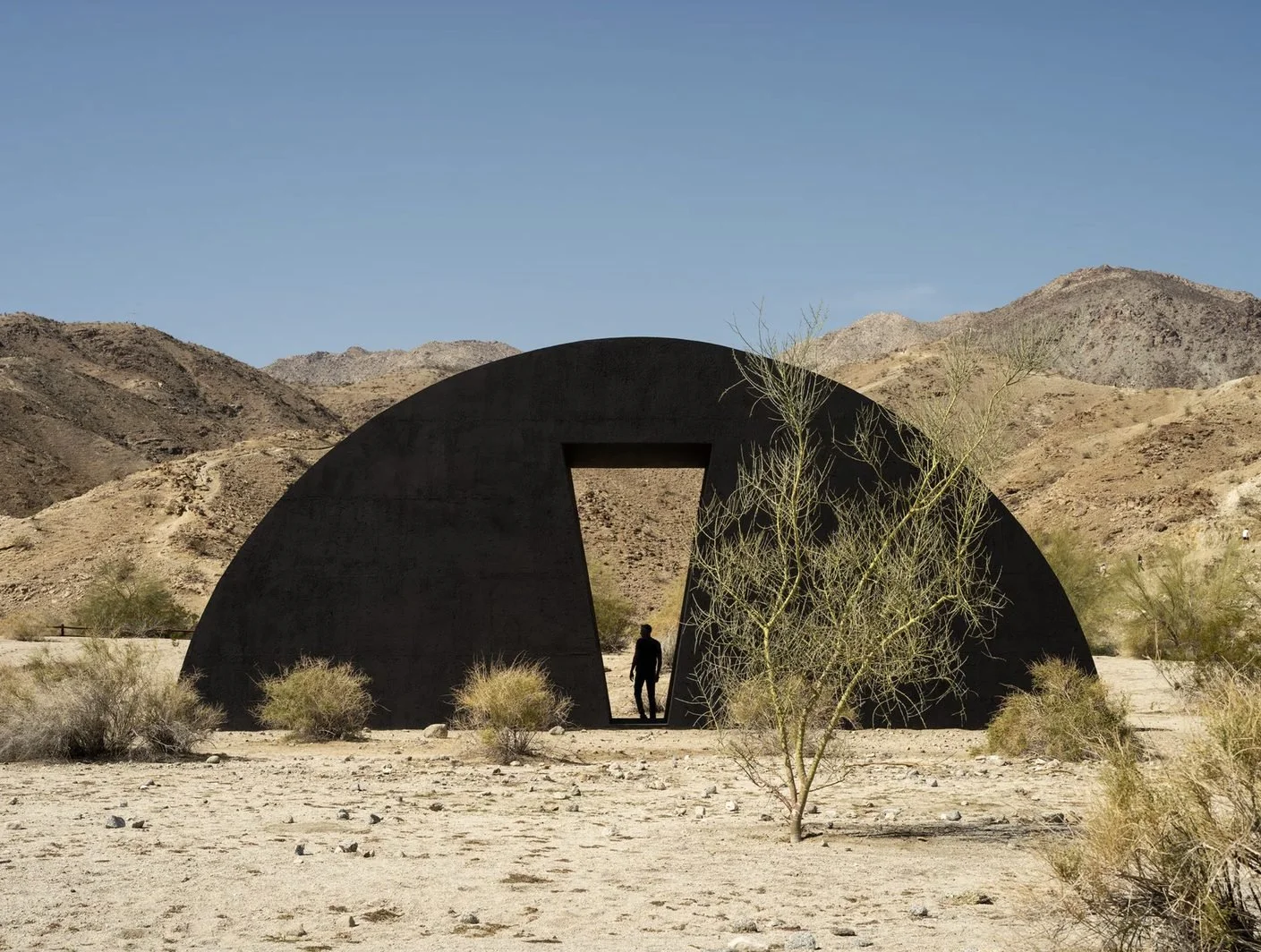
Torkwase Dyson’s work is powerful because she turns abstraction into a way of thinking about how bodies survive, move, rest, hide, escape, and claim freedom within environments that were not designed equally for everyone.
Her paintings and sculptures frequently begin with dark geometric forms:
arcs;
wedges;
circles;
rectangles;
tunnels;
slits;
enclosures;
expanding fields of black, blue, gray, and white.
At first encounter, the work may appear austere and architectural. Its shapes can resemble diagrams, fragments of buildings, abstract landscapes, vessels, shelters, portals, or machines. Yet these forms are not detached exercises in geometry.
They carry histories of movement.
A narrow attic becomes a shape of concealment.
A ship’s hold becomes a structure of forced confinement.
A doorway becomes the possibility of passage.
A curve may shelter a body.
An opening may offer escape.
A wall may protect one person while trapping another.
Dyson’s central inquiry might be stated this way:
How can abstraction make visible the spatial strategies through which Black people have survived confinement, environmental violence, displacement, and unequal access to freedom?
Her work does not illustrate those histories directly. It develops a geometric language through which architecture, ecology, bodily movement, memory, and liberation become inseparable.
What the Viewer Encounters
Dyson describes herself as a painter working across painting, sculpture, drawing, installation, performance, film, sound, and architecture. Her practice examines the continuity among ecology, infrastructure, architecture, and the ways Black and Brown bodies perceive and negotiate space. (pacegallery.com)
The viewer may encounter:
enormous black sculptures that curve overhead;
painted fields layered with graphite, acrylic, ink, and textured marks;
circles contained inside angular steel structures;
narrow apertures that frame the body;
dark surfaces interrupted by white, yellow, or blue lines;
architectural forms large enough to enter, lean against, or move around;
mirrored or reflective passages;
drawings that resemble maps, diagrams, weather systems, and speculative buildings.
The work frequently appears monumental, but it does not behave like a traditional monument.
A conventional monument often stands upright and communicates authority from a stable position.
Dyson’s forms may:
bend;
open;
shelter;
hover;
tilt;
contain absence;
redirect movement;
produce uncertain relations between inside and outside.
The viewer must negotiate them physically.
One walks around them, looks through them, approaches an opening, encounters a blocked view, or becomes aware of another person framed by the structure.
The work therefore begins not simply with shape, but with the body’s relation to shape.
The Inquiry Beneath the Work
Architecture is never merely a collection of neutral forms.
Walls, windows, roads, bridges, property boundaries, railways, levees, prisons, neighborhoods, and public institutions determine:
who can enter;
who must leave;
who is protected;
who is exposed;
who receives clean water;
who lives near pollution;
who has space to rest;
who is watched;
who can move without fear.
Dyson’s work investigates what she calls Black spatial liberation: the ways Black people have historically negotiated environments shaped by slavery, segregation, extraction, displacement, environmental racism, and unequal infrastructure. Her abstractions draw upon historical acts of navigation, concealment, migration, resistance, and self-determination. (Brooklyn Rail)
This means that geometry carries political and bodily consequence.
A rectangle is not simply a rectangle when it recalls a box used for escape.
A trapezoid is not simply a formal variation when it refers to the cramped attic in which Harriet Jacobs concealed herself for nearly seven years.
A narrow passage may be oppressive from one perspective and lifesaving from another.
Dyson asks:
How does a body invent freedom within a structure designed to restrict it?
The answer is not represented through heroic figures.
It emerges through spatial intelligence.
Abstraction as Embodied Knowledge
Abstraction is sometimes treated as a departure from lived reality.
The artist removes recognizable people, objects, and places in order to focus on line, color, surface, and shape.
Dyson reverses that assumption.
Her abstraction is grounded in embodied histories.
The shape matters because a body once had to:
fit inside it;
pass through it;
hide beneath it;
cross it;
survive within it;
imagine a route beyond it.
The abstract form becomes a vessel for bodily knowledge.
This knowledge is not always verbal.
A person facing danger may learn:
how narrow a gap is;
how long they can remain still;
where shadow creates concealment;
whether a structure will hold weight;
how water changes movement;
which route offers cover;
how sound travels through a wall.
Dyson’s work translates these spatial decisions into an abstract language.
The result is not illustration.
It is something closer to an anatomy of movement under pressure.
The Hypershape
One of Dyson’s most important inventions is the hypershape.
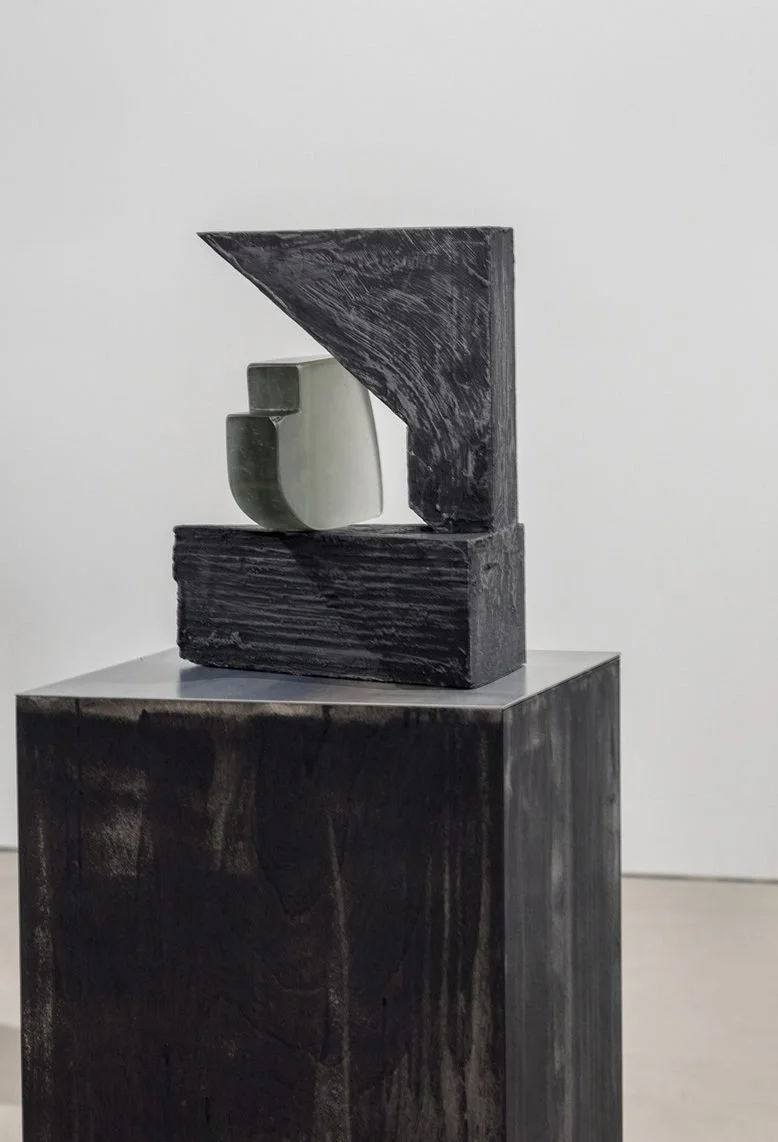
Her hypershapes frequently combine three primary forms:
a rectangular box;
a triangle;
a trapezoid.
Each has connections to histories of Black spatial liberation. Public Art Fund explains that these forms refer to people who escaped confinement through spaces of related shape, including Harriet Jacobs’s survival in a trapezoidal attic crawlspace. (Public Art Fund)
The hypershape is not a fixed symbol with one definition.
It is a generative structure.
It can become:
painting;
sculpture;
architecture;
passage;
seating;
frame;
shelter;
monument;
choreography.
The prefix “hyper” suggests movement beyond ordinary dimensional or conceptual limits.
The shape can operate at multiple scales:
the scale of a body;
the scale of architecture;
the scale of landscape;
the scale of historical memory.
A small angular mark inside a painting may later become a structure large enough to enter.
The same form migrates from image to environment.
This migration allows Dyson to ask how liberation changes when it moves among imagination, material, body, and public space.
Harriet Jacobs and the Geometry of Confinement
Harriet Jacobs’s history is especially important to Dyson’s geometric language.
Jacobs escaped enslavement but spent nearly seven years concealed inside a tiny attic space above her grandmother’s home. The space protected her from recapture while imposing extreme physical restriction.
This history contains a difficult contradiction:
The space was simultaneously a prison and an instrument of freedom.
Jacobs could not stand upright.
She lived under intense physical constraint.
Yet the enclosure also allowed her to remain near her children, resist her enslaver’s control, and eventually reach freedom.
The geometry cannot be classified simply as oppressive or liberating.
Its meaning depends on:
who designed it;
who occupies it;
why they are there;
what danger exists outside;
what future the enclosure makes possible.
This complexity is essential to Dyson’s practice.
A shape does not have a single politics.
Its meaning emerges through bodily use.
Architecture as Enemy, Tool, and Possibility
Dyson does not treat architecture only as domination.
Architecture can enforce inequality, but spatial intelligence can also transform structures into resources.
A wall may become cover.
A roof cavity may become refuge.
A river may become an escape route.
A ship may become a site of captivity, survival, memory, or return.
A city street may expose a body to danger while also providing paths of gathering and protest.
This produces one of Dyson’s most important propositions:
Freedom is not always found outside structure. It may be invented through a different use of structure.
Her forms therefore do not simply destroy architecture.
They reconfigure it.
A rigid line becomes curved.
A closed volume gains an opening.
A monumental object becomes something that can hold, shade, or support a body.
The work asks what built environments might become if they were designed around:
care;
breath;
bodily autonomy;
environmental justice;
collective movement;
multiple ways of inhabiting space.
Black Compositional Thought
Dyson uses the term Black Compositional Thought to describe a framework connecting abstraction, liberation, spatial practice, environmental conditions, and Black histories of movement.
Composition, in this sense, is larger than arranging elements on a canvas.
It includes how people compose themselves within the world.
A person composes:
a route;
a refuge;
a temporary home;
a mode of visibility;
a strategy for safety;
a way of moving through infrastructure;
a relationship to land and water.
This expands the meaning of artistic composition.
The painting is not only a composition of shapes.
It is a meditation on how life itself must be composed under unequal conditions.
Dyson’s work suggests that Black spatial history contains profound design intelligence—forms of knowledge produced through necessity, adaptation, resistance, imagination, and survival. Her conversations and writings repeatedly connect physical design with the organization of movement, belonging, visibility, and partial autonomy. (Brooklyn Rail)
The Body Inside Abstraction
Although Dyson’s paintings rarely depict recognizable human figures, the body remains everywhere.
It is implied through:
scale;
passage;
pressure;
enclosure;
reach;
balance;
orientation;
breath;
distance.
A line can become the length of a stride.
A narrow slit can suggest whether a shoulder might pass through.
An arch can establish the height of a body beneath it.
A dark field can feel inhabitable or threatening.
A circle can suggest enclosure, orbit, horizon, portal, or protection.
The absence of depicted bodies does not make the work disembodied.
Instead, the viewer’s own body becomes the figure.
We test the shape against ourselves.
Could I enter?
Could I hide there?
Would it hold me?
Would I feel protected?
Could I see outward?
Could another person see me?
The abstraction becomes bodily because it makes spatial possibility physically imaginable.
The Black Surface
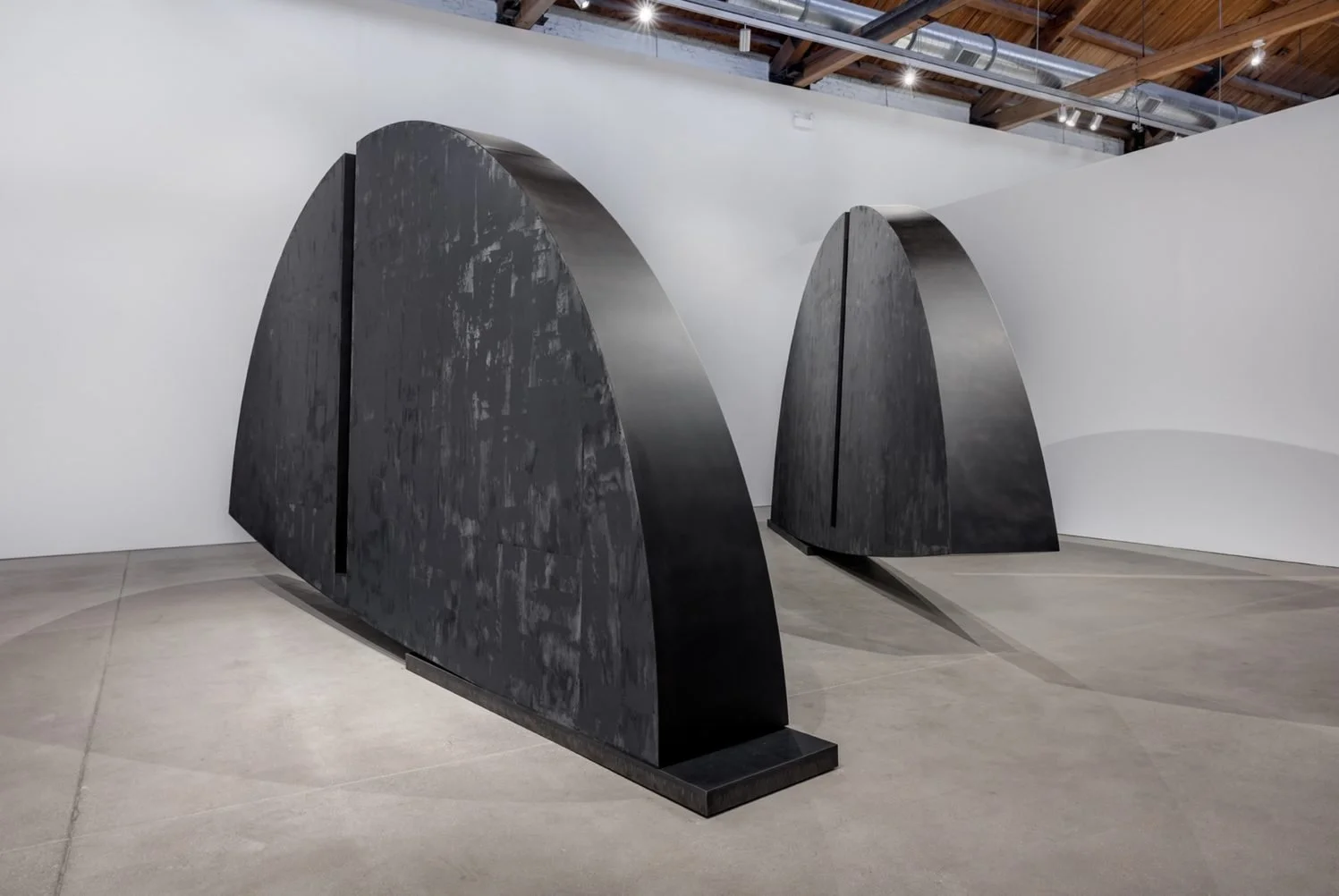
Black dominates much of Dyson’s work.
But black does not function as empty background or symbolic darkness alone.
Her surfaces are often built through layers of:
acrylic;
graphite;
charcoal;
ink;
pigment;
washes;
scumbled marks;
polished passages;
scraped areas.
The black field may appear:
dense;
reflective;
atmospheric;
absorbent;
watery;
architectural;
cosmic;
intimate.
Subtle marks remain visible inside it.
A surface that first appears nearly monochrome gradually reveals:
lines;
abrasions;
geometric boundaries;
changes in sheen;
traces of movement;
zones of depth.
The viewer must adjust to the darkness.
This makes looking temporal.
The work does not disclose itself instantly.
One has to remain before it long enough for differences to emerge.
Black becomes an environment rather than a color applied uniformly across one plane.
Visibility and Concealment
The dark surface also activates the politics of visibility.
Visibility is often described as inherently liberating.
To be seen can mean:
recognition;
representation;
public presence;
political acknowledgment.
But visibility can also bring:
surveillance;
exposure;
vulnerability;
targeting;
control.
Concealment may be necessary for survival.
Dyson’s work does not assume that liberation means becoming completely visible.
Her slits, shadows, dark forms, partial openings, and reflective surfaces produce different degrees of appearance.
A body may be:
visible from one angle;
hidden from another;
framed;
reflected;
obscured;
permitted to look without being fully seen.
This suggests a more complex freedom:
The right not only to be visible, but to determine the conditions of one’s visibility.
Distance as Material
Distance recurs throughout Dyson’s titles and statements.
Distance may be:
physical;
historical;
emotional;
geographic;
environmental;
diasporic.
A person may be separated from:
homeland;
family;
safety;
clean resources;
public power;
ancestral knowledge;
a possible future.
But distance can also create perspective, escape, breathing room, or imagination.
Dyson’s work treats distance as something bodies actively negotiate.
A line may establish a route.
An opening may connect separate spaces.
A sculpture may frame what lies beyond it.
A curved form may make a distant point feel reachable or protected.
The work does not eliminate distance.
It asks how distance can be crossed, inhabited, measured, or transformed.
Water as History and Force
Water plays a major role in Dyson’s practice.
It appears through:
blue and black fields;
reflective surfaces;
curved forms;
references to oceans, rivers, rainfall, and flood;
titles such as Liquid a Place and A Liquid Belonging;
investigations of environmental injustice and displacement.
Water carries multiple historical pressures.
For Black diasporic history, it may evoke:
the Atlantic;
forced migration;
escape routes;
labor;
drowning;
trade;
distance from home;
survival;
ecological change.
But water cannot be reduced to one symbol.
It is also a material force.
It flows, floods, nourishes, erodes, reflects, carries, and transforms.
Dyson’s upcoming 2026 exhibition Seeing in Blue is described as reflecting on what she calls water’s “boundless state change,” attending to both its beauty and devastation. (pacegallery.com)
Water is therefore both subject and model.
Like liberation, it changes form according to conditions.
Liquid a Place
In Liquid a Place, Dyson presented large sculptural structures and paintings that investigated spatial liberation, water, architecture, and bodily movement.
The sculptures resemble vessels, shelters, hulls, wedges, and open architectural containers.
Their dark forms carry enormous physical weight, yet their curves suggest motion.
They can appear:
grounded and floating;
protective and threatening;
solid and fluid;
monumental and provisional.
The title transforms “place” from a fixed noun into something liquid.
A place is not simply a location on a map.
It can shift through:
migration;
memory;
climate;
ownership;
violence;
belonging;
bodily experience.
The work asks whether a place can remain stable when the conditions of inhabiting it are constantly changing.
A Liquid Belonging
In the 2022 exhibition A Liquid Belonging, Dyson created large site-specific sculptural installations and paintings examining human geography, ecological history, and Black spatial strategies. (pacegallery.com)
The phrase “liquid belonging” contains a contradiction.
Belonging usually implies stability:
this is my home;
this is my community;
this is where I am held.
Liquid implies movement and changing form.
A liquid belongs to no single shape. It takes the form of its container while retaining the capacity to move elsewhere.
The phrase therefore suggests a belonging that can survive movement without becoming fixed.
For people shaped by migration, diaspora, displacement, and environmental change, belonging may need to be portable.
It may reside in:
memory;
movement;
relationship;
bodily knowledge;
repeated practice;
adaptive form.
Dyson’s work does not treat mobility as effortless freedom. Movement often arises because staying has become dangerous or impossible.
Liquid belonging contains both possibility and loss.
Ecology and Environmental Racism
Dyson’s interest in environmental conditions is inseparable from racial history.
Environmental harm is not distributed randomly.
Infrastructure and political decisions determine which communities face greater exposure to:
polluted air;
contaminated water;
industrial waste;
flooding;
extreme heat;
inadequate public space;
displacement;
climate vulnerability.
Dyson connects abstraction to these unequal spatial realities.
Her paintings may resemble atmospheric or geological fields, but they are not detached visions of nature.
They ask:
Who is permitted safety within an environment?
Who bears the cost of extraction and development?
How does environmental damage alter the possibility of movement and belonging?
This gives her abstraction an ethical pressure.
Ecology is not landscape without people.
It is the relation among bodies, resources, infrastructure, power, and place.
Infrastructure as Hidden Politics
Infrastructure is often invisible when it functions for those it was designed to serve.
Clean water appears from a tap.
Roads connect neighborhoods.
Electricity arrives.
Waste disappears.
Flood barriers hold.
But infrastructure becomes painfully visible when it fails or when access is unequal.
Dyson’s work draws attention to the spatial systems underlying ordinary life.
A line may recall:
a pipeline;
road;
border;
channel;
rail route;
structural support.
A geometric field may resemble:
city planning;
land division;
extraction zones;
water systems;
architectural diagrams.
These references remain abstract enough to avoid becoming maps of one specific place.
The work instead reveals a broader principle:
Infrastructure composes social possibility before an individual enters the scene.
The environment is already making decisions about the body.
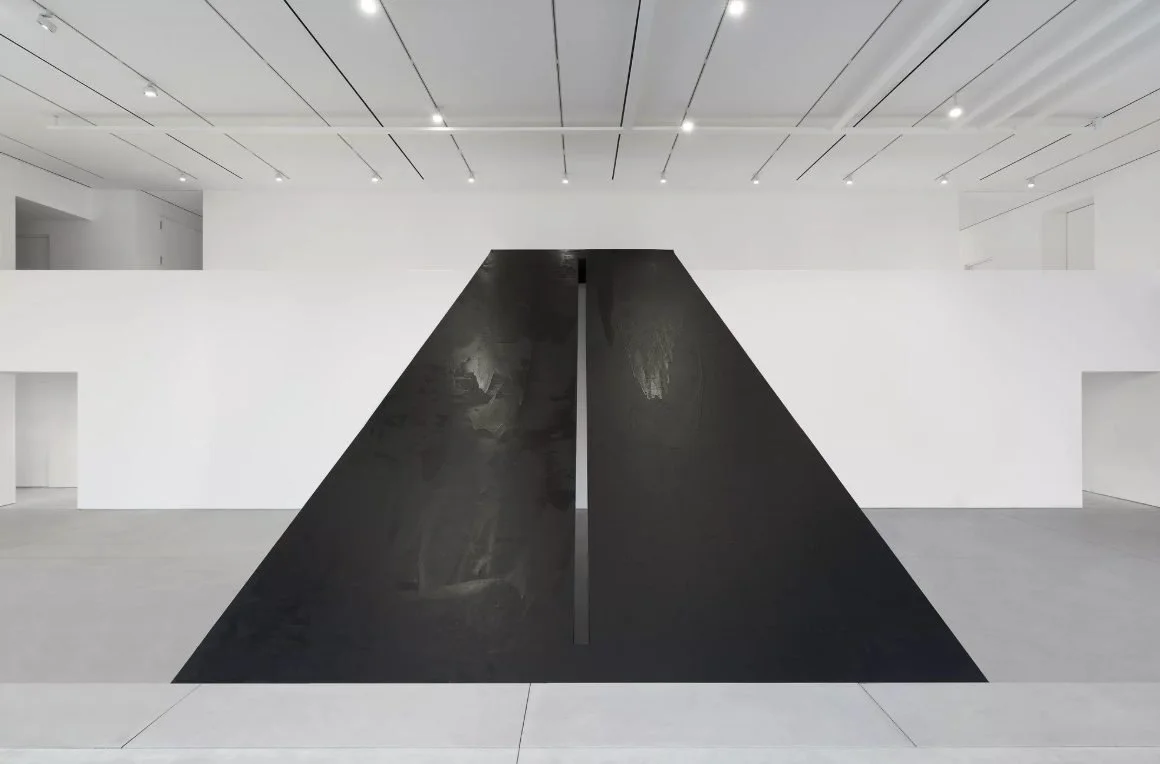
Akua: Sculpture as Public Passage
Dyson’s public sculpture Akua was installed in Brooklyn Bridge Park from May 2025 through March 2026. The work extended her hypershape language into a public environment where people could encounter it through movement, rest, and changing views. (Public Art Fund)
The title refers to an Akan day name associated with Wednesday-born girls and women, while the work also considers Black diasporic history, water, passage, and public belonging.
In a park beside the East River, the sculpture enters into relation with:
tides;
bridges;
skyline;
pedestrians;
weather;
tourism;
histories of trade and movement.
The work is no longer isolated inside a museum.
Its meaning changes through public use.
A child may treat it as a structure to explore.
A visitor may rest near it.
A passerby may see it frame the river.
The city becomes part of the composition.
Public sculpture becomes not only an object to observe, but an instrument for reorganizing relation to place.
Liquid Shadows, Solid Dreams
Dyson’s Liquid Shadows, Solid Dreams (A Monastic Playground) appeared in the 2024 Whitney Biennial and subsequently became the inaugural Hyundai Terrace Commission at the Whitney Museum.
The large black structure combines sweeping arcs, angular planes, reflective surfaces, and spaces through which viewers can look, move, rest, or orient themselves toward the surrounding city.
The title again joins opposing conditions:
liquid and solid;
shadow and dream;
monastery and playground.
A monastery suggests:
contemplation;
discipline;
retreat;
spiritual concentration.
A playground suggests:
motion;
experimentation;
pleasure;
social interaction.
The sculpture holds both.
It can be approached seriously without becoming solemn.
It can support play without becoming entertainment alone.
Dyson creates a structure in which freedom includes:
stillness;
movement;
contemplation;
bodily experimentation.
Liberation is not reduced to forward motion.
It may also mean the ability to rest safely.
Rest as a Spatial Right
Rest is politically significant in Dyson’s work.
A body under constant threat must remain alert.
A person moving through hostile space cannot always relax.
Public environments often regulate who may:
sit;
sleep;
gather;
remain;
occupy space without purchasing something.
Dyson’s structures frequently create possibilities for bodily support, shade, contemplation, or temporary enclosure.
This gives rest conceptual importance.
Rest is not inactivity.
It can be:
recovery;
autonomy;
refusal;
safety;
presence without performance;
belonging without justification.
A liberatory architecture should not only help people escape danger.
It should create conditions in which they no longer need to keep escaping.
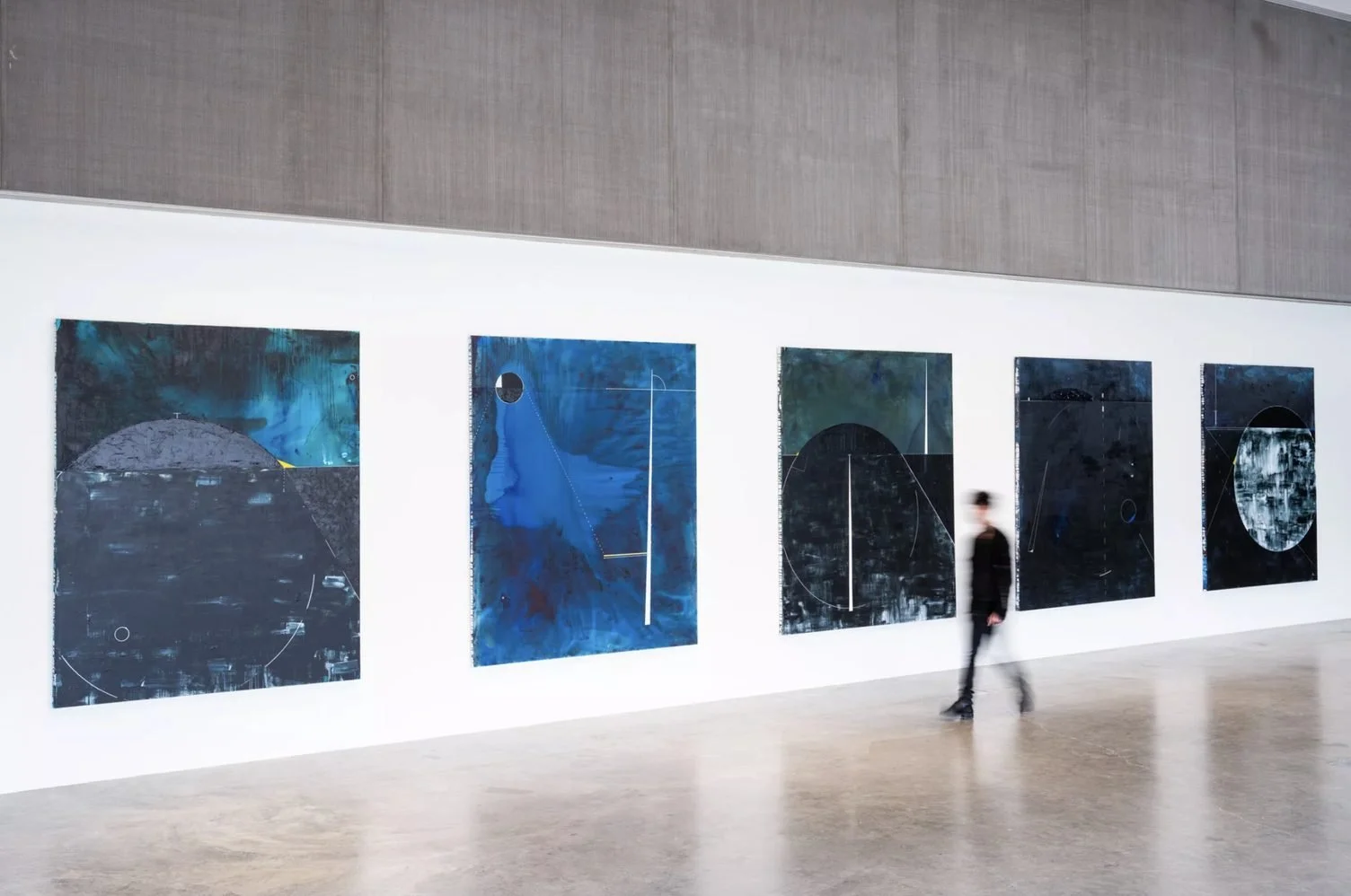
Painting and Sculpture as One Practice
Dyson identifies herself fundamentally as a painter, even when working through monumental sculpture and architectural installation.
This is revealing.
Her sculptures often behave like paintings expanded into space.
A line becomes a steel beam.
A dark geometric field becomes a wall.
A curved painted form becomes an inhabitable arc.
At the same time, the paintings carry architectural pressure.
Their lines feel structural.
Their voids feel enterable.
Their scales suggest bodily relation.
The movement between painting and sculpture allows the inquiry to operate in two ways.
Painting can propose impossible spaces through imagination.
Sculpture tests how those spaces affect actual bodies.
The painting asks:
What kind of space can be imagined?
The sculpture asks:
What happens when the body must negotiate it?
The Painted Surface as Environmental Record
Dyson’s paintings often accumulate through layering, rubbing, drawing, erasure, pouring, and repeated physical contact.
Their surfaces may resemble:
weathered walls;
maps;
water;
ash;
geological strata;
blackboards;
cosmic fields;
architectural plans.
These associations are not fixed.
A dark passage may feel simultaneously material and atmospheric.
A scratch can read as:
movement;
damage;
notation;
route;
memory.
The paintings preserve evidence of labor without becoming expressionist performances of personality alone.
Gesture becomes environmental.
It registers the relationship between body, tool, resistance, and surface.
The painting is not simply an image of space.
It is a space that has been physically negotiated.
Line as Route, Boundary, and Force
Line is one of Dyson’s primary tools.
A line may operate as:
edge;
route;
horizon;
border;
support;
cut;
beam;
direction of movement.
This multiplicity matters.
The same line can guide and prohibit.
A road allows passage but may divide a community.
A property line creates belonging for one owner and exclusion for another.
A structural beam supports the building but also determines the shape of movement inside it.
Dyson refuses to treat geometry as politically innocent.
Line organizes possibility.
Her work asks what happens when lines are redrawn according to different priorities.
Of Line and Memory
In Of Line and Memory, Dyson brought painting and large-scale sculpture together around the relation between spatial movement and historical remembrance.
The monumental curved sculptures appear like arches, vessels, thresholds, or massive fragments of an unknown architecture. Their dark surfaces and narrow openings create a tension between protection and restriction. (Richard Gray Gallery)
Memory does not appear as representational narrative.
It enters through form.
A curve may retain the memory of a route.
A slit may retain the memory of limited visibility.
A dark chamber may hold the memory of concealment.
This suggests that memory can be spatial before it is verbal.
Bodies remember:
where danger occurred;
where safety was possible;
how much space was available;
which way movement had to happen.
Dyson gives those bodily memories architectural form.
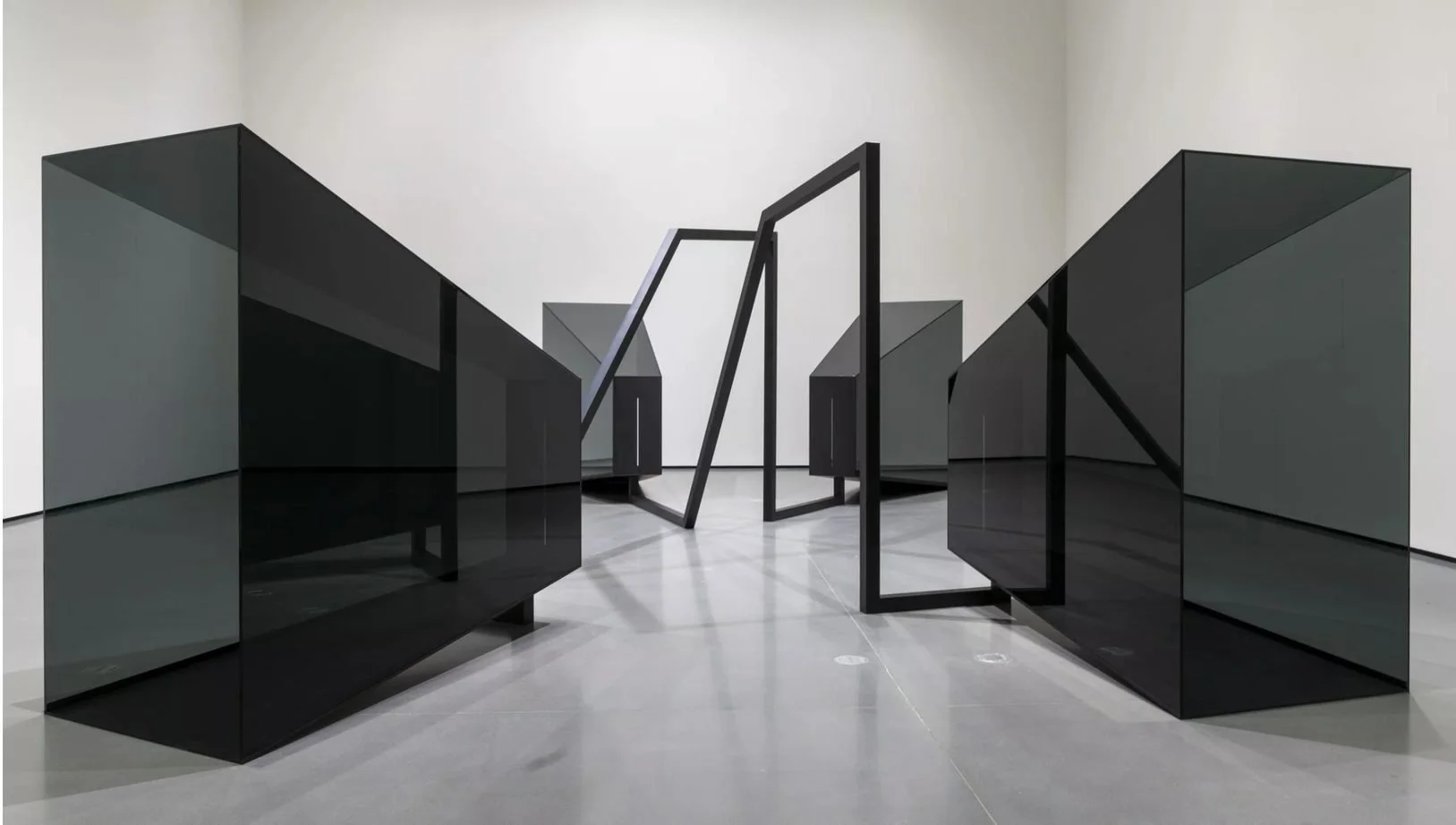
The Monument Reimagined
Traditional monuments frequently commemorate power through:
height;
permanence;
figurative representation;
heroic posture;
elevated platforms.
Dyson’s monumentality operates differently.
Her forms may commemorate:
survival;
spatial intelligence;
hidden labor;
escape;
endurance;
environmental relation;
collective movement.
They do not necessarily depict the person whose history they carry.
Instead, they preserve the spatial strategy.
This is a profound shift.
The heroic figure is replaced by the geometry of what survival required.
The monument does not say:
Look at this exceptional individual.
It says:
Attend to the intelligence embedded in this act of movement, concealment, adaptation, or resistance.
Designing Superfine
Dyson served as the conceptual exhibition designer for the Metropolitan Museum of Art’s 2025 Costume Institute exhibition Superfine: Tailoring Black Style.
She transformed her hypershape vocabulary into a flexible architectural system of frames, layered platforms, angled pathways, apertures, and changing elevations. Her design was intended to support Black self-fashioning while allowing visitors to move forward, backward, laterally, and through multiple points of view. (The Metropolitan Museum of Art)
This commission reveals the practical potential of her abstraction.
The hypershape was no longer only symbolic or sculptural.
It became:
exhibition architecture;
support for garments;
choreography for viewers;
frame for historical objects;
a way of controlling and opening sightlines.
Dyson described wanting visitors to feel held by a thoughtful system rather than confined by it. (Vogue)
That sentence captures much of her larger inquiry.
What would it mean for structure to hold without imprisoning?
Self-Fashioning and Spatial Fashioning
Superfine focused on Black dandyism and self-fashioning.
Fashion allows a person to construct how they will appear publicly.
But clothing never operates alone.
Its meaning changes according to:
architecture;
lighting;
movement;
social context;
historical framing;
the observer’s expectations.
Dyson’s exhibition design therefore extended the inquiry from self-fashioning to spatial fashioning.
The person constructs a character through dress.
The environment helps determine how that character becomes visible.
This connects directly to the insight developed through Roni Horn:
Character makes plans, but character acts inside a world it does not control.
Dyson adds that the world has already been materially composed.
The room, pathway, frame, platform, and sightline participate in the meaning of the person.
Identity is not only performed.
It is architecturally mediated.
Chance, Movement, and Multiple Views
Dyson’s work rarely gives the viewer one ideal viewpoint.
The forms change as one moves.
An opening that seemed narrow becomes broad.
A dark surface catches light.
Another person appears through a frame.
A reflection creates an unexpected overlap.
This introduces contingency.
The viewer’s experience depends upon:
route;
speed;
bodily height;
weather;
surrounding architecture;
presence of other people;
moment of arrival.
The artist designs the conditions, but cannot control every encounter.
This resembles your emerging interest in identity under contingency.
Dyson’s architecture helps shape perception, but chance determines which relationships become visible at a particular moment.
A work becomes different because someone else crossed the opening at exactly that time.
The Central Contradiction
The deepest contradiction in Dyson’s practice is:
The same structure can confine a body, protect it, or become an instrument of liberation.
Her works are:
abstract and historically specific;
monumental and bodily intimate;
dark and luminous;
architectural and fluid;
protective and threatening;
stable and mobile;
meditative and politically urgent;
solid and shaped by water.
Dyson does not attempt to eliminate these contradictions.
The work gains power by refusing simple classifications.
Freedom is not imagined as the absence of structure.
It becomes the capacity to alter one’s relation to structure.
How the Medium Thinks
Each medium contributes differently to Dyson’s inquiry.
Painting
Painting permits impossible spatial propositions. Shape, darkness, line, memory, water, architecture, and movement can coexist without obeying physical construction.
Sculpture
Sculpture forces abstraction into relation with actual bodies. Scale, weight, passage, balance, obstruction, and support become physically consequential.
Architecture
Architecture organizes collective movement. It controls sightlines, access, rest, containment, and encounter.
Performance
Performance reveals how bodies activate space over time.
Sound
Sound moves through walls and around barriers, making invisible spatial conditions perceptible.
Film
Film introduces duration, sequence, historical testimony, and changing perspective.
The practice remains coherent because every medium examines how freedom is spatially composed.
What the Practice Has Discovered
Across painting, sculpture, public art, performance, and architectural design, Dyson’s practice appears to have produced several major discoveries.
1. Abstraction can carry lived history without illustrating it
Geometry can preserve bodily strategies of escape, concealment, resistance, and survival.
2. Space is never politically neutral
Architecture and infrastructure distribute safety, visibility, mobility, and environmental risk.
3. A restrictive form can be strategically transformed
The same structure may become prison, shelter, route, or instrument of freedom according to use.
4. Liberation includes control over visibility
Freedom can mean the right to appear, disappear, observe, rest, or move under chosen conditions.
5. Rest is an architectural and political possibility
A liberatory space should permit bodies to stop defending themselves continually.
6. Belonging can be mobile
Diasporic and displaced experience may require forms of belonging that travel, adapt, and change shape.
7. Painting can become architecture without abandoning abstraction
A visual language can migrate across scale and medium while retaining conceptual coherence.
8. Historical memory can be preserved through spatial intelligence
A monument can honor not only a person’s image but the form of movement that made survival possible.
The Artistic Capacity
Dyson has developed the capacity to make abstract geometry carry bodily, environmental, historical, and political consequence.
She can make:
a trapezoid hold a history of concealment;
a line become a route or boundary;
a black surface become atmosphere, architecture, and depth;
a sculpture shelter and challenge the body simultaneously;
water become memory, devastation, mobility, and belonging;
monumental form remain intimate;
abstraction function as a plan for possible freedom.
Her work depends on integration.
The historical reference does not sit outside the form as explanation.
The history changes why the form is necessary.
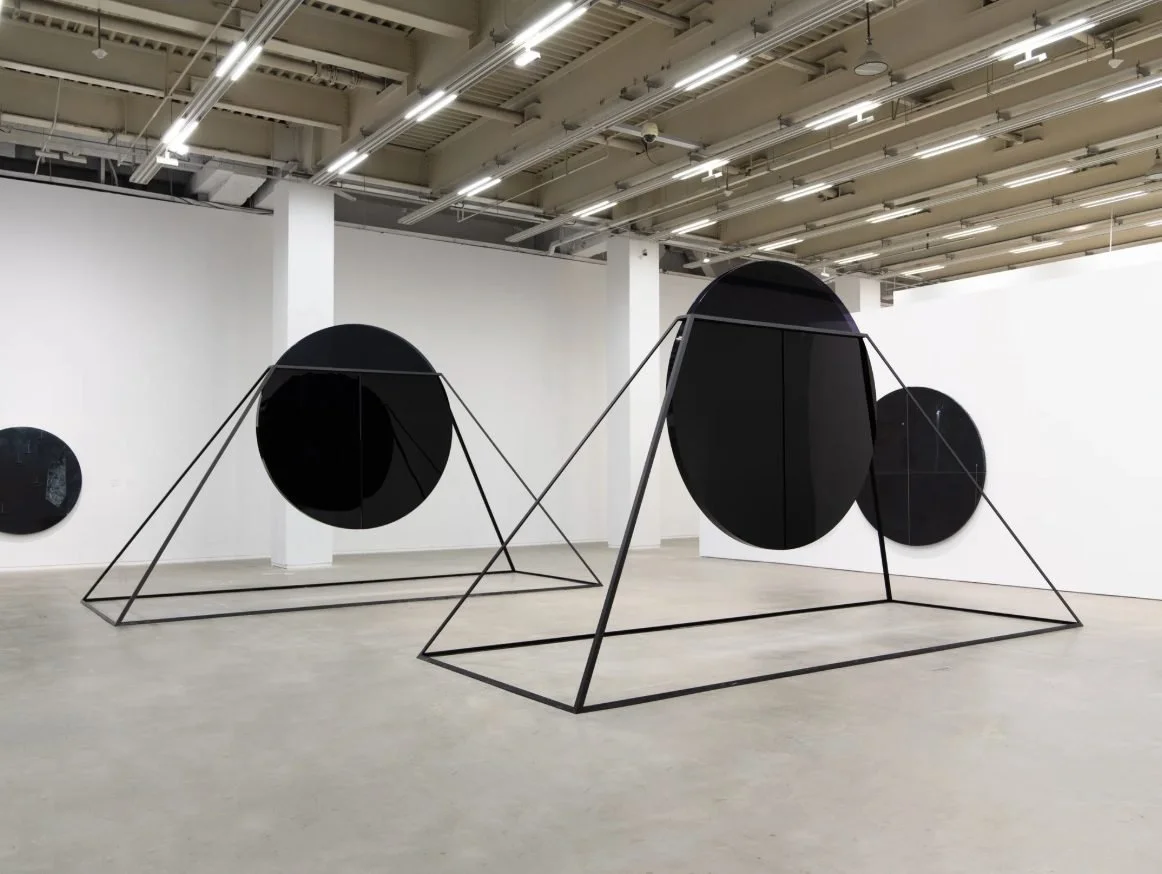
The World Dyson Has Built
Dyson’s artistic world includes recurring:
black fields;
circles;
triangles;
trapezoids;
boxes;
arches;
tunnels;
slits;
water;
vessels;
routes;
reflective surfaces;
monumental structures;
bodily passages.
These forms belong to one sustained world because they repeatedly ask:
Where can the body go?
What holds it?
What restricts it?
What protects it?
What allows it to rest?
What makes another future spatially imaginable?
The work is not simply about surviving the existing world.
It tries to develop forms for inhabiting a different one.
Is the Language Still Learning?
Dyson’s hypershapes and black architectural forms are increasingly recognizable.
This creates a critical risk.
A powerful spatial language can become a visual signature.
The triangle, trapezoid, arc, and dark monumental surface may begin to signify Black liberation before the particular relationships within the work have been fully activated.
The essential question is:
Does each new work generate a distinct spatial possibility, or does it repeat the appearance of liberation?
The language remains alive when:
a form permits a new bodily action;
a public site changes the shape’s meaning;
water introduces another environmental pressure;
an architectural commission transforms movement;
a painting generates a spatial proposition not yet resolved;
historical research changes the geometry;
rest, play, concealment, or collective gathering complicates earlier ideas of escape.
Her recent public works, exhibition design for Superfine, 2024–25 museum presentations, and forthcoming 2026 painting exhibition suggest an expanding inquiry rather than reliance on sculpture alone. (pacegallery.com)
The work weakens only when historical resonance becomes assumed rather than materially produced.
Risks and Limits
Dyson’s practice faces several demanding risks.
Historical meaning becoming inaccessible
Without contextual knowledge, the geometric forms may appear formally elegant but historically opaque.
Monumentality overpowering bodily intimacy
Large structures can command attention while making the viewer feel subordinate rather than held.
Abstraction becoming institutional language
Museums can embrace politically resonant abstraction without changing the unequal spatial systems beyond their walls.
Liberation becoming generalized
Black spatial experience is historically diverse. No single geometric vocabulary can represent every form of movement, constraint, or belonging.
Theory arriving before encounter
Conceptual language such as hypershape, Black Compositional Thought, and spatial liberation can deepen the work, but the forms must also produce experience physically.
These risks establish the standard of the practice.
The strongest works make the spatial question felt before it is fully explained.
What the Work Expands
Dyson expands what political abstraction can do.
Political art does not have to depict an event, person, injustice, or protest directly.
It can examine the structure through which political life becomes possible.
She expands what a monument can preserve.
A monument can hold:
a route;
an opening;
an enclosure;
a survival strategy;
a bodily relation to architecture.
She expands what liberation can mean.
Liberation is not only escape from structure.
It can include:
shelter;
rest;
chosen visibility;
environmental safety;
the ability to move in several directions;
the right to be held without being confined.
Most importantly, Dyson reveals that freedom must become spatial before it can become fully lived.
A person may imagine freedom, but the world must contain somewhere for that freedom to occur.
What Artists Can Learn
The lesson is not to borrow Dyson’s dark palette, monumental arches, hypershapes, or architectural vocabulary.
The deeper lesson is to investigate what formal choices allow bodies to do.
Instead of asking only:
What does this shape symbolize?
Does this composition look strong?
Is this space visually interesting?
An artist can ask:
What kind of movement does this form permit?
Who is protected by this structure?
Who is exposed?
Can the figure rest?
Can the figure disappear?
Can the viewer see without being seen?
Does the environment support the identity being performed, or contradict it?
What history of bodily adaptation makes this form necessary?
Dyson also shows how abstraction can gain depth through research without becoming illustration.
The historical source does not need to appear visibly.
It can determine:
proportion;
scale;
opening;
enclosure;
movement;
material;
relation to the viewer.
Her work offers a powerful expansion of your emerging inquiry into performed identity.
A character does not perform in empty space.
Architecture, infrastructure, weather, distance, and environmental chance participate in the result.
The environment may support the character’s intention.
It may misread it.
It may constrain it.
It may also offer an unexpected route toward another self.
Dyson’s achievement is to make abstraction behave like spatial memory and speculative architecture: a language through which histories of confinement become forms for imagining movement, rest, belonging, and freedom.