What Makes Tschabalala Self’s Work So Powerful?
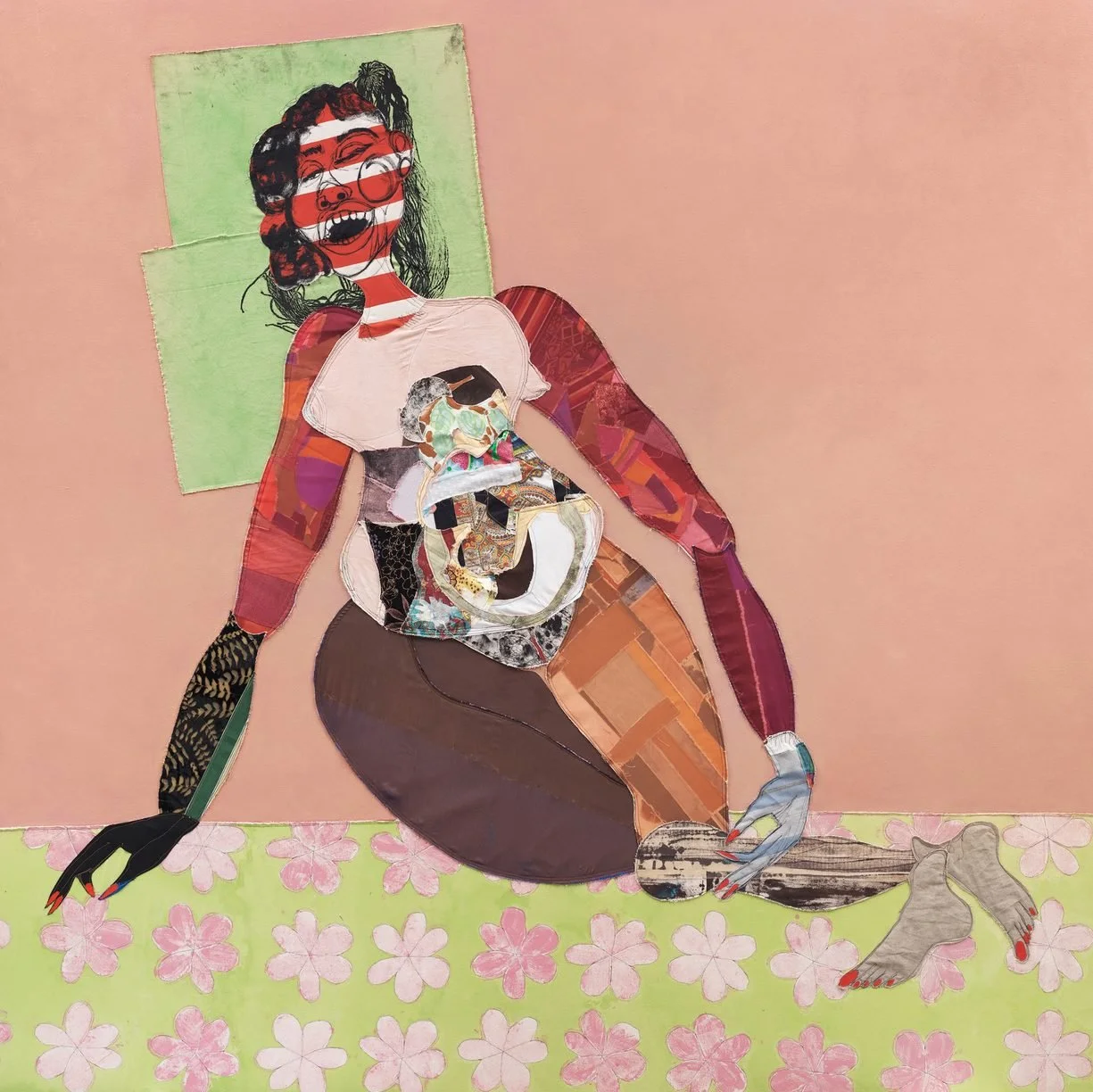
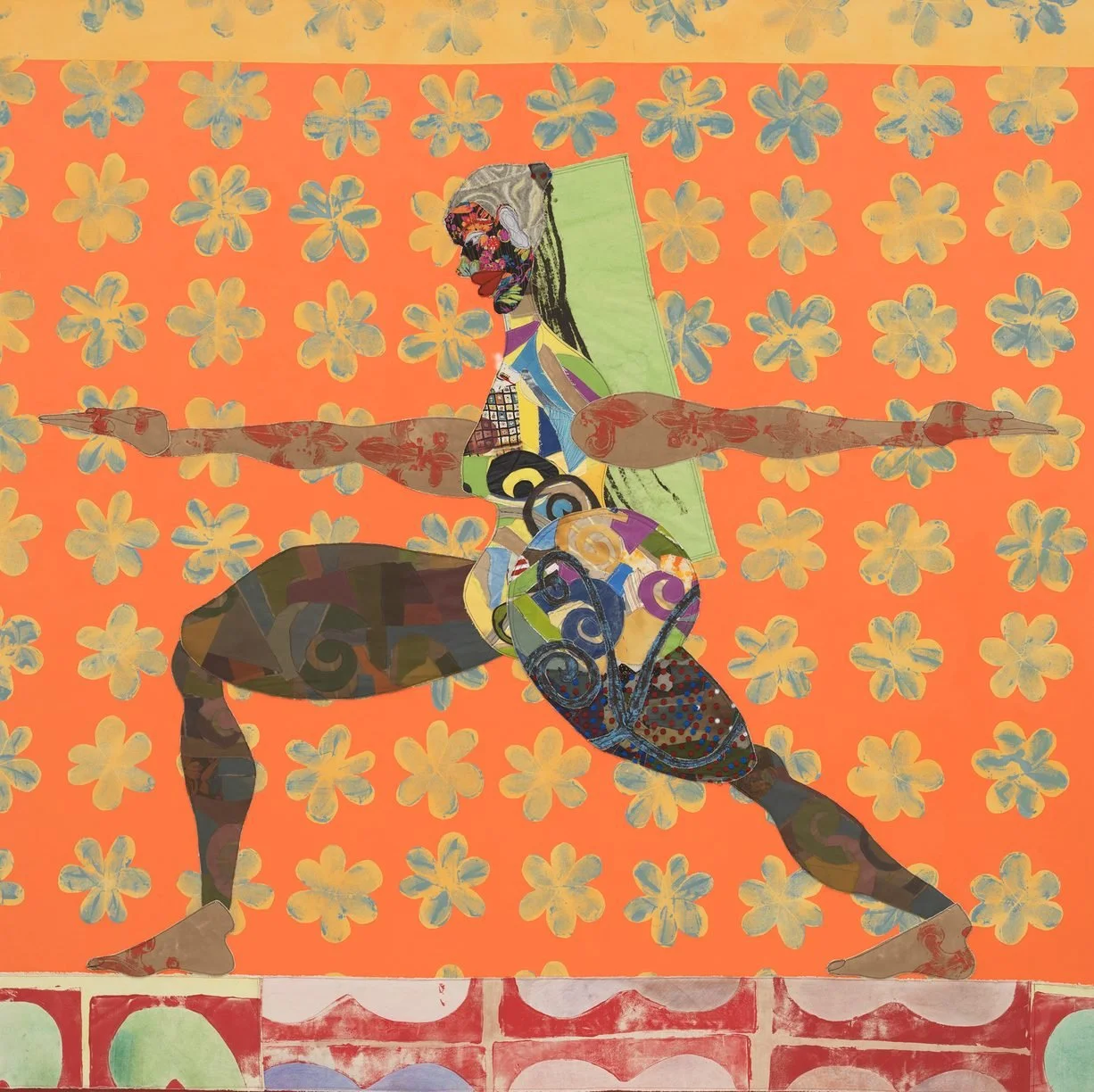
Tschabalala Self’s work is powerful because she makes the body behave like a construction site for identity.
Her figures are assembled from:
painted canvas;
printed fabric;
sewn seams;
drawing;
collage;
spray paint;
oil pastel;
exaggerated limbs;
compressed spaces;
conflicting textures;
fragments that refuse to disappear into one seamless whole.
A hip may seem to belong to one body while a hand appears to come from another visual system. A torso may be built from patterned cloth while the face is drawn with a different kind of line. Clothing can merge with skin. Background can enter the body. A figure may look self-possessed, theatrical, vulnerable, sensual, confrontational, awkward, and socially alert at the same time.
Self’s central inquiry might be stated this way:
How can figuration represent a person as psychologically and socially complex when the body has already been burdened by stereotype, fantasy, projection, and inherited visual codes?
Her work does not attempt to remove all cultural projections and reveal a pure individual underneath.
Instead, she builds figures who absorb those projections, resist them, perform through them, and exceed them.
The result is not a portrait of identity as essence.
It is identity as assembly.
What the Viewer Encounters
Self works across painting, printmaking, collage, sewing, sculpture, and performance, while maintaining a sustained concern with figuration and Black embodiment. Her official biography describes a practice built through the combined use of painting, printmaking, and sculpture, particularly through sewn, printed, and painted materials. (Tschabalala Self)
The viewer may encounter:
monumental figures occupying nearly the entire canvas;
bodies assembled from incompatible materials;
patterned fabric crossing the boundary between clothing and flesh;
exaggerated thighs, hips, mouths, hands, eyes, or genitalia;
characters in bedrooms, bodegas, streets, interiors, or theatrical spaces;
couples in moments of intimacy, tension, display, or mutual observation;
standing and seated figures that appear both sculptural and performative;
bronze bodies that translate her collaged anatomy into three dimensions.
The figures are often instantly legible as bodies, yet difficult to stabilize.
One knows where the person is.
One does not always know where one visual system ends and another begins.
This instability is not a failure of anatomical coherence.
It is the work’s psychological structure.
The Inquiry Beneath the Work
Black bodies in Western visual culture have often been subjected to reductive representation.
They have been:
stereotyped;
sexualized;
exoticized;
criminalized;
idealized;
fetishized;
flattened into symbols;
made to stand for social categories before being allowed individual complexity.
Self’s work confronts that condition without simply producing corrective images of respectable, dignified, or idealized subjects.
She does not replace one fixed image with another.
Instead, she creates characters with desires, moods, contradictions, social roles, private fantasies, and active interiority.
Her gallery has described her work as concerned with the agency involved in myth creation and the emotional effects of projected fantasy, while emphasizing that her characters retain power over self-presentation and external perception. (Galerie Eva Presenhuber)
The key issue is not merely representation.
It is authorship.
Who controls the story a body is made to tell?
The Body as Assembly
Self’s figures are built visibly from parts.
This matters because identity is not presented as one continuous surface.
The figure may contain:
one fabric for the torso;
another for the leg;
a painted hand;
a drawn face;
a stitched outline;
a fragment from an earlier work;
a patterned shape that behaves ambiguously as clothing, skin, shadow, or environment.
The parts remain distinguishable.
The body becomes coherent without becoming seamless.
That formal structure produces a powerful proposition:
A person can be whole without being uniform.
Wholeness does not require visual consistency.
The figure’s unity comes from relation among fragments.
Sewing as a Model of Identity
Sewing carries conceptual weight in Self’s practice.
A seam joins two things while preserving evidence that they were once separate.
It does not erase difference.
It holds difference together.
This distinguishes sewing from illusionistic blending.
A painted transition can make one form appear to dissolve smoothly into another.
A stitched seam insists upon attachment.
The connection is physical.
The figure therefore becomes a record of construction.
A body can contain:
inherited histories;
social roles;
performed identities;
imposed fantasies;
private desires;
contradictory emotional states.
The seam does not resolve those elements.
It gives them a structure in which to coexist.
Fabric and Social Meaning
Fabric carries histories that paint alone does not automatically possess.
It can suggest:
clothing;
domestic labor;
family memory;
decoration;
commerce;
class;
femininity;
cultural belonging;
bodily intimacy;
craft traditions;
mass production.
Fabric is already social before it enters the painting.
Its patterns may recall interiors, dresses, upholstery, shops, quilts, home environments, or vernacular design.
When Self uses fabric to build a body, the figure appears materially entangled with the social world.
The person is not placed inside culture.
The person is constructed through it.
Clothing and Skin
In many of Self’s figures, clothing and body are difficult to separate.
A patterned area may initially appear to be a dress.
Then it may become part of the torso.
A painted surface may behave like skin in one passage and fabric in another.
This instability complicates the boundary between:
body and costume;
identity and performance;
interior self and outward presentation;
person and social code.
Clothing can be:
self-expression;
protection;
seduction;
aspiration;
class signal;
armor;
disguise;
conformity.
But if clothing enters the body structurally, then performance is not merely placed on top of identity.
It helps produce identity.
Exaggeration and Psychological Weight
Self exaggerates bodily features, but exaggeration does not operate uniformly.
A large hand may carry agency.
A widened hip may carry sensuality, stability, social projection, or visual power.
A small head may shift emphasis toward posture and bodily presence.
A compressed face may make expression feel more ambiguous.
The exaggeration directs psychological weight.
It asks the viewer to notice which parts of the body have become socially overread.
Her practice has long been associated with exaggerated depictions of the Black female body through painted, sewn, and printed materials. (Pilar Corrias)
The crucial question is not:
Is the body anatomically correct?
It is:
What cultural and emotional pressure has made this part of the body visually dominant?
Stereotype and Dimensionality
A stereotype reduces a person to a few repeatable characteristics.
It flattens.
Self’s figures resist that flattening not by becoming conventionally realistic, but by becoming more structurally complex.
One figure may contain:
sensual confidence;
theatrical self-awareness;
defensiveness;
humor;
vulnerability;
vanity;
social intelligence;
private uncertainty.
The body may still activate familiar cultural associations, but those associations no longer control the whole figure.
The character has more dimensions than the stereotype can contain.
This is one of Self’s deepest achievements:
She does not pretend projected fantasies can simply be removed. She builds figures capable of surviving and exceeding them.
The Figure as Character
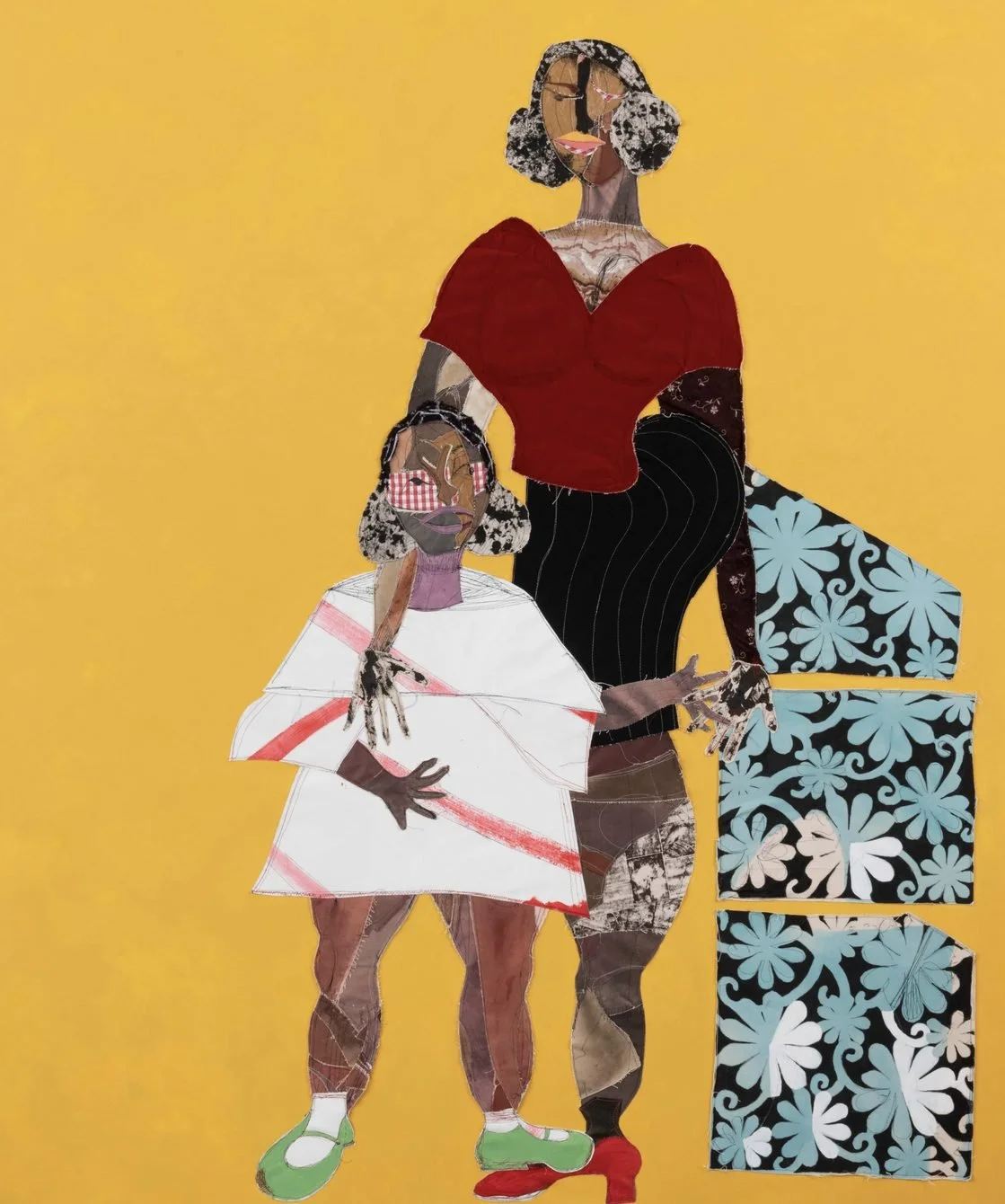
Self often speaks of her figures as characters rather than portraits of specific sitters.
This distinction matters.
A portrait may imply that the artwork records an existing person.
A character is constructed.
It has:
posture;
desire;
history;
social position;
psychology;
relation to others;
a world it inhabits.
Self’s characters are not generic symbols.
They often feel as though they existed before the viewer arrived and will continue afterward.
Their bodies imply active histories.
Her Bodega Run project, for example, presents figures with psychologies, desires, and social histories rather than reducing them to types within urban space. (Two Palms)
The character exceeds the instant of representation.
Presence Before Explanation
Many of Self’s figures possess extraordinary presence.
They do not appear to wait for the viewer’s approval.
They occupy the canvas fully.
This presence may come through:
scale;
frontal posture;
direct gaze;
compressed composition;
exaggerated anatomy;
strong contour;
refusal to recede politely into the background.
The figure often appears aware of being seen.
But awareness does not necessarily produce submission.
The character may return the gaze.
This shifts the viewer’s role.
The viewer is no longer safely positioned as the one who possesses visual authority.
The figure participates in the encounter.
Looking and Being Looked At
Self’s work repeatedly turns the politics of looking back onto the viewer.
The body may appear highly visible, but visibility does not equal availability.
A figure can be seen without becoming fully known.
The viewer may bring assumptions about:
race;
gender;
sexuality;
class;
desire;
danger;
beauty;
respectability.
The painting does not prevent those projections.
It exposes them.
The figure remains more complex than the interpretation imposed upon it.
The viewer’s reading becomes one event in the character’s life, not the final truth of the character.
Sexuality Without Simplification
Self’s figures may be sexually explicit, sensual, exposed, flirtatious, or physically assertive.
But sexuality is rarely isolated from other psychological conditions.
A sexually confident posture may coexist with:
awkwardness;
self-consciousness;
humor;
control;
vulnerability;
performance;
emotional distance.
This matters because representations of Black sexuality have often been shaped by dehumanizing fantasies.
A simple corrective could suppress sexuality in favor of dignity.
Self refuses that exchange.
Her figures can be sexual without being reduced to sexuality.
The body can desire and still retain interior complexity.
Fantasy Absorbed Into the Figure
Self’s practice does not act as though projection occurs outside the work.
The figures seem to know that bodies are read through fantasy.
They absorb:
erotic expectation;
racial myth;
gender performance;
social stereotype;
desire for visibility;
fear of exposure.
But absorption is not surrender.
The figure can use the projected fantasy as material.
A pose may exaggerate what the viewer expects, then complicate it.
A body may perform a stereotype so intensely that the performance becomes unstable.
The viewer cannot easily determine whether the character is:
submitting;
mocking;
enjoying;
controlling;
reversing;
exceeding the fantasy.
That ambiguity preserves agency.
Bodega Run
The Bodega Run series draws upon the social environment of the neighborhood bodega.
A bodega is more than a retail space.
It can be:
marketplace;
meeting point;
local archive;
threshold between private and public life;
stage for neighborhood observation;
site of surveillance;
source of food, gossip, familiarity, and conflict.
Self’s works connected to the series combine figures, product imagery, printed surfaces, and urban social memory.
Two Palms describes the project as exploring the politicization and sexualization of Black bodies while constructing characters with active psychologies and desires. (Two Palms)
The bodega becomes a theater of social character.
People arrive with roles already partially assigned.
They are:
customer;
worker;
neighbor;
stranger;
regular;
observer;
observed person.
The environment participates in identity.
Urban Life as Character Formation
Self grew up in Harlem, and institutional accounts frequently connect her visual world to the textures, smells, rhythms, and social density of urban life. (Studio Museum in Harlem)
Urban environments make identity public.
People are continually:
seen;
overheard;
categorized;
remembered;
recognized;
ignored;
interpreted.
A city produces rapid encounters.
A body may be read before it speaks.
The figure develops strategies of presentation through:
style;
gait;
clothing;
posture;
facial control;
familiarity with place.
Self’s characters often seem to possess that urban intelligence.
They know how to occupy a visual field.
The Background Is Not Neutral
Self’s backgrounds can appear decorative, flat, theatrical, architectural, or psychologically charged.
They may include:
patterned walls;
domestic interiors;
street references;
color fields;
shop-like surfaces;
furniture;
checkerboard floors;
windows;
compressed rooms.
These spaces do not simply locate the figure.
They alter the figure’s meaning.
A pose in a bedroom reads differently from the same pose in a bodega.
A patterned wall may support the figure, compete with it, or absorb parts of the body.
The environment becomes one of the materials from which character is produced.
Pattern as Social Pressure
Pattern can perform several functions at once.
It can be:
decorative pleasure;
cultural memory;
domestic familiarity;
camouflage;
emotional atmosphere;
visual noise;
social code;
material identity.
A patterned surface may attract the eye while also making the body harder to separate from its surroundings.
That creates a tension between distinction and absorption.
The figure asserts individuality while remaining materially continuous with the environment.
This makes pattern conceptually necessary.
It is not simply ornament.
It becomes a structure through which the person negotiates visibility.
The Interior
Self’s interiors frequently feel compressed and psychologically active.
A room can provide:
privacy;
safety;
intimacy;
performance;
domestic control;
vulnerability;
fantasy.
But interiors also contain social histories.
Furniture, textiles, decoration, and spatial arrangement communicate class, taste, gender roles, aspiration, and belonging.
A figure inside such a room is not merely at home.
The room participates in describing who the figure may be.
Self’s exhibition Make Room and later presentations extended this attention to interior space, creating environments in which painting, furniture, sculpture, and staged relations among figures became increasingly interconnected. (Wikipedia)
Out of Body
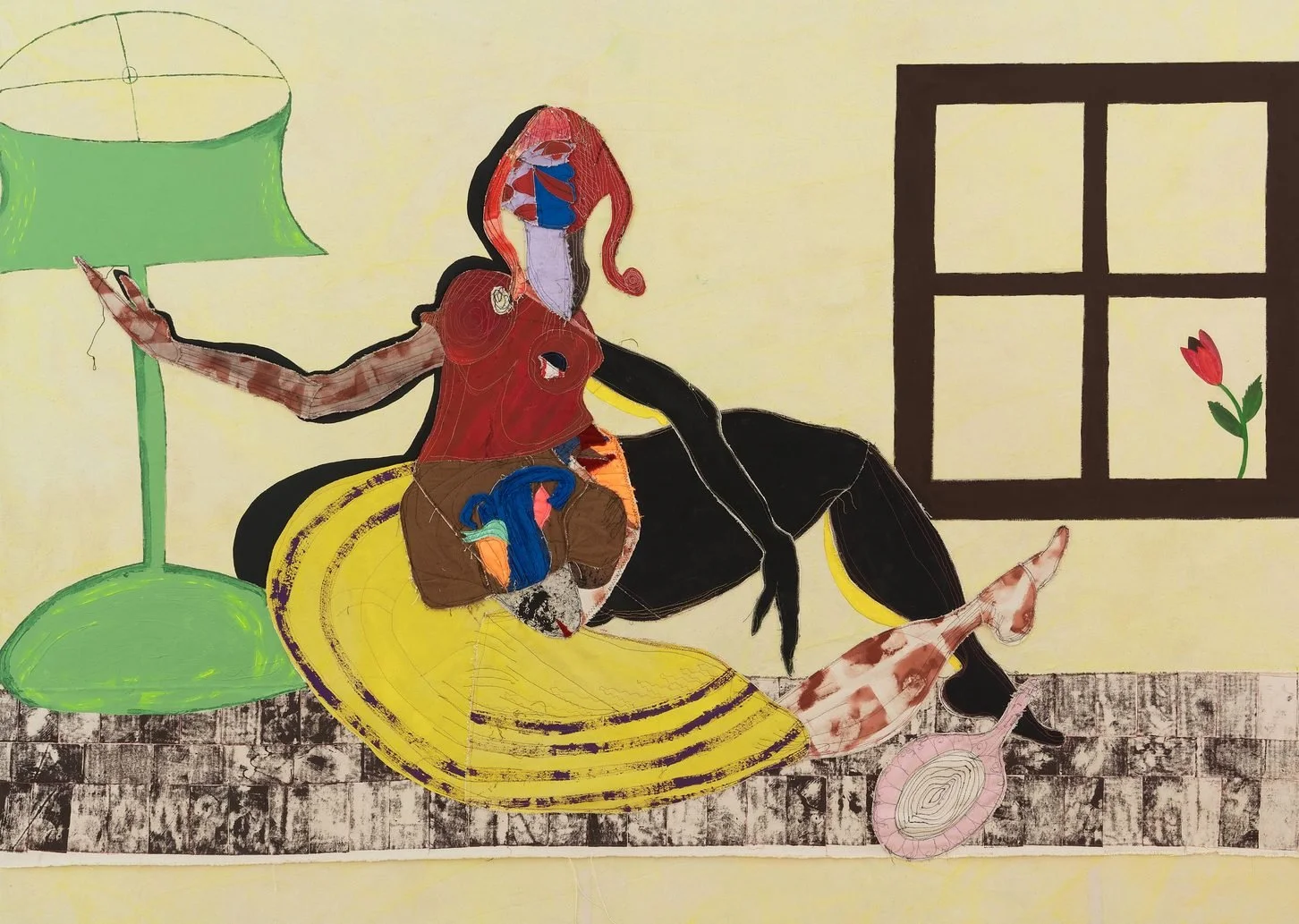
The title Out of Body captures a recurring contradiction in Self’s work.
Her figures are intensely bodily.
Yet the body is never simply identical with the self.
A person may experience the body as:
home;
social surface;
object of projection;
source of pleasure;
burden;
costume;
memory;
public evidence.
The body can feel both intimate and external.
The ICA Boston described the exhibition as bringing together large-scale paintings and sculpture depicting personal avatars, couples, and social exchanges drawn from urban life. (ICA Boston)
The “out of body” condition is therefore not disembodiment.
It is awareness that the body has meanings beyond personal control.
Coupling and Relation
Self’s work increasingly includes pairs and couples.
A couple introduces new questions:
Who is looking at whom?
Who possesses social power?
Who is performing?
Who is vulnerable?
Is the encounter intimate, staged, defensive, romantic, or competitive?
Does one person’s presence alter the other’s identity?
A figure alone may appear self-contained.
A pair reveals relation.
Posture, proximity, touch, gaze, and bodily scale become psychological evidence.
The person is no longer only an individual character.
The person becomes one version of themselves within a particular encounter.
Art Lovers
Self’s recent public commission Art Lovers places a Black couple in an embrace on the facade of the expanded New Museum. The museum describes the work as exploring connection and romance through architecture and public space. (New Museum)
The placement is important.
The intimate embrace becomes public.
A private gesture is enlarged into architecture.
The couple occupies the museum facade not as anonymous decoration, but as a visible image of Black intimacy and mutual attachment.
Because the work exists on the exterior, it enters the city directly.
Pedestrians, traffic, weather, institutional identity, and urban scale all become part of the encounter.
The relationship is not hidden inside the museum.
It participates in public space.
Intimacy and Public Visibility
Public representation of intimacy always involves risk.
The couple may appear:
tender;
celebratory;
erotic;
idealized;
vulnerable;
monumental;
exposed.
The larger the image becomes, the less private the gesture remains.
Yet public visibility can also claim social space.
The work asks what it means for Black romantic life to occupy monumental cultural architecture.
It does not present intimacy as weakness.
It presents relation as presence.
Dream Girl
Self’s 2025 exhibition Dream Girl addressed the constructed self and the construction of femininity through new paintings and sculpture. The exhibition was conceived as an immersive environment, with individual works functioning as psychological vignettes within a larger conceptual map.
The phrase “dream girl” carries several possibilities.
It may refer to:
ideal femininity;
romantic projection;
self-invention;
fantasy;
desirability;
performance;
impossible expectation.
A dream girl may be someone imagined by others.
She may also be the person a woman imagines becoming.
The title therefore places femininity between projection and authorship.
Who creates the dream?
Who must inhabit it?
What happens when the fantasy acquires its own desire?
Constructed Femininity
Femininity is often presented as natural.
Self’s work shows it as composed through:
posture;
clothing;
bodily emphasis;
gesture;
social expectation;
erotic coding;
performance;
repetition.
This does not make femininity false.
A constructed role can become emotionally real.
A performed style can create genuine pleasure, confidence, belonging, or power.
The difficulty lies in distinguishing chosen performance from imposed expectation.
Self’s figures often remain inside that ambiguity.
They may enjoy the visual codes they inhabit while also resisting the restrictions those codes impose.
Avatars
Self has frequently referred to her figures as avatars.
An avatar is both self and not-self.
It may represent:
a projected identity;
an imagined possibility;
a character through which desire can be explored;
a body capable of actions unavailable to the artist;
a public form for a private idea.
The avatar allows psychological investigation without requiring literal autobiography.
It is a constructed body with enough autonomy to exceed its creator.
This makes the figure a testing ground.
What kind of person becomes possible inside this body?
What does the body know that the artist did not decide in advance?
Character Before Biography
Self’s figures often feel specific without being fully biographical.
The viewer may infer:
confidence;
social class;
desire;
mood;
history;
occupation;
relationship.
But the painting does not supply a complete story.
This partial specificity is productive.
A character needs enough information to become distinct, but not so much that interpretation closes.
The figure remains open to several possible narratives.
That openness resists stereotype because stereotype depends upon immediate certainty.
Sculptural Thinking
Even in two dimensions, Self’s figures often behave sculpturally.
Their bodies are built from layers.
Seams create physical relief.
Fabric produces density.
Shapes appear attached rather than merely painted.
The figure occupies the canvas as an object.
Her later bronze works extend that logic into actual space, translating collaged anatomy into volume. Recent selected works include seated bronze figures alongside large sewn and painted canvases.
The shift to sculpture tests whether the body’s complexity can survive without the literal seam.
Translation Into Bronze
Bronze carries different associations from fabric.
Fabric is flexible, intimate, domestic, wearable, and vulnerable.
Bronze is durable, monumental, public, and historically associated with authority.
Translating Self’s figures into bronze changes their cultural position.
The constructed body becomes permanent.
The exaggerated anatomy becomes monument.
The figure no longer depends upon the flat support of the canvas.
It occupies the viewer’s space.
This creates a productive contradiction:
A body built from instability and assembled identity acquires the permanence of public sculpture.
Performance and Sounding Board
Self has also extended her practice into performance.
Her play Sounding Board, presented in 2021, brought voice, embodiment, theatrical space, and live relation into a practice already concerned with constructed character. (Wikipedia)
Performance changes the figure fundamentally.
A painted character remains fixed.
A performed character exists through:
time;
gesture;
voice;
audience;
repetition;
unpredictability;
relation with other performers.
The body is no longer only represented.
It acts.
This reveals the theatrical dimension already present in the paintings.
Theatricality Without Illusion
Self’s figures frequently appear posed or staged.
They may occupy the canvas like actors holding a scene.
But theatricality does not make them false.
The pose may reveal social intelligence.
A person knows when they are being seen and adjusts accordingly.
The pose becomes part of character.
It can signal:
confidence;
seduction;
self-protection;
humor;
resistance;
readiness;
vulnerability concealed through control.
Theatricality becomes a form of social survival.
Gesture as Character
Because facial features may be stylized or compressed, posture often carries enormous meaning.
A hand on a hip can suggest:
defiance;
impatience;
confidence;
performance;
self-consciousness.
A crossed leg can signal:
composure;
withdrawal;
elegance;
territorial control.
A turned torso may suggest both departure and invitation.
Self’s figures are psychologically legible through the whole body.
Character is distributed.
It does not belong only to the face.
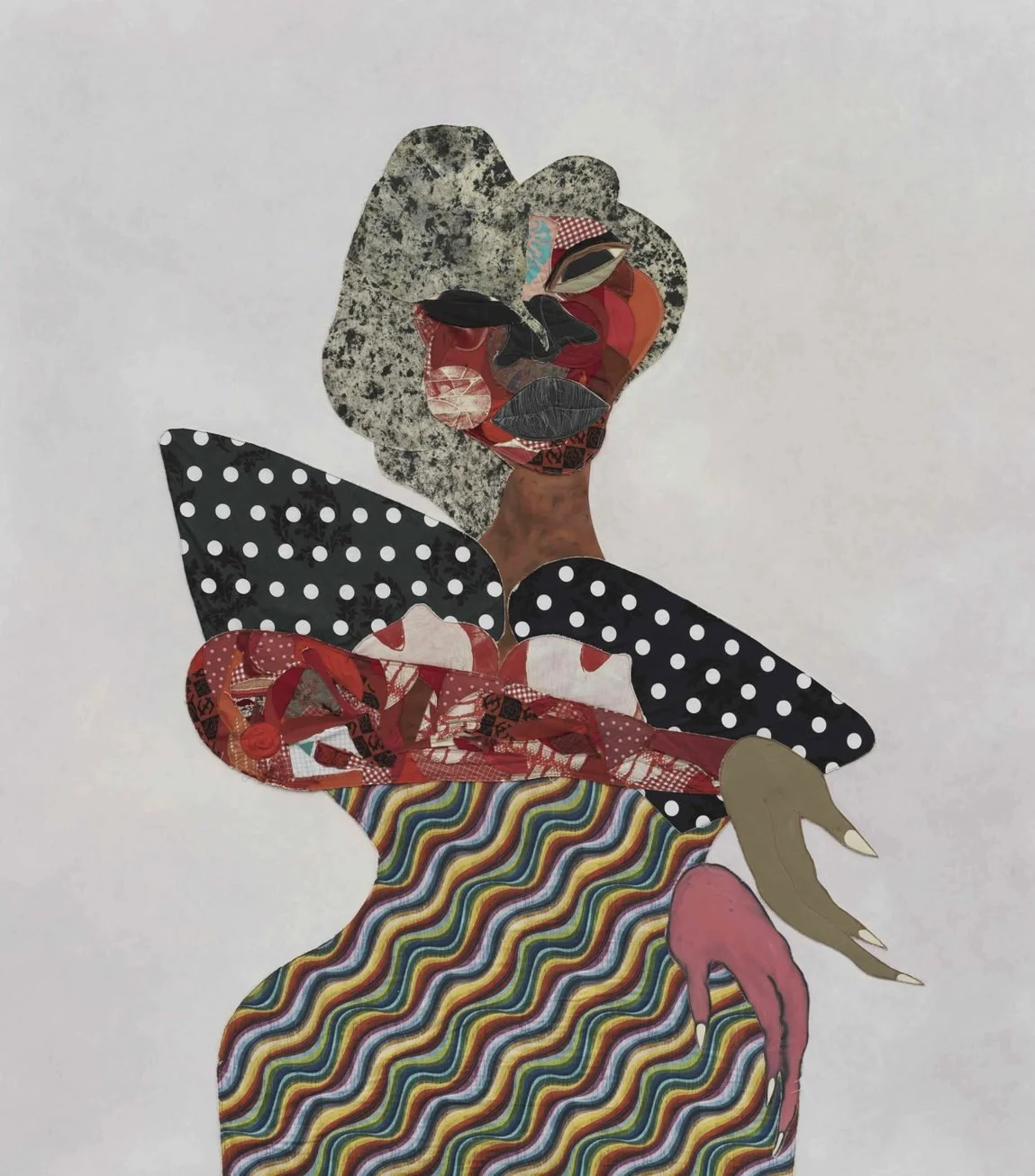
The Face Is Not the Sole Center
Western portraiture often gives the face primary authority.
The face is expected to reveal:
personality;
emotion;
moral character;
identity.
Self redistributes that authority.
The body speaks through:
limbs;
scale;
clothing;
pattern;
pose;
relation to space;
material difference.
A face may remain enigmatic while the figure’s posture creates intense presence.
This expands portraiture beyond facial expression.
The person becomes a total formal arrangement.
Fragmentation Without Collapse
Fragmentation often suggests damage.
A fractured figure may appear wounded, unstable, or psychologically broken.
Self’s figures complicate that expectation.
They are fragmented, but not necessarily defeated.
Their assembly can produce:
strength;
agency;
humor;
pleasure;
self-possession.
Fragmentation becomes a method of expansion.
The figure can contain more because it is not required to conform to one visual system.
The body is divided formally and strengthened conceptually.
Coherence Through Difference
Self’s paintings solve a difficult formal problem.
How can a figure remain coherent when built from highly different materials?
The answer is not uniformity.
It is orchestration.
Shape, contour, repetition, scale, rhythm, color, and pose organize the fragments.
The figure becomes legible because the differences have been composed.
This has broader significance.
Identity does not require the elimination of contradiction.
It requires a structure capable of holding contradiction without collapse.
The Central Contradiction
The deepest contradiction in Self’s practice is:
Her figures are made from cultural projections and material fragments, yet they insist upon agency, interiority, and self-possession.
The work is:
celebratory and critical;
sensual and guarded;
fragmented and whole;
theatrical and sincere;
socially specific and psychologically open;
decorative and structurally rigorous;
public and intimate;
constructed and emotionally convincing.
Self does not remove contradiction.
She turns contradiction into the condition of character.
The Viewer’s Position
Self positions the viewer as someone whose act of looking carries history.
The viewer may recognize:
sexual codes;
racial stereotypes;
fashion;
beauty conventions;
urban types;
gender expectations.
But recognition does not guarantee understanding.
The figure may return the gaze, withhold information, or perform in ways that complicate the viewer’s assumptions.
The viewer is forced to confront the difference between:
seeing a body;
interpreting a body;
believing one knows the person.
This distance is ethically important.
How the Medium Thinks
Each material contributes differently to Self’s inquiry.
Paint
Paint creates gesture, color, atmosphere, illusion, and bodily immediacy.
Fabric
Fabric introduces clothing, domestic life, social code, touch, memory, and cultural materiality.
Sewing
Sewing joins difference while preserving evidence of construction.
Printmaking
Print introduces repetition, transfer, seriality, and the circulation of visual motifs.
Collage
Collage allows incompatible systems to coexist without dissolving into one another.
Sculpture
Sculpture gives assembled character physical volume, gravity, permanence, and public presence.
Performance
Performance activates voice, time, audience, and the instability of live character.
The practice remains coherent because every medium examines how a body becomes socially and psychologically legible.
What the Practice Has Discovered
Across painting, collage, sewing, sculpture, and performance, Self’s work appears to have produced several major discoveries.
1. Wholeness does not require seamlessness
A person can remain coherent while visibly composed from incompatible parts.
2. Stereotype can be exceeded through character
The figure becomes irreducible when granted desire, psychology, history, and agency.
3. Clothing participates in identity
Outward presentation is not merely surface. It helps construct the person.
4. Pattern can carry social and psychological pressure
Decoration becomes meaningful when it changes how the body is read.
5. Fragmentation can produce agency
A divided visual body need not signify defeat or collapse.
6. Sexuality and complexity can coexist
A figure may be erotic without becoming reducible to erotic projection.
7. Environment participates in character
Interior, street, bodega, museum, and public architecture alter the body’s social meaning.
8. The viewer’s projection is part of the work
Interpretation becomes one of the forces the figure must negotiate.
The Artistic Capacity
Self has developed the capacity to make a visibly constructed body feel psychologically autonomous.
She can make:
a seam become identity;
fabric become flesh and social code;
exaggeration become psychological weight;
fragmentation become wholeness;
pattern become environmental pressure;
pose become character;
intimacy become public presence;
projected fantasy become material the figure actively negotiates.
Her figures feel alive because they are not reduced to what they signify.
They retain excess.
Something remains beyond interpretation.
The World Self Has Built
Self’s artistic world includes recurring:
Black figures;
women;
couples;
urban interiors;
bodegas;
bedrooms;
patterned fabrics;
exaggerated anatomy;
stitched seams;
direct gazes;
theatrical poses;
furniture;
public encounters;
social performance.
These elements belong together because they repeatedly ask:
Who controls self-presentation?
How does a body survive projection?
What can a stereotype not contain?
How does material difference become psychological complexity?
What happens when clothing, body, and environment overlap?
Can a figure remain visible without becoming available?
How does relation produce another version of the self?
Is the Language Still Learning?
Self’s visual language is highly recognizable.
The sewn body, exaggerated anatomy, patterned fabric, monumental scale, and frontal pose can now function as an immediate signature.
That creates a real risk.
A recognizable method can begin producing expected meanings automatically.
The critical question is:
Does each new figure possess a distinct psychology and social condition, or does the collaged body merely repeat the general idea of empowered complexity?
The language remains alive when:
the environment changes the figure’s behavior;
relation introduces a new emotional pressure;
material choice becomes specific to character;
sculpture alters the politics of bodily presence;
performance reveals another dimension of the avatar;
intimacy complicates autonomy;
public architecture changes how the figure is read.
Her 2025–26 projects—including Dream Girl, museum exhibitions, new bronzes, Art Lovers at the New Museum, and recent paintings shown in 2026—suggest an expanding interest in constructed femininity, couples, public intimacy, sculpture, and architecture. (New Museum)
The work weakens only when material exuberance substitutes for distinct character.
Risks and Limits
Self’s practice faces several demanding risks.
Signature becoming formula
Fabric collage and exaggerated anatomy may become recognizable before the specific figure has developed psychological necessity.
Celebration becoming generalized
Affirmation can become less complex if every figure communicates the same kind of power or self-possession.
Projection remaining unavoidable
Even resistant images can be absorbed into the stereotypes or fantasies they seek to exceed.
Material richness overpowering character
Pattern, texture, and color can become more memorable than the person represented.
Monumentality simplifying intimacy
Large scale and bronze can make a figure authoritative while reducing vulnerability or ambiguity.
Social meaning becoming assumed
Black embodiment, urban life, and femininity must remain specific rather than functioning as broad signs of cultural significance.
These risks establish the standard of the practice.
The strongest works make each character feel newly encountered.
What the Work Expands
Self expands what portraiture can be.
A portrait can be:
collaged;
sewn;
materially contradictory;
psychologically open;
socially constructed;
visibly assembled.
She expands what fragmentation can mean.
Fragmentation need not imply only damage.
It can become:
multiplicity;
adaptability;
self-invention;
formal freedom;
expanded character.
She expands what decoration can do.
Pattern can carry:
bodily identity;
social code;
environment;
memory;
pressure;
pleasure.
She expands what representation can claim.
The figure does not need to become transparent in order to become fully human.
Complexity can remain partially inaccessible.
What Artists Can Learn
The lesson is not to imitate Self’s sewn figures, exaggerated hips, patterned textiles, or collaged anatomy.
The deeper lesson is to ask:
How can the construction of the figure embody the construction of identity?
If the person is socially assembled, perhaps the body should be materially assembled.
If character contains contradiction, perhaps the figure should contain conflicting visual systems.
If clothing participates in identity, perhaps clothing and skin should become difficult to separate.
If the viewer projects onto the body, perhaps the work should make that projection visible without allowing it to dominate the figure.
Self demonstrates that distortion becomes powerful when it assigns psychological and cultural weight rather than merely producing novelty.
She also shows that a fragmented figure can remain deeply whole.
Tschabalala Self’s achievement is to make the body operate as a complex social and psychological construction: stitched from projection, desire, memory, style, environment, and material difference, yet still capable of asserting a character that exceeds every category imposed upon it.